If your EMIs to Union Bank of India have become hard to manage, you’ve probably typed some version of this question into Google late at night: can I just settle this loan?
The short answer is yes, Union Bank of India loan settlement is possible. The bank runs an official One Time Settlement (OTS) facility, including an online option for borrowers whose accounts have turned into NPAs (non-performing assets).
But here’s the part most articles skip. Settlement is not a right you can claim. It’s a proposal you make, and the bank decides whether to accept it based on its recovery policy and your situation.
In this guide, we’ll walk you through how Union Bank’s OTS actually works, who usually qualifies, what documents you’ll need, how it affects your CIBIL score, and what to check before you pay a single rupee.
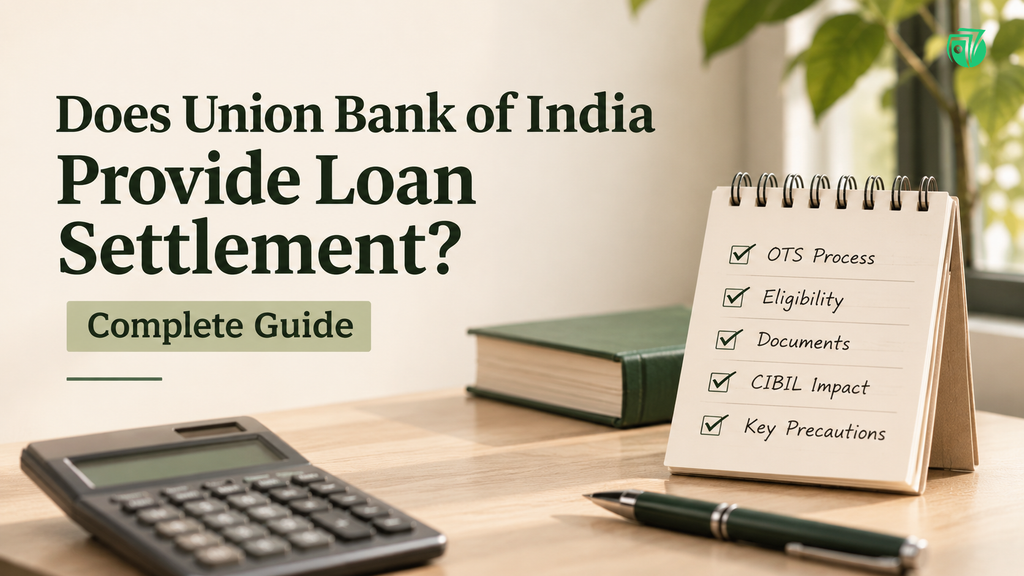
Does Union Bank of India Provide Loan Settlement?
Yes. Union Bank of India offers an Online One Time Settlement (OTS) facility, and you can find it on the bank’s official Recovery Services page. This isn’t a rumour or an agent’s promise. It’s listed by the bank itself.
Three things on that page are worth understanding clearly:
- It’s meant for NPA customers. The online OTS route is for accounts the bank has already classified as non-performing, usually after a long period of missed payments.
- You need your registered mobile number. The bank verifies you through an OTP, so the number linked to your loan account must still be active with you.
- Your online offer is non-binding. Submitting a proposal does not mean your loan is settled. The bank’s competent authority reviews it and can accept or reject it under its recovery policy.
That third point is where many borrowers get confused. Filling the online form feels like a finished step, but it’s really the start of a negotiation. Until you hold a written sanction letter from the bank, nothing is final.
This also fits the wider regulatory picture. The RBI’s Framework for Compromise Settlements and Technical Write-offs recognises compromise settlement as a valid way for banks to resolve stressed loans. Even so, it leaves the final decision to each bank’s board-approved policy.
What Is the Union Bank of India OTS Scheme?
A One Time Settlement is a compromise deal. The bank agrees to accept an approved amount, usually lower than your total dues, and close the account once you pay it on the agreed terms.
Think of it this way. The bank has a choice: spend months or years trying to recover the full amount, or recover a realistic sum now. When recovering everything looks unlikely, a settlement can make sense for both sides.
People often mix up settlement with two other options. They are quite different:
| Option | What happens | What it means for you |
|---|---|---|
| Loan settlement (OTS) | You pay an approved lump sum or short instalments; the bank closes the account | Debt ends, but credit report usually shows “Settled” |
| Loan restructuring | The bank changes your repayment terms, such as tenure or EMI amount | You still repay the full loan, just on easier terms |
| Loan waiver | Dues are written off, usually under a government scheme for specific groups | Rare, and not something an individual can simply request |
If you can still manage some repayment, restructuring may protect your credit profile better. If repayment has genuinely broken down, OTS is often the more realistic route.
Who Is Eligible for Union Bank Loan Settlement?
There’s no public checklist that guarantees eligibility. Union Bank looks at each account on its own merits. That said, settlement is usually considered when a borrower faces genuine, documented financial hardship, such as:
- Job loss or a sharp fall in income, for example after layoffs or salary cuts.
- Medical emergencies that drained savings or stopped you from working.
- Business losses that made it impossible to keep paying a business loan.
- Long-running repayment trouble, where the account has already become an NPA.
A quick reality check: missing EMIs for a few months doesn’t automatically make you eligible. You’ll often see claims online that settlement opens up after exactly 90 days of default. That’s not how it works. The 90-day mark is roughly when an account may be classified as an NPA, but whether the bank agrees to settle is a separate decision.
The bank will usually weigh your current income, your assets, the security (if any) behind the loan, and how much it could realistically recover through other means.
Which Loans Can Be Considered for Settlement?
Settlement requests commonly come up for these types of credit, though approval always depends on the specific account:
- Personal loans, which are unsecured, so the bank has no asset to fall back on.
- Credit card dues that have piled up with interest and charges.
- Business and MSME loans hit by losses or cash-flow problems.
- Other stressed credit facilities the bank has classified as NPAs.
Secured loans need extra care. If your home loan, property loan or vehicle loan is backed by collateral, the bank has another way to recover its money: the asset itself. That changes the negotiation. The settlement amount will usually reflect what the bank could recover by selling the security, and settling may also affect the release of your property documents. Read every condition about the collateral before you agree to anything.
How to Apply for Union Bank of India Loan Settlement
Here’s how the process usually unfolds. Exact steps can vary by branch and loan type, so treat this as a practical roadmap rather than an official rulebook.
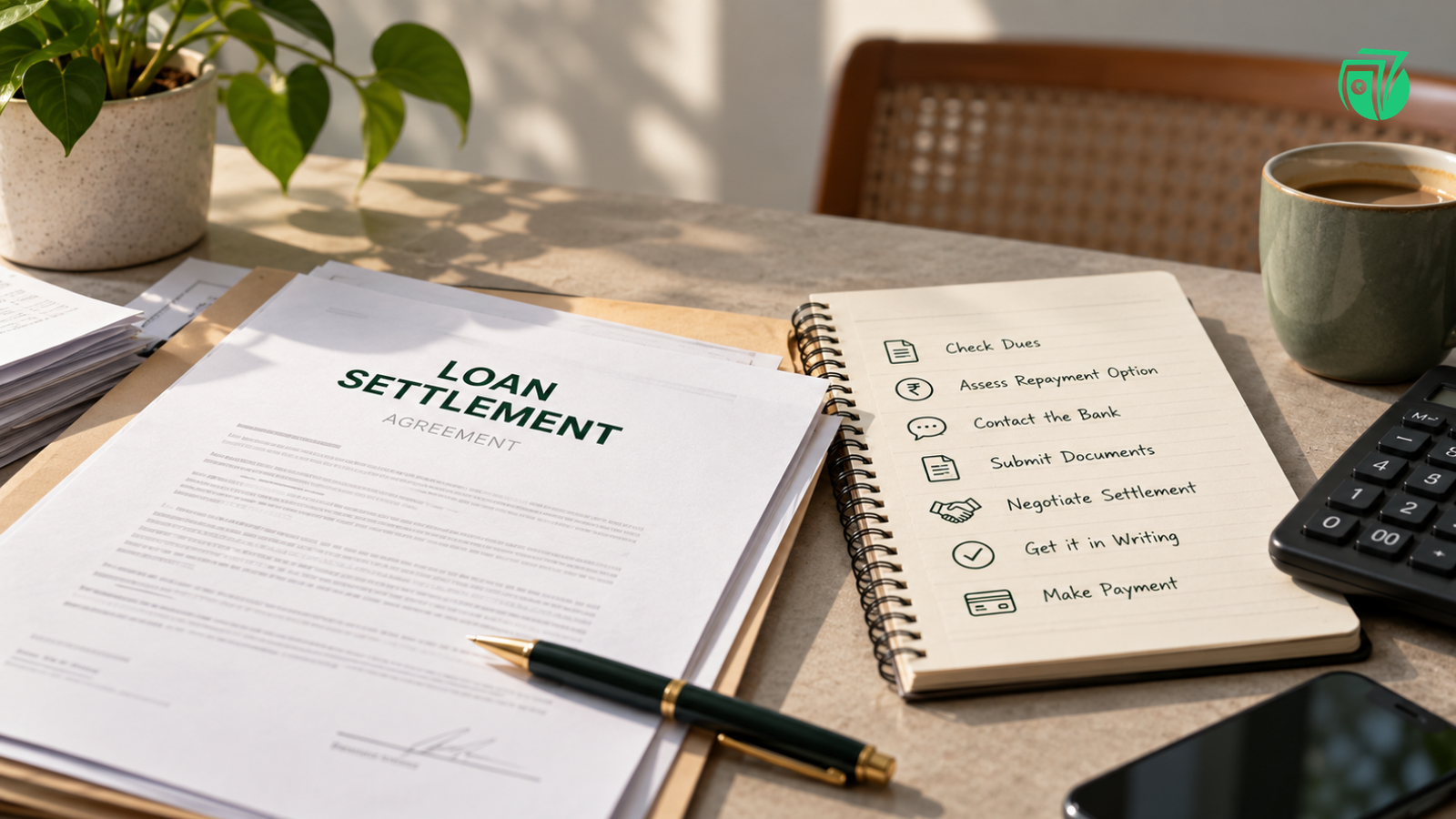
- Check your loan status. Find out your total outstanding amount, how it breaks down into principal, interest and charges, and whether the account is already classified as an NPA.
- Talk to the bank. Visit your home branch or the bank’s recovery department and ask whether your account can be considered for OTS.
- Try the Online OTS facility, if you’re eligible. NPA borrowers can submit a proposal online through the official recovery page using an OTP on their registered mobile number.
- Gather your hardship proof. Collect documents that show why you can’t repay in full (more on this below).
- Submit a realistic proposal. Offer an amount you can actually arrange. An offer you can’t pay on time can do more harm than good.
- Wait for formal approval. The bank’s competent authority will review your proposal. It may accept it, reject it, or come back with a different figure.
- Pay exactly as per the sanction letter. Stick to the approved amount, mode and deadline. Keep every receipt.
- Collect your closure documents. Ask for a settlement confirmation and a No Objection Certificate (NOC) once you’ve paid in full.
One small habit makes a big difference: keep everything in writing. Verbal assurances from anyone, including recovery agents, won’t help you if a dispute comes up later.
Documents Required for Union Bank Loan Settlement
The bank may ask for different papers depending on your loan, but having these ready will save you time:
- PAN card and identity proof (such as Aadhaar)
- Loan account number and recent loan statements
- Bank account statements for the last few months
- Salary slips, ITR or other income proof
- Proof of hardship, where it applies: a termination letter, hospital bills and medical records, or business loss statements
- A short written request explaining your situation and your settlement offer
Honest, well-documented requests tend to be taken more seriously. If your income has dropped, show it. If there was a medical emergency, attach the records. You’re helping the bank understand why full repayment isn’t realistic.
How Much Can You Save Through Union Bank OTS?
This is the question everyone asks first, and the honest answer is: it depends. Union Bank doesn’t publish a fixed discount percentage. If someone guarantees you a “50% waiver” before the bank has even looked at your file, be careful.
The settlement figure is usually shaped by:
- Your outstanding principal and the interest and penal charges added on top.
- Your financial condition, including income, savings and other debts.
- Any security behind the loan and how much it could realistically fetch.
- The age of the default and how the account has been classified.
- The bank’s internal recovery policy, which sets limits on what officials can approve.
In many cases, the biggest relief comes from reduced interest and penalty charges rather than a cut in the principal. But every account is different, and only the bank’s sanction letter tells you the real number.
How Does Loan Settlement Affect Your CIBIL Score?
Settlement brings relief, but it does leave a mark. When you settle, the bank typically reports the account to credit bureaus as “Settled” instead of “Closed”.
The difference matters. “Closed” tells future lenders you repaid in full. “Settled” tells them you repaid less than you owed. Lenders often see it as a warning sign, which can make new loans or credit cards harder to get for a while.
There’s no fixed number of points your score will drop, and no set date it will bounce back. Much of the damage often happens earlier, during the months of missed EMIs. The effect of the settlement itself depends on your full credit history.
The good news is that credit can be rebuilt. A few habits help:
- Pay every existing EMI and card bill on time, every month.
- Keep credit card usage low compared to your limit.
- Avoid applying for several loans in a short span.
- Check your credit report regularly and raise disputes for any errors.
Some borrowers later pay the remaining waived amount to request a change from “Settled” to “Closed”. Whether this is possible depends on the bank, so ask about it in writing.
What Happens If Union Bank Rejects Your Settlement Request?
A rejection feels discouraging, but it isn’t always the end of the road. Common reasons include an offer that’s too low, missing hardship proof, or the bank believing you can repay more than you’ve offered.
If that happens, try these steps:
- Ask for the reason. If the bank shares one, it tells you what to fix.
- Re-check what you can actually pay. A slightly higher, realistic offer may be accepted where a low one wasn’t.
- Look at other options. Restructuring, a revised repayment plan or a longer tenure may suit your situation better.
- Get professional guidance. An experienced advisor can help you prepare a stronger, better-documented proposal.
Whatever you do, don’t simply stop responding to the bank. Silence usually makes recovery action more likely, not less.
Important Things to Check Before Accepting an OTS Offer
Once the bank approves your settlement, slow down and read the sanction letter carefully. Before you pay, make sure:
- You have a written sanction letter on the bank’s letterhead, not just a phone call or a message.
- The final settlement amount is clearly stated, with nothing left vague.
- The payment deadline is one you can genuinely meet.
- Any instalment terms, if allowed, are spelled out, including what happens if you miss one.
- You’re paying only to the bank’s official account, never in cash to an individual.
- The letter explains how the account will be reported to credit bureaus.
- The bank commits to issuing an NOC and closure confirmation after full payment.
After paying, check your credit report within a few months. Make sure the account shows the status you were promised and a zero balance. If something looks wrong, raise it with the bank and the credit bureau right away.
Frequently Asked Questions
1. Does Union Bank of India provide loan settlement?
Yes. Union Bank of India offers a One Time Settlement facility, including an online OTS option for NPA borrowers. Every proposal is subject to the bank’s recovery policy and approval by its competent authority.
2. Can I settle my Union Bank personal loan after default?
You can request it. If you’re facing genuine hardship and the account has turned into an NPA, the bank may consider a settlement. Approval isn’t guaranteed.
3. Is Union Bank OTS available for credit card dues?
Settlement requests for overdue credit card dues are common. Whether yours qualifies depends on the account status and the bank’s assessment, so confirm directly with the bank.
4. How do I apply for OTS in Union Bank of India online?
If your account is an NPA, you can use the Online OTS facility on the bank’s official recovery page. You’ll need your registered mobile number for OTP verification.
5. Can I negotiate my settlement amount?
Yes, you can make an offer based on what you can afford. The bank may accept it, reject it, or suggest a different figure.
6. Can Union Bank reject an online OTS application?
Yes. An online offer is a non-binding proposal. The bank can reject it under its recovery policy.
7. What happens if I miss the approved OTS payment?
If you fail to pay as per the sanction letter, the settlement may be cancelled and the bank may resume recovery of the full dues. Read the default clause in your letter carefully.
8. Will Union Bank issue an NOC after settlement?
You should request an NOC and closure confirmation once you’ve paid the full settled amount. Make sure your sanction letter mentions it.
9. Can I get a new loan after settling my Union Bank account?
It’s possible, but often harder for some time. Lenders see the “Settled” status. Rebuilding your credit with on-time payments improves your chances over time.
10. Is loan settlement better than loan restructuring?
It depends on your situation. Restructuring keeps you repaying the full loan on easier terms and is usually kinder to your credit profile. Settlement suits borrowers who truly can’t repay in full.
Conclusion
So, does Union Bank of India provide loan settlement? Yes. Through its OTS facility, including the online route for NPA accounts, the bank does consider settlement for borrowers facing real financial difficulty.
Just remember what settlement is and isn’t. It’s a negotiated outcome, not an automatic right. The amount isn’t fixed, approval isn’t guaranteed, and it will affect your credit report. Understanding all of this before you apply helps you make a calmer, smarter decision.
If you’re unsure whether settlement, restructuring or another route fits your situation, you don’t have to work it out alone. TrueSettle helps borrowers understand their options, prepare their documents and approach the bank with a clear, realistic plan. Book a free consultation to talk it through with our team.
Disclaimer: This article is for general information only and isn’t legal or financial advice. Settlement terms are decided by Union Bank of India under its own policies. Please confirm details with the bank before acting.