The Short Answer: Can You Lose Your House for a Personal Loan?
Personal loan house seizure is a common concern for borrowers who are struggling with missed EMIs. A personal loan is generally unsecured, which means you didn’t pledge your house — or any other asset — as collateral when you took it. Because of that, a lender doesn’t automatically have the right to seize your house simply because you’ve missed EMIs.
That said, it’s not quite as simple as “your house is completely safe no matter what.” Default can still lead to serious consequences — damaged credit, recovery proceedings, and in some cases, legal action through a court or Debt Recovery Tribunal. Whether any of that could ever touch your house depends on the specifics of your situation, including whether a court eventually passes an order against your assets as part of a recovery suit. This article walks through what actually happens, separating the common myths from what the law and RBI’s guidelines actually say.

Myth vs Fact: What Really Happens After Personal Loan Default?
| Myth | Fact |
|---|---|
| “The bank can immediately take my house.” | A personal loan is generally unsecured and does not automatically give the lender a right to seize your house. |
| “Missing one EMI means my house is at risk.” | One missed EMI does not automatically result in property seizure — it typically starts with reminders and collection communication. |
| “The debt disappears if I stop paying.” | The outstanding debt remains payable and continues to attract interest and charges, along with possible recovery action. |
| “The bank can do anything to recover the money.” | Recovery practices are governed by RBI’s Fair Practices Code and Recovery Agent guidelines, which set clear limits on how lenders can act. |
| “Settlement means my credit report becomes clean.” | Settlement resolves the debt but is typically reported as “Settled,” not “Closed” — and isn’t the same as full repayment. |
What Happens When You Stop Paying Personal Loan EMIs?
The typical progression looks something like this, though exact timelines vary by lender:
Missed EMI → overdue account → collection communication → continued default → possible NPA classification → potential recovery or legal proceedings
In the early stage, you’ll likely get reminder calls, SMS, and emails. If the account stays overdue, it gets reported to credit bureaus, and your credit score takes a hit. Continued non-payment can lead the lender to classify the account as a Non-Performing Asset (NPA) internally — generally after 90 days of overdue payments — and to escalate the matter to a recovery agent or a legal notice.
It’s worth being clear that this progression isn’t identical for every lender or every borrower. Some lenders escalate faster than others, and your specific circumstances — communication with the lender, partial payments, disputes — can all affect the pace.
Personal Loan House Seizure: Can a Bank Seize Your House?
This is the core legal question, and it deserves a careful answer rather than a blanket “no.”
Personal loans are generally unsecured — you haven’t pledged your house or any specific asset as collateral, unlike a home loan or a loan against property. Because of that, the lender doesn’t have the same collateral rights that apply to secured loans, and mechanisms like the SARFAESI Act — which allow banks to take possession of pledged property after a notice period — generally don’t apply to personal loans.
That doesn’t mean there’s zero legal exposure, though. If a lender pursues recovery through a civil suit or a Debt Recovery Tribunal (typically for larger outstanding amounts) and obtains a court order or decree against you, a court could, in principle, direct recovery against your assets as part of enforcing that decree. This is a materially different process from a lender simply walking in and seizing your house — it requires legal proceedings and a court’s involvement, not a unilateral decision by the bank.
In short: no bank can seize your house directly for an unpaid personal loan the way it might repossess a car under a car loan or initiate SARFAESI action on a mortgaged property. But default is not consequence-free, and if it escalates to formal legal proceedings, outcomes depend on the facts of your case and the court’s decisions.
What Can Happen to Your Credit Score?
This is usually the more immediate and certain consequence of default:
- Missed payments get reported to credit bureaus, and your score drops with each reporting cycle you stay overdue.
- Continued default eventually gets reported as a serious delinquency or write-off, which has a much larger impact than a single late payment.
- Future borrowing becomes significantly harder — banks and NBFCs are generally reluctant to lend to applicants with recent default history.
- If you eventually settle the debt, the account is typically reported as “Settled” rather than “Closed” — a distinction that remains visible on your credit report for a number of years and signals to future lenders that the original terms weren’t fully honoured.
- It’s worth checking your credit report periodically to make sure whatever status gets reported — overdue, settled, or closed — is accurate. Errors happen, and they’re disputable.
What If Recovery Agents Are Calling You?
Recovery communication can feel overwhelming, but you do have rights here, backed by RBI’s Fair Practices Code and Recovery Agent Code of Conduct:
- Recovery calls are expected to happen within reasonable hours — not at odd times of day or night.
- Agents are expected to identify themselves properly and should be able to provide details establishing they’re authorised to contact you about your account.
- Threats, harassment, or intimidation are not permitted — banks are held responsible for the conduct of agents acting on their behalf.
- Keep records of calls, messages, and any communication — dates, times, and what was said. This matters if you ever need to file a complaint.
- If conduct crosses a line, you can escalate through the lender’s own grievance redressal process first, and if that doesn’t resolve it, through the RBI’s complaint mechanisms.
Knowing your rights doesn’t make the debt go away, but it does change how you can respond to pressure tactics that go beyond what’s actually permitted.
What Should You Do If You Can No Longer Afford Your EMI?
If you’re genuinely struggling to keep up, here’s a more constructive path than simply going silent:
- Review your budget honestly — understand exactly how much you can realistically pay, and where the gap is coming from.
- Contact your lender early, before the account slips deep into default. Lenders are often more flexible with borrowers who reach out proactively.
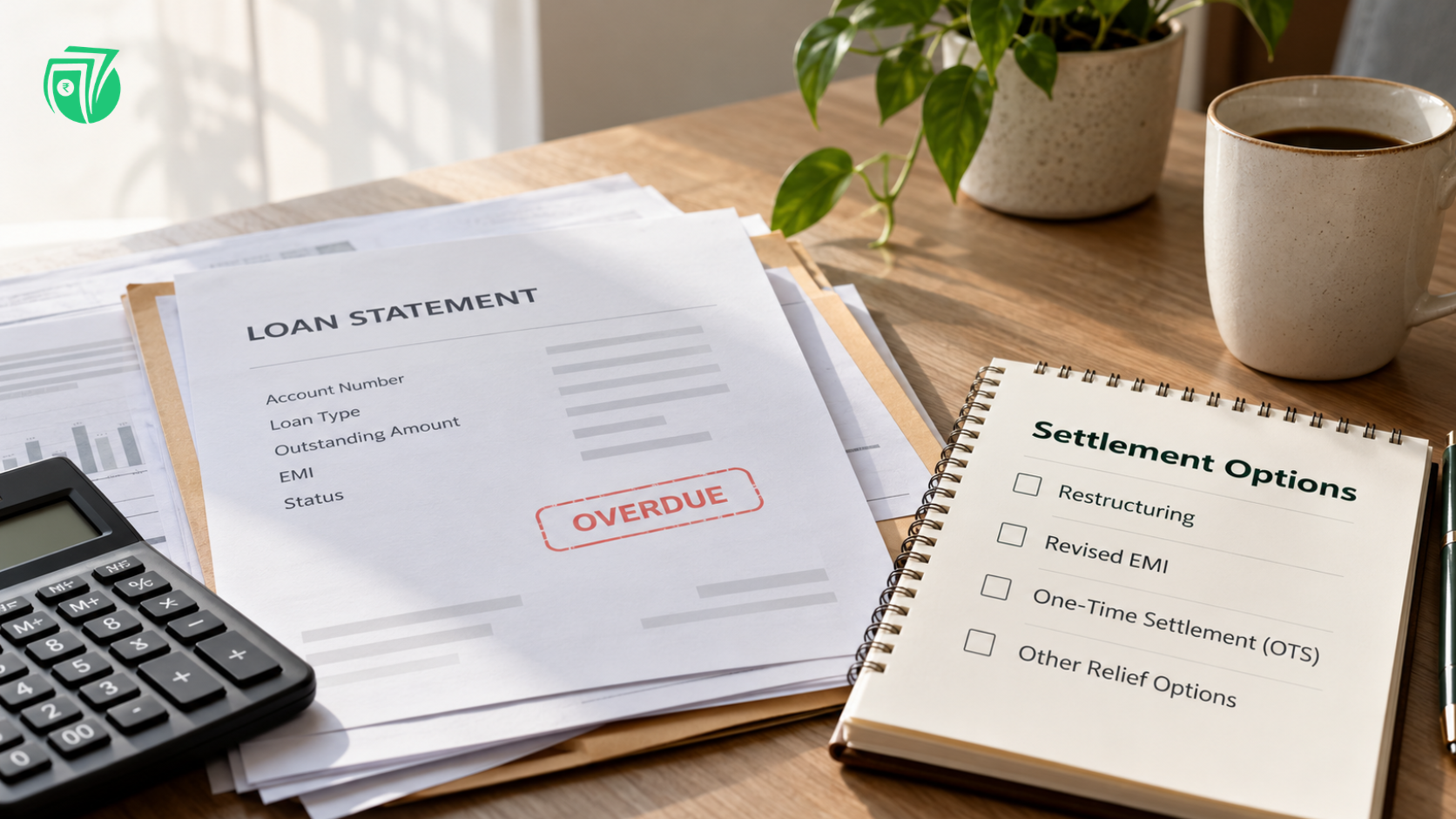
- Ask about restructuring or revised repayment options — some lenders offer modified EMI plans for borrowers in temporary financial difficulty.
- Understand the consequences before you stop paying — going silent doesn’t pause the debt; it just lets charges and damage accumulate while you’re not in the conversation.
- If you’re considering settlement, get the terms in writing and review them carefully before making any payment — don’t act on a verbal offer alone.
- Consider professional or legal advice if your situation involves legal notices, large outstanding amounts, or recovery action that feels difficult to navigate on your own.
Myth vs Fact: Quick Answers to Common Questions
Can a personal loan affect my house?
Not directly through automatic seizure, since the loan is unsecured. It could theoretically become relevant only if formal legal proceedings result in a court decree — a very different scenario from routine default.
Can a bank take property for an unsecured loan?
Not without going through a court process. Unlike secured loans, an unsecured personal loan doesn’t give the lender direct rights over your assets.
What happens after 3 missed personal loan EMIs?
Typically, more intensive collection communication, a further credit score impact, and — depending on the lender’s internal policy — movement toward NPA classification and possible escalation to recovery agents or legal notice.
Can I negotiate personal loan dues?
Often, yes. Many lenders are open to discussing revised repayment terms or settlement, particularly if you reach out proactively and can demonstrate genuine financial hardship.
Does personal loan default affect CIBIL?
Yes, significantly. Missed payments and continued default are reported to credit bureaus and materially lower your score.
Can recovery agents visit my home?
They may, but their conduct is governed by RBI guidelines — including expectations around timing, identification, and respectful behaviour.
What happens if I cannot repay my personal loan?
The debt remains outstanding and continues to attract charges. Depending on how long it stays unpaid, it can lead to credit score damage, recovery communication, and potentially legal proceedings.
Frequently Asked Questions
Will I lose my house if I stop paying personal loan EMIs?
Not automatically. Personal loans are generally unsecured, so a lender can’t seize your house the way it could with a mortgaged property. However, default can still lead to serious financial and, in some cases, legal consequences.
Can a bank seize my property for a personal loan?
Not directly. Since personal loans aren’t secured against your property, seizure isn’t automatic — it would require formal legal proceedings and a court’s involvement, which is a different process from routine recovery action.
Is a personal loan secured or unsecured?
A personal loan is generally unsecured — it isn’t backed by collateral like a house or vehicle, unlike a home loan or car loan.
What happens if I miss several personal loan EMIs?
Your account moves further into default, your credit score takes a bigger hit, and the lender may escalate to recovery agents, legal notices, or eventually a recovery suit, depending on the amount and their internal policies.
Can personal loan default affect my CIBIL score?
Yes. Missed EMIs and continued default are reported to credit bureaus and can significantly lower your score, affecting your ability to borrow in the future.
Can I negotiate with the lender if I cannot pay?
Yes, many lenders will discuss restructuring, revised terms, or settlement — especially if you reach out before the account falls deep into default.
What should I do before stopping my personal loan EMI payments?
Talk to your lender first. Understand the consequences of default, explore restructuring or settlement options, and get any agreed terms in writing before acting.
If you’re struggling with personal loan EMIs and unsure what your options actually are, it helps to get a clear, honest picture before deciding what to do next.
👉 Get a free debt assessment with TrueSettle to understand your options.
👉 Understand your debt resolution options before you decide how to move forward.