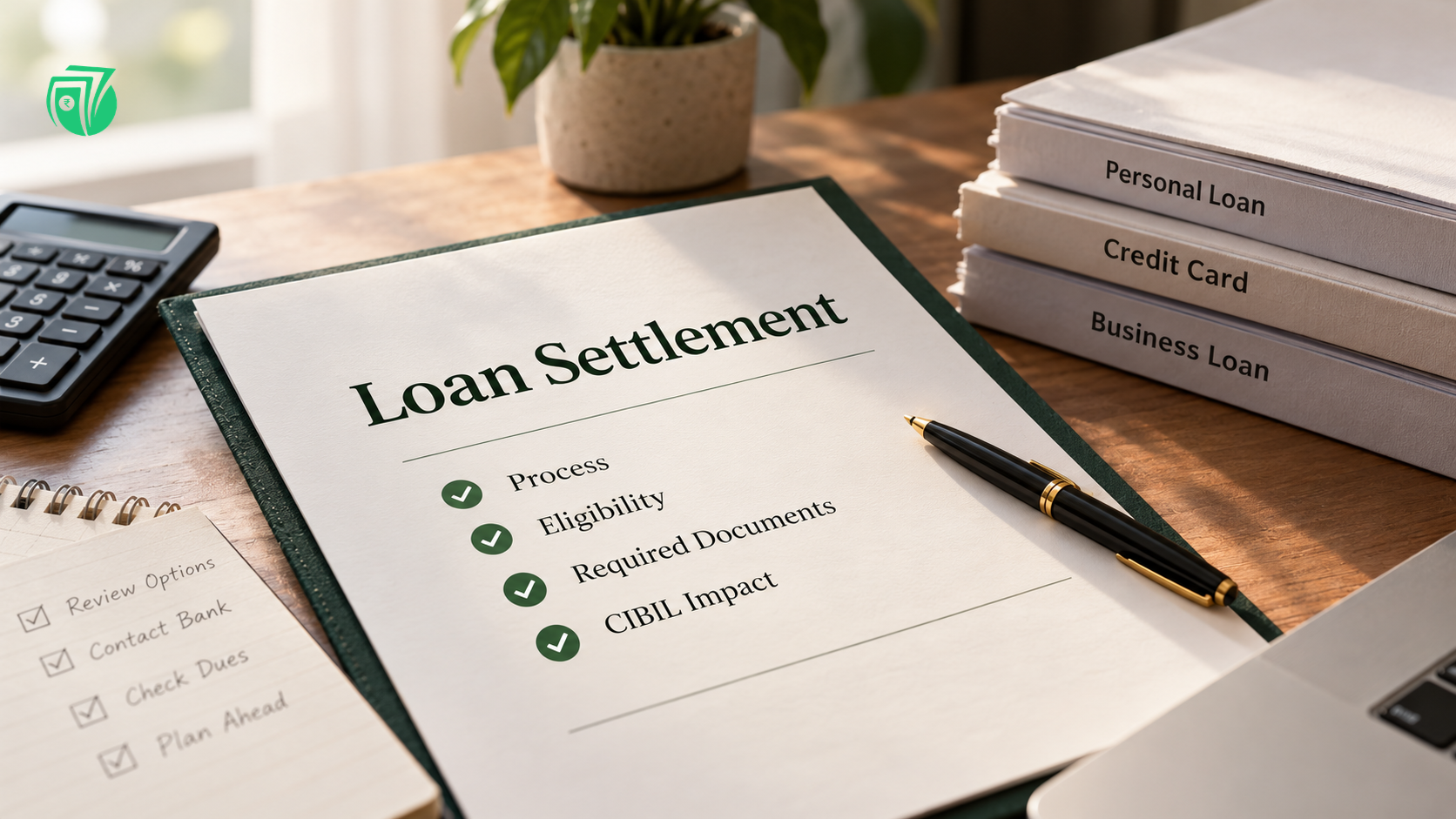
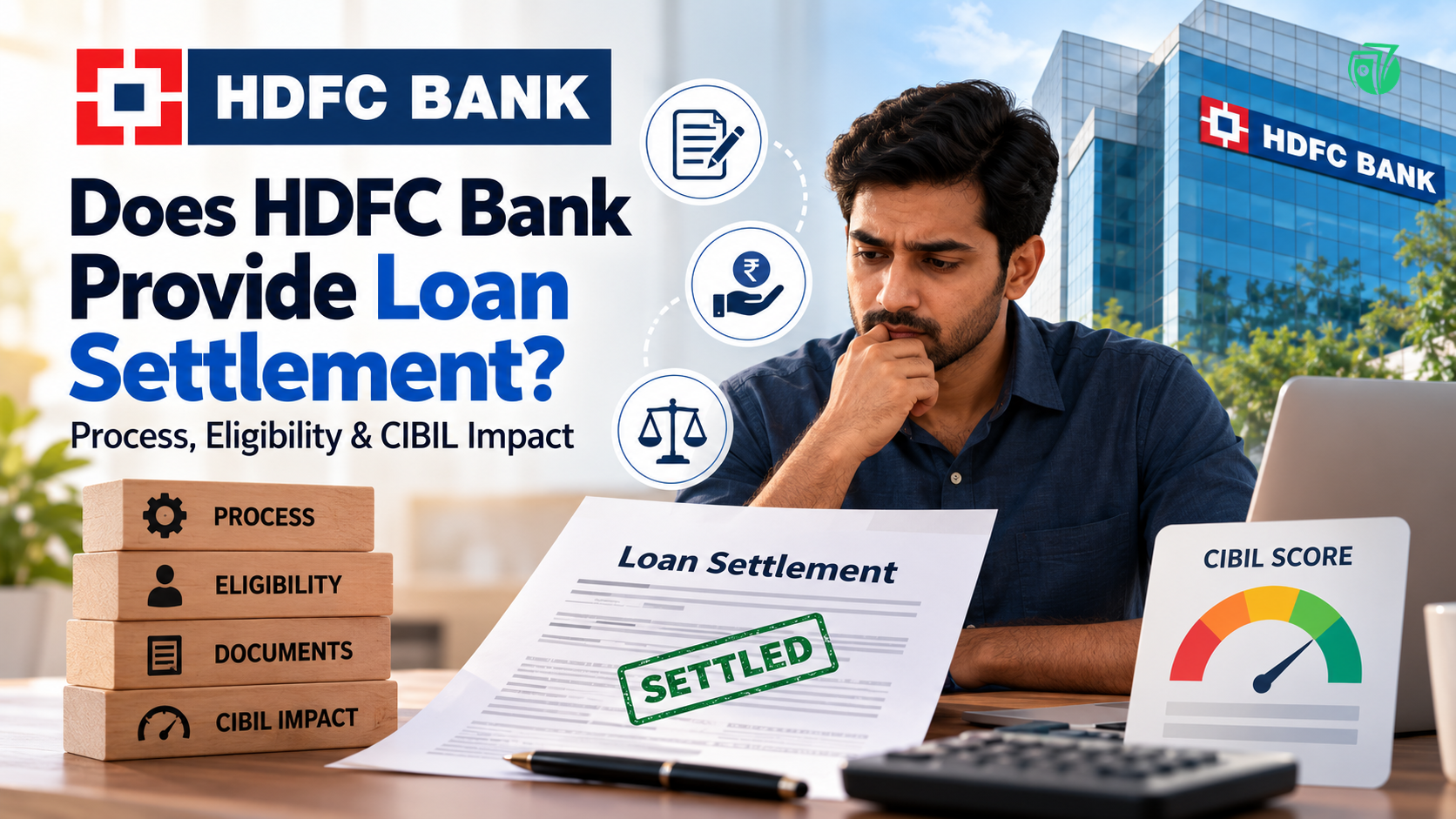
Does Axis Bank provide loan settlement? Yes, Axis Bank may offer loan settlement to borrowers facing genuine financial hardship. However, approval depends on the bank’s internal policies and individual circumstances. Learn about the process, eligibility, required documents, and how loan settlement can affect your CIBIL score.
If you are reading this, chances are the EMIs have started to pile up. Maybe a job loss, a medical bill, or a business that slowed down. The calls are getting more frequent, and you have heard someone say, “Just settle it with the bank.”
That advice is half right. Settlement can give you a way out when you genuinely cannot repay in full. It also leaves a mark on your credit report that stays for years. This guide walks you through how it actually works with Axis Bank, what to prepare, and what to watch out for before you pay a single rupee.
What does “loan settlement” with Axis Bank actually mean?
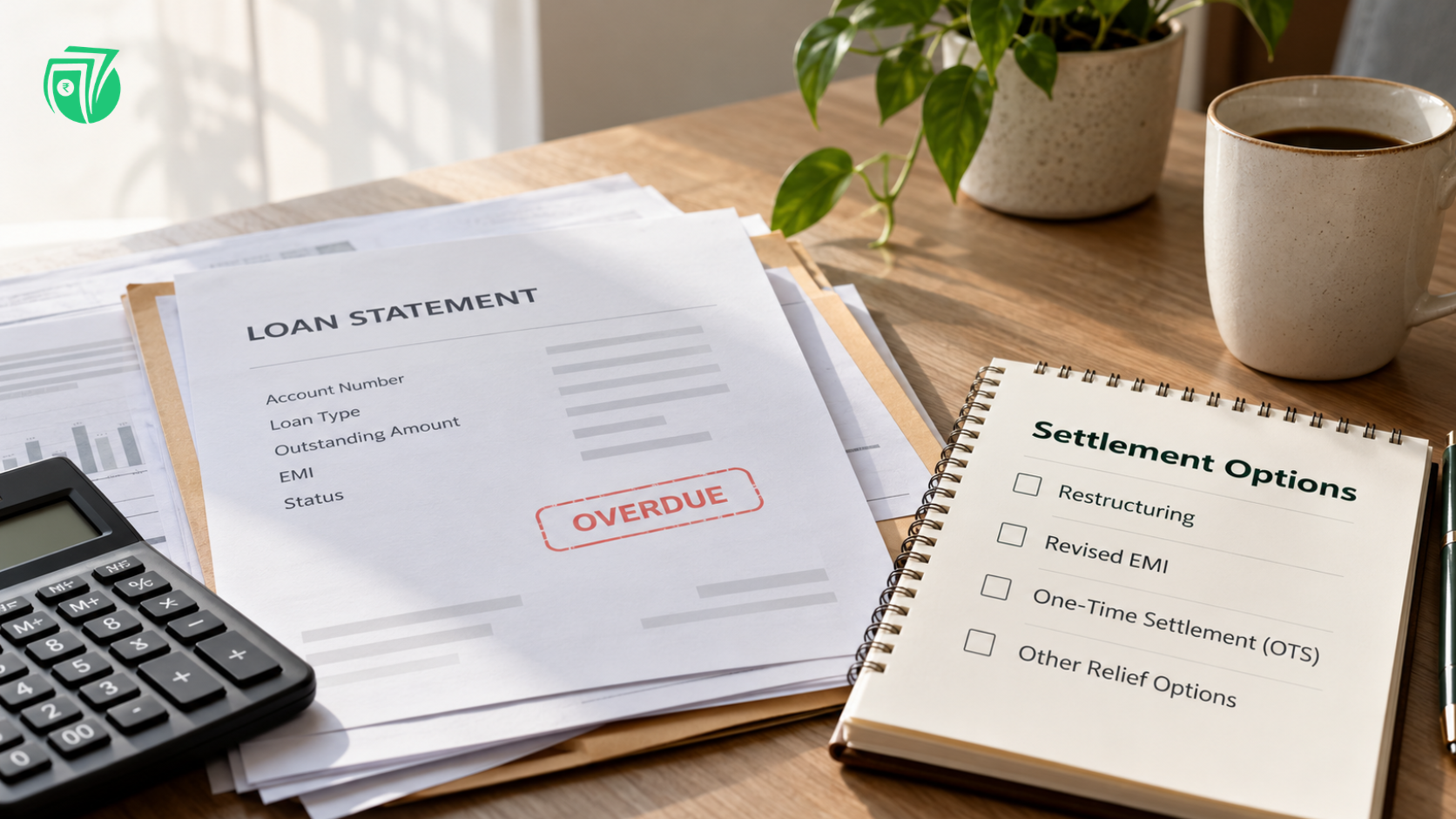
A loan settlement, often called a One-Time Settlement or OTS, is a deal where the bank agrees to accept less than the full amount you owe and close the account. You pay the agreed sum, usually as a lump sum or in a few short instalments, and the bank stops chasing the rest.
Axis Bank itself explains this idea on its own blog. It describes credit card settlement as an option for people in real financial hardship who cannot repay their full card dues, and notes that it hurts your credit score and future borrowing.
Banks don’t do this out of generosity. They do it because recovering a bad loan through legal action takes time and money. Sometimes collecting a reduced amount now makes more sense for them than waiting years for the full amount.
There is also a regulatory side to this. In June 2023, the RBI issued its Framework for Compromise Settlements and Technical Write-offs. It asks every bank, including Axis, to keep a Board-approved policy for settlements, with clear conditions and approval levels. So there is a proper process inside the bank. What there is not is a guarantee that your account will qualify.
Who might Axis Bank consider for settlement?
There is no public checklist that says “you qualify.” Each case is reviewed on its own. In practice, banks tend to look more closely at settlement when a few things line up:
- A real, provable hardship. Job loss, a serious illness in the family, a business shutdown, or a sharp fall in income. “I’d rather not pay” is not hardship.
- The account is already overdue. Settlement is usually discussed for accounts that have been in default for a while, not ones where you missed a single EMI last week.
- Unsecured debt. Personal loans and credit cards come up most often. With home or car loans, the bank holds an asset, so it usually has other recovery routes.
- You can pay something now. A bank is far more likely to listen if you can offer a realistic lump sum from savings, family support or the sale of an asset.
One honest warning: be careful of anyone who says Axis Bank will “definitely” settle after a fixed number of days, or for a fixed percentage. Neither the bank nor the RBI framework promises that.
How to approach Axis Bank for a loan settlement
Think of this less as filling a form and more as a negotiation that needs patience and a paper trail. Here is a practical way to go about it.
- Know your numbers first. Get your latest loan or card statement. Note the principal outstanding, interest, penalties and the total being demanded. You can’t negotiate a number you don’t understand.
- Work out what you can really pay. Be honest with yourself. Offer only what you can arrange without taking a fresh high-interest loan to pay it.
- Write to the bank. Contact Axis Bank through official channels: your branch, the collections or recovery team, or the customer care and grievance routes on its website. Explain your hardship briefly and clearly, and ask about settlement or other relief.
- Share supporting proof. Attach documents that back up your story (see the next section). A clear, documented case is taken more seriously than a phone call.
- Expect some back and forth. The bank may reject your first offer or come back with a higher figure. Stay polite, stay consistent, and keep everything in writing.
- Get the offer in writing before you pay. Never pay a settlement amount based only on a phone call or a WhatsApp message from an agent. Wait for an official settlement letter on Axis Bank letterhead.
- Pay only to the bank. Use the account or payment link mentioned in the official letter. Do not pay cash to a recovery agent or into anyone’s personal account.
If calls from recovery agents feel threatening or abusive, you can complain to the bank. If the bank does not resolve it, you can escalate to the RBI Ombudsman.
Documents you may need
The exact list depends on what the bank asks for, but it helps to keep these ready:
- Loan account number or credit card number, with recent statements
- PAN card and Aadhaar (or other ID and address proof)
- A short hardship letter explaining what happened and when
- Proof of hardship, such as a termination or relieving letter, hospital bills and medical reports, or business loss records
- Recent bank statements and salary slips (or proof of no income)
- Copies of every letter, email and notice exchanged with the bank
Keep both soft and hard copies. If you share anything by email, save the sent mail as proof.
Settlement isn’t your only option
Settlement is usually the last door, not the first. Before you knock on it, check whether one of these fits your situation better.
| Option | What it means | Effect on credit report | Best when |
|---|---|---|---|
| Loan settlement (OTS) | You pay a reduced amount and the account is closed as “settled” | Strong negative; “settled” status stays visible for years | You truly cannot repay in full, even over time |
| Restructuring | The bank changes the terms, such as a longer tenure or lower EMI | Usually less damaging than settlement, though it may still be reported | Your income dropped but you can still pay something every month |
| EMI holiday or short relief | A temporary pause or reduced payments, if the bank offers it | Depends on how the bank reports it | The problem is short-term, like a gap between jobs |
| Debt consolidation | One new loan pays off several costly debts | Neutral to positive if you then pay on time | You have a decent score and stable income, just too many EMIs |
| Full repayment, slowly | You clear dues in full with a planned budget | Account ends up “closed,” the best outcome | You can pay over time and want to protect your score |
Under the RBI framework, a settlement where payment is spread over more than three months is treated as restructuring. So a long instalment plan is not really a “quick settlement.”
What settlement does to your CIBIL score
This is the part most people underestimate. When you settle, Axis Bank reports the account to credit bureaus like CIBIL as “settled,” not “closed.”
To a future lender, “closed” means you paid everything. “Settled” means the lender took a loss on you. That one word can make banks hesitate to give you a new loan or credit card, or offer one only at a higher interest rate.
The settled status doesn’t disappear quickly. It stays on your credit history for years. Banks may also keep their own internal records, which can affect future dealings with the same bank.
The good news is that a settlement is not the end of your credit life. Many people rebuild over time:
- Pay every remaining EMI and bill on time, without exception
- Consider a secured credit card against a fixed deposit, and use it lightly
- Keep your credit utilisation low and avoid applying for many loans at once
- Check your credit report regularly and raise disputes for any errors
Some borrowers later go back and pay the waived amount to get the account updated to “closed.” Whether the bank allows this, and how it reports it, is up to the bank. Ask in writing before you pay.
Before you pay a single rupee: a quick checklist
Most settlement horror stories come from skipping one of these steps. Go through them slowly.
- The settlement letter is on official Axis Bank letterhead and names your loan or card number
- It clearly states the settlement amount, the payment deadline and the payment method
- It says that on payment, the bank will treat the account as settled and will not claim the balance
- You are paying directly to Axis Bank, through the channel the letter mentions
- You have saved the payment receipt or transaction reference
- After payment, you have asked for and received a No Dues Certificate (NDC) or settlement closure letter
- After 30 to 60 days, you have checked your CIBIL report to confirm the account shows the right status and a zero balance
If something looks off, like a different bank account number, pressure to pay “today only,” or a letter without proper details, stop and verify with the bank first.
Frequently asked questions
Does Axis Bank provide loan settlement? Yes, in some cases. Axis Bank can agree to a one-time settlement for borrowers facing genuine financial hardship. Approval depends on the bank’s own assessment and policy, so it is not guaranteed.
Can I settle my Axis Bank credit card dues? Credit card dues are one of the most common debts that get settled, because they are unsecured. Axis Bank’s own blog discusses credit card settlement as an option for people who cannot repay in full.
How much will Axis Bank reduce my loan by? There is no fixed percentage. It depends on how long the account has been overdue, your hardship, your repayment capacity and the bank’s policy. Be wary of anyone promising a specific waiver.
Will settlement stop recovery calls? Once you have paid the agreed amount under a written settlement, the bank should stop recovery on that account. Simply asking for a settlement does not automatically stop calls.
Is a “settled” loan the same as a “closed” loan? No. “Closed” means you paid in full. “Settled” means you paid less than you owed, and future lenders see it as a negative mark.
Can I get a new loan after settling with Axis Bank? It is possible, but harder, especially in the first few years. Rebuilding your credit with on-time payments helps over time.
Can I ask for restructuring instead of settlement? Yes. If you can still manage a smaller EMI, ask the bank about restructuring or other relief before choosing settlement.
What should I collect after settlement? The official settlement letter, your payment proof, and a No Dues Certificate or closure letter. Then check your CIBIL report to confirm the update.
The bottom line
So, does Axis Bank provide loan settlement? Yes, but only case by case, only on its terms, and never as a right. It can be a genuine lifeline when your finances have truly broken down. It can also cost you years of easy credit if you rush into it.
Take a breath before deciding. Look at restructuring or a slower repayment plan first. If settlement is the only realistic path, go in prepared: know your numbers, keep your proof ready, and insist on everything in writing.
Not sure which option fits your situation? The TrueSettle team can help you understand your choices, prepare your case and review settlement terms before you commit. Talk to us for a no-pressure consultation.
Disclaimer: This article is for general information only and is not legal or financial advice. Settlement decisions rest with Axis Bank and depend on its policies and your circumstances. TrueSettle does not guarantee any settlement outcome, amount or timeline.
Sources
- Axis Bank, What Is Credit Card Settlement & How Does It Work?
- Reserve Bank of India, Framework for Compromise Settlements and Technical Write-offs (8 June 2023)
- Reserve Bank of India, FAQs on the Framework for Compromise Settlem