ICICI Bank loan settlement may be an option for borrowers who are struggling to repay their personal loans or credit card dues due to financial hardship. Job loss, reduced income, medical emergencies or business losses can make regular repayments difficult. However, ICICI Bank does not guarantee settlement for every borrower. Approval depends on the borrower’s financial circumstances, account status and the bank’s internal policies.
Here’s the honest answer: yes, ICICI Bank may agree to a loan settlement — but it’s not automatic, and it’s never guaranteed. Like most banks, ICICI can consider a compromise settlement (often called a one-time settlement or OTS) for accounts where the borrower is genuinely struggling. Whether they say yes, and on what terms, depends on your account, your circumstances and the bank’s own policy.
Settlement can be a real lifeline. It can also leave a mark on your credit profile that follows you for years. So before you pick up the phone, it helps to understand what you’re actually asking for. That’s what this guide is here for.
What Does Loan Settlement With ICICI Bank Actually Mean?
In simple words, a loan settlement is a deal. You tell the bank you can’t repay the full amount, you show them why, and you offer what you realistically can. If the bank agrees, it accepts that agreed amount to close out the dispute — and gives up the rest of its claim.
Let’s make it real. Say Rahul, a salaried professional in Pune, owes ₹2,00,000 on an ICICI personal loan. He lost his job six months ago, and his savings are gone. He approaches the bank, shares his termination letter and bank statements, and proposes an amount he can arrange from family. The bank reviews it. It might accept, it might come back with a different number, or it might say no.
Rahul is an illustration, not a prediction. Nobody can tell you in advance what ICICI will accept in your case.
One thing worth saying clearly: settlement is not the same as simply going silent and hoping the bank gives up. It only exists once there’s a written agreement — and you keep your side of it.
Settlement is not the same as closure
These two words get mixed up all the time, but they mean very different things on your credit report:
- Loan closure: You pay everything you owe, including charges. Your account shows as Closed. Clean slate.
- Loan settlement: The bank accepts less than the full amount. Your account usually shows as Settled. Future lenders will notice.
So if there’s any realistic way to repay in full — even slowly — it’s worth looking at that first.
Who Can Ask ICICI Bank for a Settlement?
There’s no fixed eligibility checklist that guarantees a yes. ICICI looks at each account individually. That said, banks are generally more open to settlement when a borrower is facing genuine, documented hardship — not just inconvenience.
Situations that usually carry weight include:
- Job loss or a big pay cut. If your salary stopped or dropped sharply, the EMI you signed up for may no longer be realistic.
- A medical emergency. A serious illness in the family can wipe out savings in weeks, leaving little for loan repayments.
- Business losses. For self-employed borrowers and small business owners, a bad stretch of months can make fixed EMIs very hard to meet.
- Too many debts at once. When multiple loans and credit cards together eat up more than your income, something has to give. On its own, though, having several debts doesn’t make you eligible.
What ties all of these together is proof. Salary slips, a termination letter, hospital bills, bank statements, business accounts — anything that shows the bank your situation is real.
And one more honest note: even with genuine hardship and good paperwork, the bank can still say no. Settlement is something ICICI may offer, not something you’re entitled to.
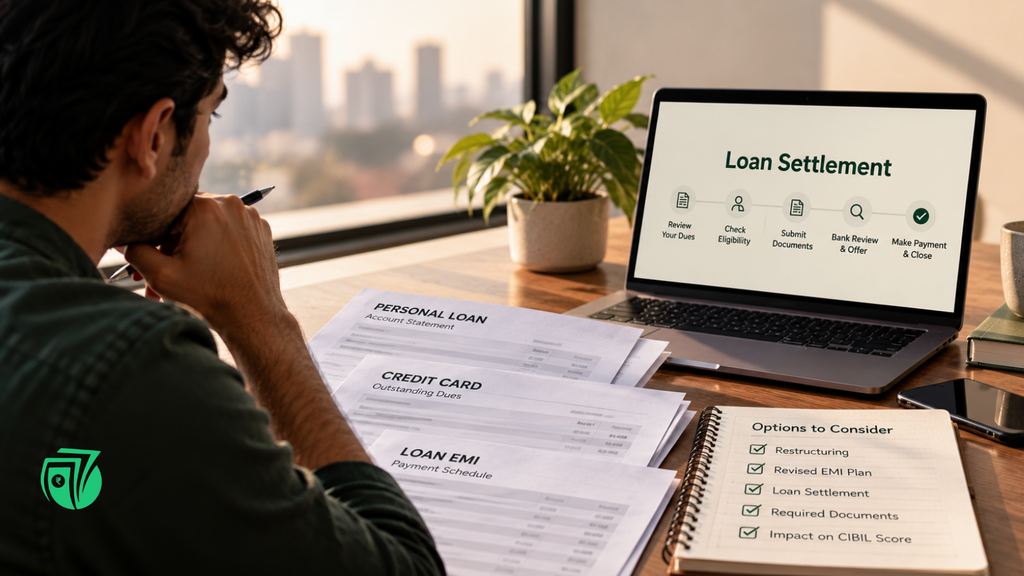
How to Apply for ICICI Bank Loan Settlement: Step by Step
If you’ve decided settlement is worth exploring, take it one step at a time. Rushing, or trusting a verbal promise over the phone, is where most borrowers get into trouble.
Step 1: Know exactly what you owe
Pull up your latest loan or credit card statement. Note the principal, interest, overdue amount and any penalties. You can’t negotiate well if you don’t know the starting number. Keep a copy.
Step 2: Be brutally honest about your finances
Sit down with your monthly income, rent, groceries, school fees, other EMIs — everything. Then work out what you could genuinely put towards a settlement without borrowing more or cutting into essentials. Offering an amount you can’t arrange will only backfire.
Step 3: Reach out to ICICI Bank directly
Contact the bank through its official customer care or visit your branch. Explain what happened and ask what options exist for your account — restructuring, a revised repayment plan, or a settlement. ICICI lists 1800 1080 as its customer care number on its official website; check you’re choosing the right option for your loan or card.
Step 4: Share the documents they ask for
The bank will likely want proof of your situation. Send accurate information, keep copies of everything, and ask for any further requirements in writing.
Step 5: Read the offer slowly — very slowly
If ICICI comes back with a proposal, don’t say yes on the spot. Check:
- The exact amount you have to pay
- The deadline and how payment must be made
- Whether it’s a lump sum or in instalments
- How your account and the remaining balance will be treated
- What documents you’ll get once you’ve paid
- Whether any other liabilities or recovery actions remain open
If something is said on a call but isn’t in writing, treat it as if it was never said.
Step 6: Pay only through official channels
Once you accept a written offer, pay exactly as it says, before the deadline, through ICICI’s official payment channels. Save every receipt. Never hand cash or transfer money to an “agent” who promises a guaranteed deal. Missing the deadline can undo the whole arrangement.
Step 7: Get your settlement letter
After payment, ask ICICI for your settlement confirmation. The bank’s official Debt Services page notes that credit card customers who have completed a settlement can request a settlement letter from customer service once the payment is verified. Store it safely — you may need it years from now.
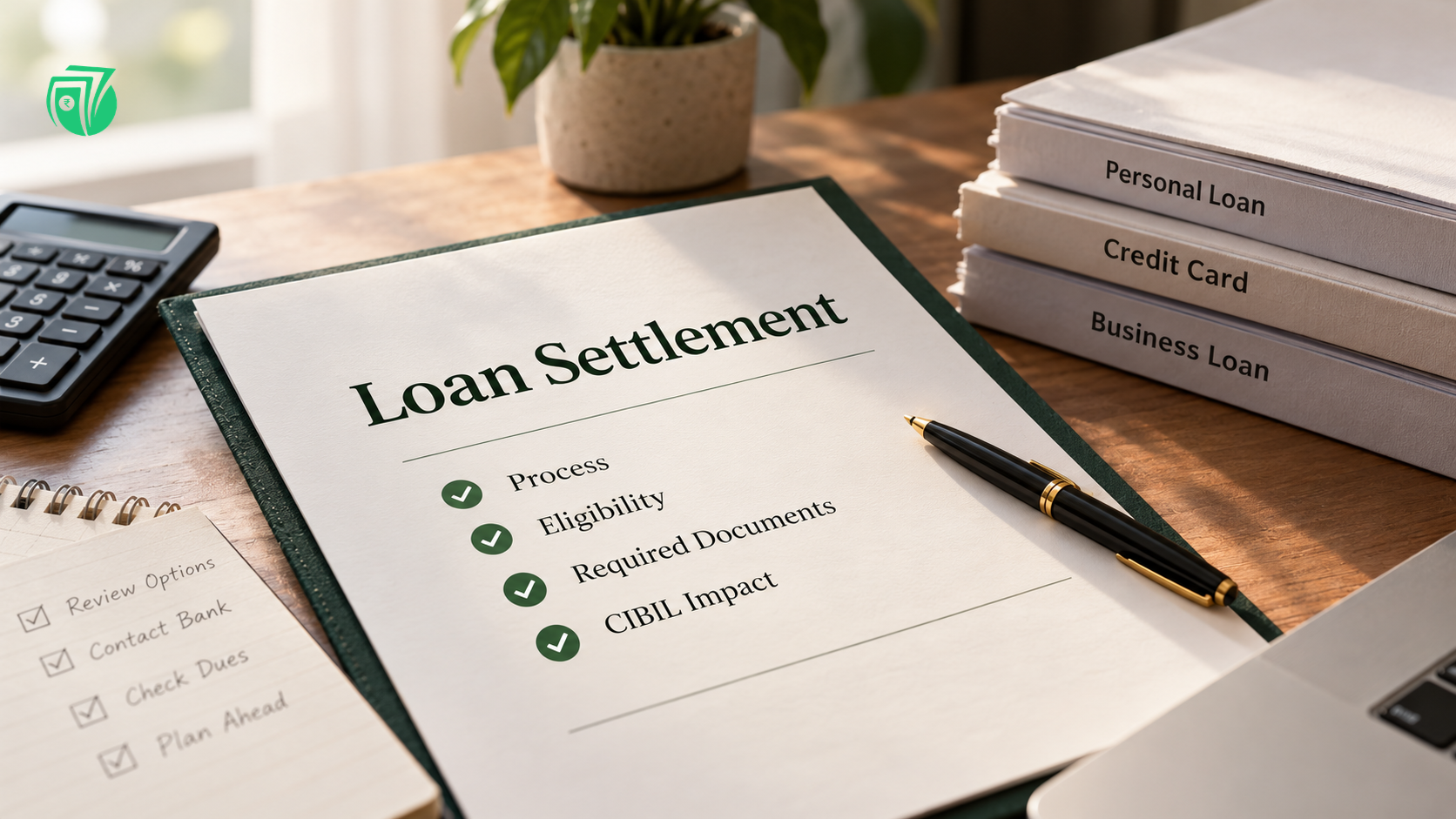
Documents You May Need
The exact list depends on your account and what the bank asks for, but it’s smart to keep these ready:
- PAN card and other ID proof
- Address proof, if asked
- Loan agreement or account details
- Latest loan or credit card statement
- Bank statements for the last few months
- Salary slips showing reduced income
- Termination or relieving letter, if you lost your job
- Hospital bills or medical records, for a health emergency
- Business accounts or GST returns showing losses, if you’re self-employed
Not every document applies to everyone. Ask ICICI what’s required for your specific account, and submit only through official channels.
How Much Will You Have to Pay?
This is the question everyone wants answered — and the honest answer is: it depends. There’s no standard percentage ICICI applies to every borrower.
If the bank does agree to settle, the amount usually reflects things like how much you owe, how the account has behaved so far, how strong your hardship case is, what other recovery options the bank has, and its internal settlement policy. The bank may accept your proposal, counter with its own number, or decline altogether.
You’ll probably come across people online — or agents on the phone — saying ICICI “always settles for 30–40%.” Be careful. What worked for someone else’s account says very little about yours, and anyone promising a fixed percentage can’t actually guarantee it.
Before you agree to any number, ask yourself two things: can I really arrange this amount by the deadline, and am I okay with the credit impact of settling instead of paying in full?
Will Settlement Hurt Your CIBIL Score?
Yes, it usually does — and it’s better to know that going in.
When a bank accepts less than what was owed, the account is typically reported as “Settled” instead of “Closed.” To a future lender, “Settled” quietly says: this person didn’t repay the full amount. That can make the next home loan, car loan or credit card harder to get, or more expensive.
How much your score drops, and how long it takes to recover, varies from person to person. Anyone quoting you an exact number of points is guessing.
Rebuilding after settlement
A settled account isn’t the end of your credit life. It just means the next few years matter more. Here’s what helps:
- Keep your settlement letter and payment receipts safe.
- Check your credit report a few weeks after settlement to see how the account is reported.
- If something looks wrong, raise a dispute with the bank and the credit bureau.
- Pay every other EMI and card bill on time, every time.
- Don’t take on new debt your income can’t comfortably handle.
- Apply for fresh credit only when you genuinely need it.
ICICI Bank also lists a Credit Builder Program on its Debt Services page. It’s meant for customers who want to pay the overdue or waived amount from an earlier settled relationship and then apply for a secured credit card against a fixed deposit, subject to the bank’s conditions. It’s worth asking about — though it doesn’t guarantee approval or a specific score improvement.
Settlement vs Restructuring vs Closure: Which One Fits You?
Settlement isn’t the only door. Depending on how bad things are, one of these might suit you better:
| Option | What it means | Keep in mind |
|---|---|---|
| Full closure | You repay everything you owe | Best for your credit, if you can afford it |
| Loan restructuring | The bank changes your EMI or tenure so it’s easier to pay | Needs bank approval; total cost may go up |
| Debt consolidation | You merge several debts into one new loan | Needs eligibility; check the overall cost carefully |
| Loan settlement | The bank accepts a lower agreed amount to resolve the account | Usually hurts your credit profile |
A simple way to think about it: if your problem is temporary — a few tight months — ask about restructuring or a revised repayment plan first. If you truly can’t repay the full amount, then ask whether settlement is possible.
Don’t just chase the smallest number. Pick the option that matches what you can actually pay and what you can live with long term.
What to Do Once the Settlement Is Done
Paying the amount feels like the finish line, but there are a few loose ends worth tying up:
- Get it in writing. Collect the settlement letter or confirmation promised in your agreement.
- Save your payment proof. Receipts, transaction IDs, emails — keep them all, digitally and on paper.
- Check your credit report. Make sure the account status and balance match what was agreed.
- Fix any mistakes. If something’s off, contact ICICI and the credit bureau right away.
- Reset your budget. Build a plan that doesn’t rely on new loans to cover everyday expenses.
A settlement closes the chapter with ICICI on agreed terms. It doesn’t fix your credit score overnight — that part comes from what you do next.
Frequently Asked Questions
Does ICICI Bank offer loan settlement?
It can. ICICI may consider a settlement for genuinely distressed accounts under its own policy, but approval and the amount are never guaranteed.
Can I settle my ICICI personal loan?
You can ask. Contact the bank, explain your situation with proof, and ask whether a compromise settlement can be considered for your account.
Can I settle my ICICI credit card dues?
Yes, you can raise it through official channels. Any settlement depends on the bank’s approval and written terms.
I’ve lost my job. Will ICICI settle my loan?
Job loss strengthens a hardship case, but it doesn’t guarantee a yes. Expect the bank to ask for documents and review your account individually.
Is a loan settlement the same as a loan waiver?
No. A settlement is a negotiated deal with specific terms. A waiver is a different concept, and you shouldn’t assume one applies just because a settlement was approved.
Will settlement affect my CIBIL score?
Most likely, yes. A “Settled” account is viewed less favourably than a “Closed” one, though the exact impact varies.
Can ICICI reject my settlement request?
Yes. Settlement isn’t a right. The bank can review your request and decide not to approve it.
What should I keep after settling?
Your settlement letter, all payment receipts and any written communication. Then check your credit report to confirm everything is reported correctly.
The Bottom Line
ICICI Bank loan settlement can genuinely help when you’re stuck — but it’s a negotiation, not a shortcut. Know your numbers, talk to the bank through official channels, compare it with restructuring and other options, and never pay a rupee until the terms are in writing.
Most importantly, go in knowing the trade-off. Settlement may ease the pressure today, but it can shape your credit for years. That’s a decision worth making with a clear head.
Not sure which option is right for you?
Talking it through with someone who understands how loan settlement works in India can make a big difference. At TrueSettle, we help borrowers understand their financial position, weigh their options honestly, and decide on a way forward that actually fits their life.
Understand. Resolve. Move Forward.
Disclaimer: This article is for general information only and is not legal, financial or credit advice. Settlement eligibility, amounts, documents and terms depend on the lender’s policies and individual assessment. TrueSettle does not guarantee any settlement or credit score outcome. For account-specific information, please contact ICICI Bank through its official channels.