Nobody takes a loan planning to miss EMIs. It just happens, slowly. A bonus doesn’t come through, so the credit card bill gets paid in part. Then a parent falls ill and the personal loan EMI bounces. A few months later, you’re avoiding calls from numbers you don’t recognise and your stomach drops every time an SMS from HDFC Bank lands.
If you’re there right now, hear this first: it doesn’t make you a bad person. Most people who fall behind are honest borrowers whose plans got knocked over by a job loss, an illness or a business that didn’t work out.
Sooner or later, many of them search for the same thing: HDFC Bank loan settlement. Is it real? Will the bank agree? What does it cost you? This guide answers all of that in plain words. It covers:
- what settlement actually means
- who usually qualifies
- what to try before settling
- how the process works, step by step
- which documents you’ll need
- what happens to your CIBIL score afterwards
The Short Answer, in Five Points
- Yes, HDFC Bank can settle loans. It’s usually called a One-Time Settlement (OTS) or compromise settlement, and RBI rules allow banks to do this.
- It usually comes up only after a long default. Often this is once the account has become an NPA, meaning unpaid for more than 90 days.
- Every case is judged on its own. There’s no fixed discount and no guarantee that HDFC Bank will say yes.
- Your credit report will show “Settled,” not “Closed.” That can make new loans and cards harder to get for a while.
- Treat it as the last option. Ask about restructuring or other relief first.
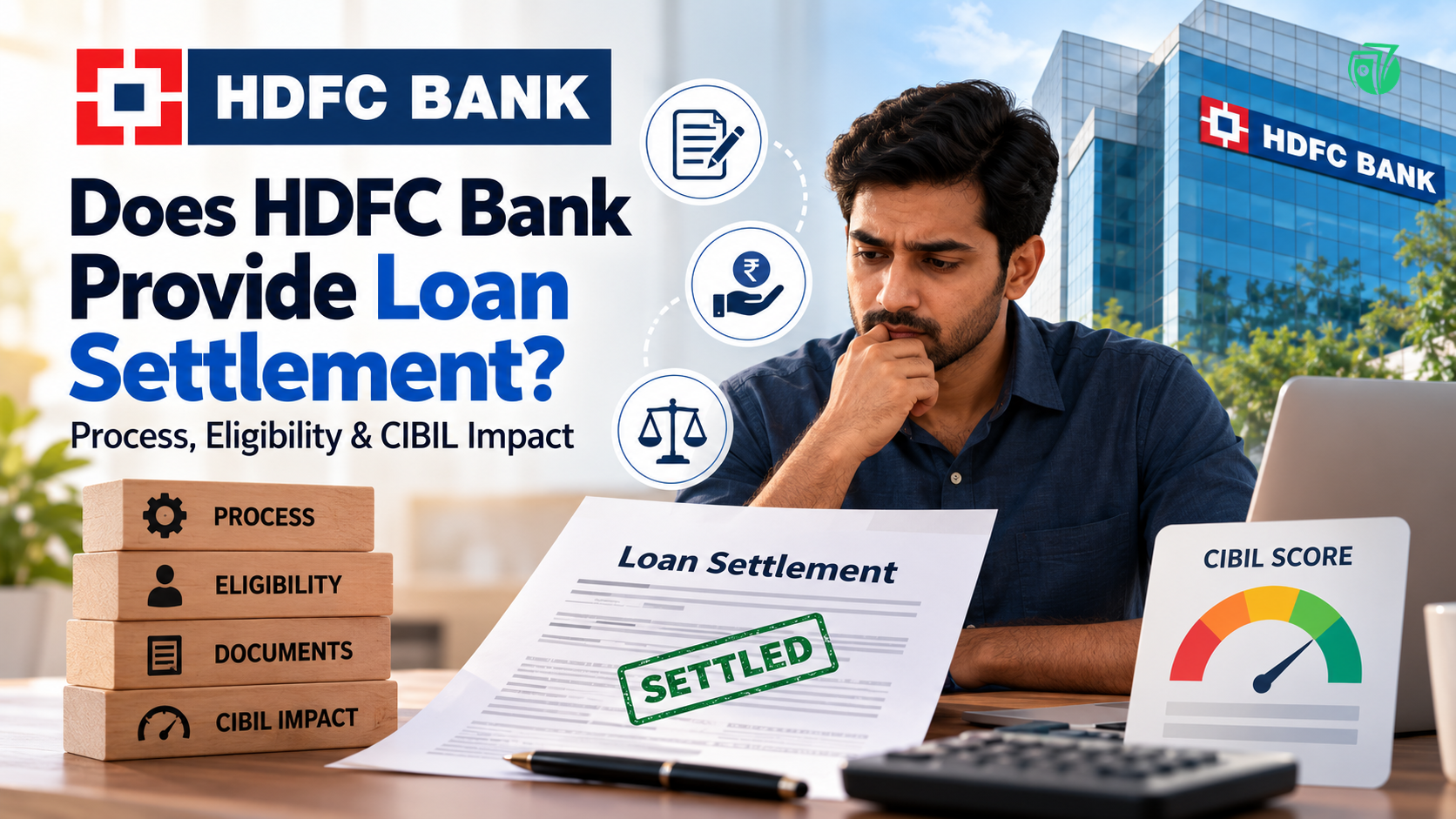
[Featured image here. Alt text: HDFC Bank loan settlement guide for borrowers]
What Is HDFC Bank Loan Settlement?
When you take a loan, you promise to repay all of it, with interest. Sometimes life makes that impossible. A loan settlement is when the bank agrees to accept a smaller final amount instead. You pay that amount within the agreed time, and HDFC Bank stops chasing you for the rest.
A Simple Example
Amit worked at a logistics firm in Jaipur and had taken a ₹3 lakh personal loan from HDFC Bank. Then the firm cut half its staff, and Amit was one of them. He paid EMIs from his savings for a few months, but by the fifth month the account was empty. With interest and late charges, his dues kept growing.
Amit wrote to the bank and explained what had happened, with his termination letter and bank statements attached. After reviewing his case, HDFC Bank may offer to close the account for a reduced amount, payable by a fixed date.
This is only an illustration. Whether HDFC Bank agrees, and by how much it reduces the dues, depends completely on your own case.
Why Would a Bank Agree to Take Less?
When a loan stays unpaid for more than 90 days, RBI rules require the bank to classify it as an NPA, or Non-Performing Asset. In simple words, the bank now accepts it may not recover all its money.
At that stage, getting a good part of the money back quickly can make more sense for the bank than spending years and legal fees chasing the full amount. That’s why the RBI’s Framework for Compromise Settlements, issued on 8 June 2023, allows banks to settle loans under their own Board-approved policies.
So settlement is a recognised, legal process. It isn’t a loophole or a trick.
“Settled” vs “Closed”: The Difference That Follows You
- Closed means you repaid every rupee. Your credit report stays clean.
- Settled means the bank accepted less than the full amount, and every future lender can see that.
That one word can affect your chances of getting loans and credit cards for years. That’s exactly why settlement should never be treated as a shortcut.
Who Is Eligible for HDFC Bank Loan Settlement?
HDFC Bank doesn’t settle a loan just because a borrower asks. It looks at the full picture. These are the things that usually decide it.
1. Your Account Is Badly Overdue
If your EMIs or card payments are running on time, settlement is normally off the table. The conversation usually starts only after a long default, often once the account becomes an NPA. Even then, NPA status alone doesn’t mean approval.
2. There’s a Genuine Reason You Stopped Paying
The bank will want to know why the payments stopped. Reasons it takes seriously include:
- losing your job, or a sharp fall in income
- a serious illness or medical emergency in the family
- the death of the family’s main earner
- a business that made heavy losses or had to shut down
Expect HDFC Bank to check your bank statements, salary slips or ITRs to confirm the hardship.
3. You Can’t Pay, Not That You Won’t
This is the line banks draw most firmly. A borrower who has the money but refuses to repay is unlikely to be offered settlement, and may face recovery or legal action instead. Settlement is meant for people who are genuinely stuck.
Courts in India have also made it clear that a borrower cannot demand a one-time settlement as a right. It is always the bank’s decision.
4. What Kind of Loan It Is
Unsecured products, like HDFC personal loans and HDFC Bank credit cards, are the ones most often settled.
Home loans, car loans and loans against property are treated differently, because the bank can recover its money by selling the asset. Ask HDFC Bank how your particular loan will be handled.
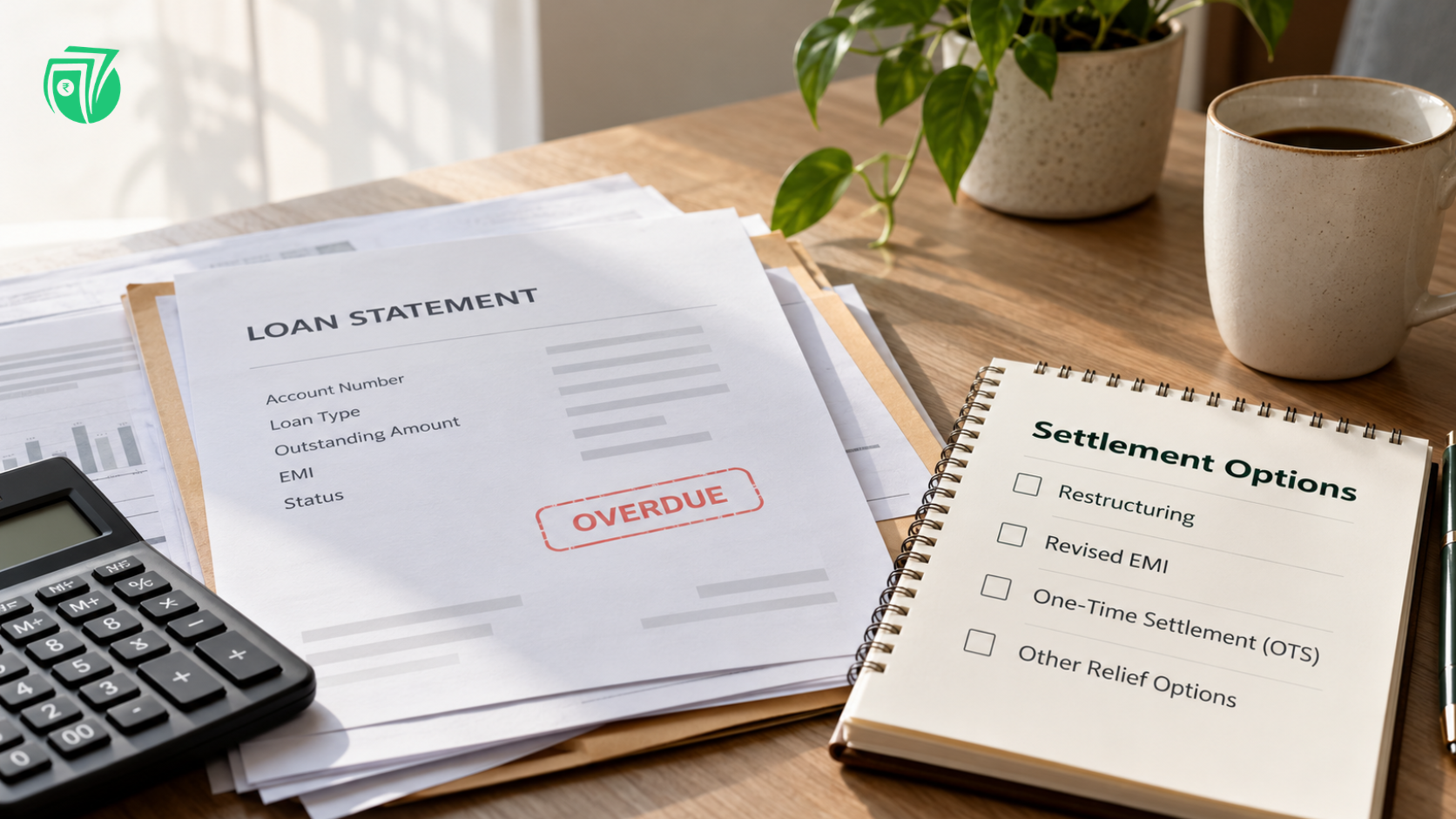
Try These Options Before You Settle
Think of settlement as the last door in the corridor. Before you knock on it, check whether one of these could work for you instead.
Restructuring Your EMI
Ask HDFC Bank whether it can stretch your loan over a longer tenure so your monthly EMI comes down. You still repay everything, just more slowly. This suits people whose income has dropped but not stopped. The big plus: your credit report won’t carry a “Settled” tag.
Converting Card Dues Into EMIs
If your problem is an HDFC credit card bill that keeps growing, ask whether the outstanding can be converted into a fixed EMI plan. Card interest is very high, so a structured plan can stop the balance from snowballing. Ask for the interest rate and total cost in writing first.
Short-Term Relief
Your trouble may be temporary, for example if you’re between jobs. In that case, ask whether the bank can offer a temporary payment arrangement. Interest usually keeps running during this time, so get the total cost in writing before you agree.
Paying Part of the Overdue Amount
If you have some savings, or money coming in soon, clearing part of the overdue amount can ease the pressure. It also shows the bank you’re serious about repaying, which helps in any later conversation.
Lok Adalat
Banks, including private banks like HDFC, often take unpaid loan cases to Lok Adalat, a “people’s court” run by the Legal Services Authorities. You and the bank sit before a panel and try to agree on a solution. If both sides agree, the result is final, works like a civil court decree, and can’t be appealed.
If you get a Lok Adalat notice, don’t panic and don’t skip it. Go with your documents. It can be one of the quickest and fairest ways to close the matter.
If none of these options fit your situation, settlement may be the right path.
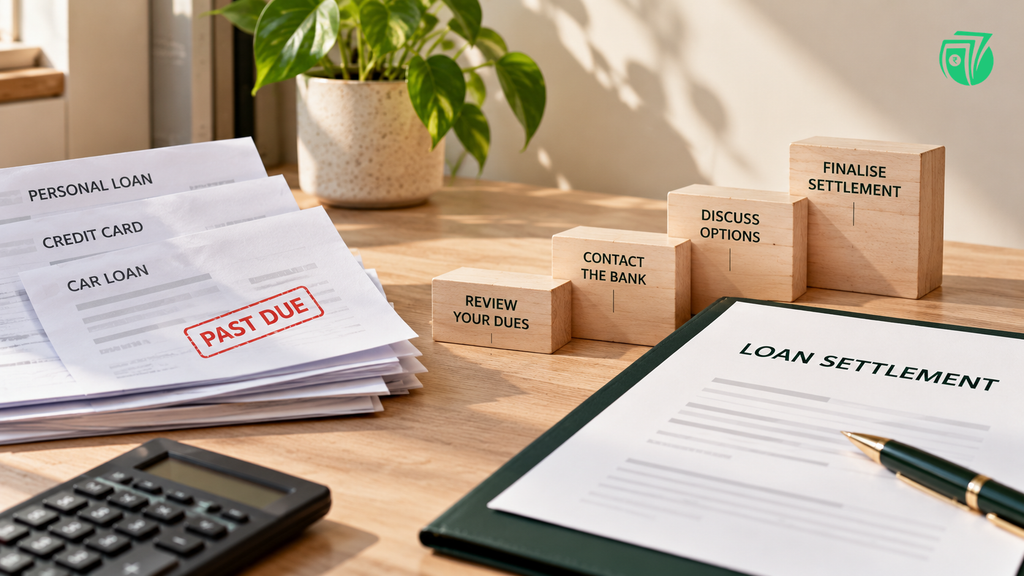
HDFC Bank Loan Settlement Process: Step by Step
Here’s how the process usually works, from your first contact with the bank to the final certificate.
Step 1: Know Exactly Where Your Account Stands
Check your account through HDFC Bank NetBanking, the MobileBanking app, your branch or official customer care. Find out three things:
- how long the loan or card has been overdue
- whether it’s already been classified as an NPA
- the exact outstanding amount, including interest and charges
Don’t rely on figures a recovery agent gives you over the phone.
Step 2: Be Honest With Yourself About Your Finances
Write down your monthly income, your must-pay expenses, and every other EMI or debt you have. This tells you whether settlement is really needed, and how much you can realistically offer.
Step 3: Get Your Papers Together
Keep your ID, bank statements, income proof and proof of hardship ready. There’s a full checklist in the next section.
Step 4: Put Your Request in Writing
Reach out through HDFC Bank’s official contact channels: your branch, customer care or the bank’s email and online request options. Hand over or send a simple written application that mentions:
- your name and loan or card account number
- why you couldn’t keep paying
- your current income and financial situation
- the amount you can pay, if you already know it
- a request to consider your account for One-Time Settlement (OTS)
Always ask for an acknowledgement or service request number, and keep a copy for yourself.
Step 5: Give the Bank Time to Review
Depending on the amount, your request may need approval from senior officers. There’s no fixed timeline, so follow up politely. While you wait, never make informal cash payments to anyone.
Step 6: Read the Offer Letter Line by Line
If HDFC Bank agrees, you’ll receive a written settlement letter. Check:
- the exact settlement amount
- the last date to pay
- whether it’s one payment or instalments
- what happens to the rest of the dues
- how the account will be reported to CIBIL
The bank may ask for part of the money upfront and the rest within a set period. Make sure you can meet every date before you accept. If you miss a deadline, the bank can cancel the settlement, and the full dues can come back.
Step 7: Pay Only Through HDFC Bank’s Official Channels
Pay exactly as the letter says, directly to HDFC Bank. Never give cash to an agent or transfer money to a personal account. Keep every receipt.
Step 8: Collect Your NOC and Check Your CIBIL Report
Once you’ve paid the full settlement amount, ask for a settlement completion letter or No Objection Certificate (NOC). This is your proof that the matter is closed, so keep it safe forever.
After 30 to 60 days, check your CIBIL report. The account should show as “Settled.” If anything looks wrong, contact HDFC Bank and raise a dispute with CIBIL.
The one rule to remember: don’t pay a single rupee until HDFC Bank’s written settlement offer is in your hands.
Documents You’ll Need
Walking in prepared saves time and shows the bank you’re serious. Keep these ready:
- PAN card and Aadhaar card
- loan account number or credit card number, and the loan agreement
- bank statements for the last 6 to 12 months
- salary slips, ITRs or other income proof
- termination or relieving letter, if you lost your job
- hospital bills and medical records, if there was a medical emergency
- proof of business loss, if you’re self-employed
- your written settlement application
- copies of earlier letters, notices or emails from HDFC Bank
HDFC Bank may ask for more, depending on your case. Share documents only through verified bank channels.
HDFC Personal Loans vs HDFC Credit Cards: What’s Different?
The basic idea of settlement is the same for both, but a few things work differently.
HDFC personal loan settlement. Your dues are the unpaid principal plus interest and late charges. Requests are usually handled by the loans and collections side of the bank. Your loan account number is the key reference in every letter.
HDFC Bank credit card settlement. Card dues grow much faster because of high interest and late fees. That’s why many card holders reach a point where the outstanding is far larger than what they originally spent. HDFC Bank issues its own credit cards, so requests go to its card services and collections channels.
What About Special Settlement Schemes?
Unlike some public sector banks, HDFC Bank doesn’t widely publicise named settlement drives. Settlement is generally handled case by case under the bank’s internal policy.
A few things to keep in mind:
- Ignore WhatsApp forwards or social media posts claiming a “special HDFC OTS offer” with fixed discounts.
- Any genuine offer will come from the bank in writing, through its official channels.
- Confirm everything with HDFC Bank directly before you plan anything.
Before you start, ask the bank four questions:
- Is my account eligible to be considered for settlement?
- How will the settlement amount be worked out?
- Can I pay in instalments, or only in one go?
- How will the account be reported to the credit bureaus?
Got a Legal or Arbitration Notice? Respond, Don’t Hide
When a loan or card stays unpaid, the bank may move from phone calls to formal recovery. Private banks often use arbitration for unsecured loans, so you might receive a legal notice, a Lok Adalat summons or an arbitration notice.
The worst thing you can do is put that envelope in a drawer. If you don’t respond to arbitration, it can go ahead without you. This is called an ex-parte proceeding.
The final decision, called an award, may then go fully in the bank’s favour for the whole outstanding amount, plus interest and costs. Under the Arbitration and Conciliation Act, 1996, such an award can be enforced like a court decree. That can include action against your bank account or assets.
So if a notice arrives, reply within the time given. Explain your financial difficulty honestly and, where possible, propose a settlement. At this stage, it’s wise to get proper legal advice.
What Settlement Does to Your CIBIL Score
This is the part most people underestimate, so please read it slowly.
After a settlement, HDFC Bank usually reports your account as “Settled” rather than “Closed.” To any future lender, that quietly says: this borrower didn’t repay the full amount. (CIBIL explains settled status here.)
Here’s what that can mean:
- Your score will likely fall. How much depends on the rest of your credit history. Anyone who quotes you an exact number is guessing.
- The record stays visible for years. Lenders will see the settled status for a long time.
- New credit gets harder. Many banks hesitate to approve loans or cards for someone with a settled account.
- You may pay more for credit. Even if you’re approved, the interest rate may be higher.
- There’s a waiting period too. Under the RBI framework, banks must observe a cooling period before lending again to a borrower who settled. For most non-farm loans this is at least 12 months, and banks can set a longer one.
Still, keep the other side in view. Picture a loan left unpaid for years, with interest piling up, constant recovery calls and legal action hanging over you. That damages your credit, and your peace of mind, far more.
How to Rebuild Your Credit After Settlement
Your score can recover with time and steady habits:
- Pay every remaining EMI and bill on time, every month.
- Keep your credit card usage low.
- Don’t apply for several loans or cards at once.
- Consider a secured credit card against a fixed deposit to build a fresh repayment record.
- Check your credit report regularly for mistakes.
- If you later pay the waived amount, ask HDFC Bank whether your status can be changed from “Settled” to “Closed.”
Be wary of anyone who offers to “remove” a settled status for a fee. A credit report can only be corrected based on facts the bank confirms.
HDFC Bank Settlement Routes Compared
| Route | What it means | Best suited for | Effect on credit report |
|---|---|---|---|
| Restructuring | Lower EMI over a longer tenure; full loan repaid | Income has dropped but not stopped | No “Settled” tag |
| Card EMI conversion | Credit card dues turned into a fixed EMI plan | Card holders who can pay in instalments | No “Settled” tag if paid as agreed |
| One-Time Settlement (OTS) | Bank accepts a reduced final amount, case by case | Long-overdue or NPA accounts with genuine hardship | Shown as “Settled” |
| Lok Adalat | Agreement before a people’s court panel; final, no appeal | Cases the bank refers to Lok Adalat | Depends on the agreed terms |
Which route fits you depends on your loan, how long it has been overdue, and HDFC Bank’s decision at the time.
Being in Debt Doesn’t Take Away Your Rights
Missing EMIs gives no one the right to harass you. Under RBI rules:
- Recovery agents must carry ID and an authorisation letter from the bank.
- They cannot threaten, abuse or humiliate you or your family.
- They should call only between 8 am and 7 pm.
If an agent crosses the line, complain to HDFC Bank in writing and follow its grievance redressal process. If it isn’t resolved within 30 days, or you’re unhappy with the reply, file a complaint on the RBI’s CMS portal (cms.rbi.org.in) under the Integrated Ombudsman Scheme.
You owe the bank money. You don’t owe anyone your dignity.
Practical Tips for a Smooth Settlement
- Put everything on paper. A verbal promise from an agent or an officer means nothing until it’s written down.
- Keep a record of every interaction. Note the date, the person’s name, the reference number and what was discussed.
- Don’t borrow from loan apps or moneylenders to pay the settlement. You’ll only walk into a new, costlier debt trap.
- Treat the deadline as sacred. Missing it can cancel the whole deal.
- Guard your NOC. It’s your proof if a dispute ever comes up, even years later.
- Check your CIBIL report afterwards. Make sure the account is reported exactly as agreed.
How TrueSettle Can Help
Debt stress is lonely. Most people carry it quietly for months, too embarrassed to tell even their family, before they ask anyone for help.
At TrueSettle, we sit down with you and understand your full financial picture. We help you put the right documents together and plan how to approach HDFC Bank with a clear, realistic proposal. If settlement isn’t the best route for you, we’ll tell you honestly, and suggest what might work better.
What we won’t do is promise that HDFC Bank will approve a settlement, or guarantee a particular amount. No honest adviser can. What we can promise is that you’ll walk into that conversation prepared, calm and confident.
Struggling with your HDFC Bank loan or credit card? Talk to the TrueSettle team today and find out where you stand.
Frequently Asked Questions
1. Does HDFC Bank provide loan settlement?
Yes. HDFC Bank can settle loans and credit card dues through One-Time Settlement (OTS) or compromise settlement, as allowed by the RBI. Approval depends on your case.
2. How many EMIs do I need to miss before HDFC Bank considers settlement?
There’s no set number. The conversation usually starts after a long default, often once the account becomes an NPA (unpaid for more than 90 days). Even then, settlement isn’t automatic.
3. Can I approach HDFC Bank for settlement myself?
Yes. You can contact the bank directly through its official channels with a written request and documents. Some borrowers prefer help from a debt adviser to prepare their case.
4. How much discount does HDFC Bank give?
There’s no fixed discount. It depends on:
- your outstanding dues
- how long the account has been unpaid
- your financial situation
- HDFC Bank’s policy at the time
5. Can HDFC Bank reject my settlement request?
Yes. It’s the bank’s decision, and courts have confirmed that a borrower can’t demand settlement as a right.
6. Will settlement hurt my CIBIL score?
Yes. The account will usually show as “Settled.” This lowers your score and makes new credit harder to get for a while.
7. Is HDFC credit card settlement different from personal loan settlement?
The idea is the same, but card dues grow faster because of high interest and late fees. Ask the bank whether converting the dues into an EMI plan is possible before you consider settlement.
8. What happens if I ignore an arbitration notice from HDFC Bank?
The proceedings can continue without you, and the award may go fully in the bank’s favour. It can then be enforced like a court decree. Always respond on time.
9. Can I get a loan again after settling with HDFC Bank?
Yes, but it takes time. Banks observe a cooling period of at least 12 months for most loans, and lenders may charge higher interest. A clean repayment record over time improves your chances.
Disclaimer: This article is for general information only and is not financial or legal advice. Whether HDFC Bank approves a settlement, and on what amount and terms, depends on the bank’s policies and your individual case. The example above is illustrative. Please confirm all details directly with HDFC Bank before making any payment.