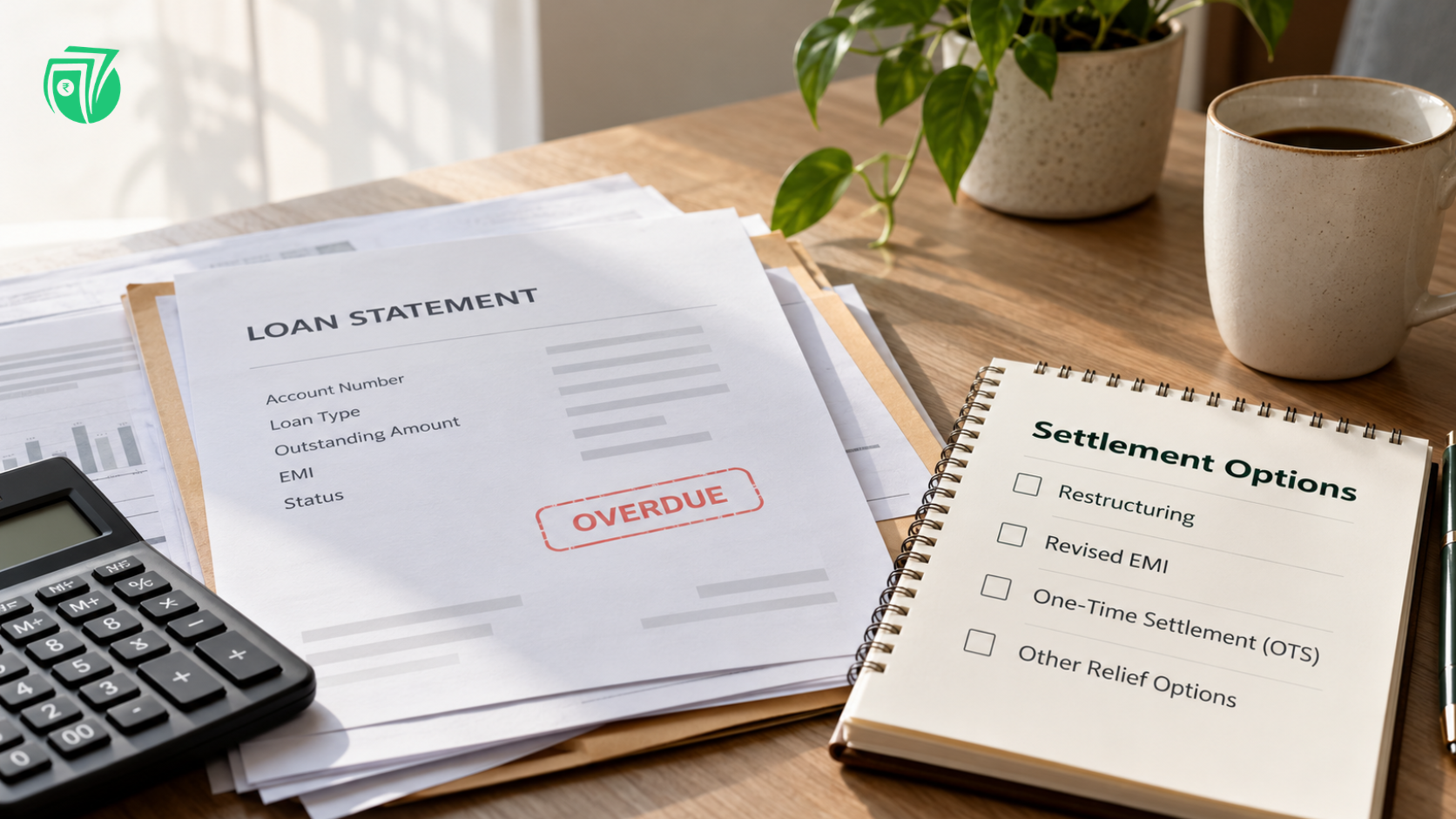
Let’s start with a situation many people will recognise. You took a personal loan or used your HDFC credit card, everything was on track, and then life happened. A job loss. A hospital bill. A business month that never recovered. Now the EMI date feels like a weight on your chest, and the calls have started.
Somewhere in the middle of all this, you’ve probably typed one question into Google: does HDFC Bank provide loan settlement?
Here’s the honest answer. Yes, you can approach HDFC Bank to discuss your repayment difficulty and ask whether a settlement can be considered. But settlement is not automatic, and it is not guaranteed. The bank looks at each case on its own — your account, your situation and its own policies.
That’s why it helps to understand the full picture before you pick up the phone. In this guide, we’ll walk you through what HDFC loan settlement actually means, who may be considered, the step-by-step process, the documents to keep ready and — most importantly — what it can do to your CIBIL score. No jargon, no false promises.
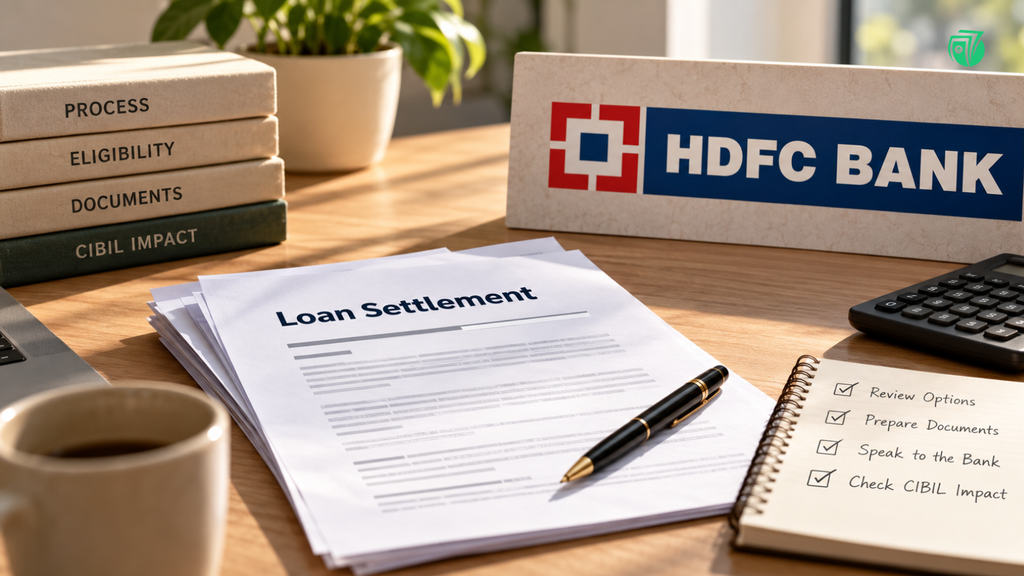
What Is HDFC Bank Loan Settlement, Really?
In simple words, loan settlement is when the bank agrees to close your outstanding dues by accepting an amount that may be lower than what you technically owe. It’s usually a one-time arrangement, and it’s meant for people who genuinely can’t repay the full amount.
Let’s take an example. Say Rohit, a sales executive in Pune, has ₹2,00,000 outstanding on his personal loan after losing his job. If the bank agrees in writing to accept ₹1,20,000 as full and final settlement, Rohit has to pay exactly as per those written terms to complete it.
This is only an illustration. It is not an HDFC Bank offer, and it doesn’t predict what the bank would accept in your case.
One thing people often mix up: settlement is not the same as restructuring.
- Restructuring changes how you repay — for example, a longer tenure or a smaller EMI — but you still repay what you owe.
- Settlement closes the account by agreeing on a final amount, which may be less than the full dues.
HDFC Bank publicly shares information about loan restructuring. Whether settlement is available for your specific account is something you need to confirm directly with the bank.
Does HDFC Bank Settle Personal Loans and Credit Cards?
It depends on the product and on your account. Not every overdue account is offered a settlement, so it helps to know what kind of debt you’re dealing with.
HDFC personal loan settlement
Personal loans are unsecured, which means there’s no collateral involved. If your EMIs have become unmanageable, reach out to the bank and explain what changed in your life. You can ask about repayment support, restructuring, or whether a settlement proposal could be looked at.
Be ready to explain clearly why the current EMI doesn’t work for you anymore — and to back it up with proof if asked.
HDFC credit card settlement
Credit card dues can snowball quickly. One missed payment brings late fees, interest piles up, and a ₹50,000 balance can start looking very different in a few months.
If you can’t clear your HDFC credit card dues, contact the bank through its official channels and ask what options exist for your card account. Just don’t assume a settlement will be offered simply because payments are overdue.
Home loans, car loans and other secured loans
Secured loans work differently because there’s an asset — your house or vehicle — linked to the loan. The consequences of default and the options available may not be the same as for a personal loan or credit card. Check the terms of your specific loan with the bank before deciding anything.
Who May Be Considered for HDFC Loan Settlement?
HDFC Bank doesn’t publish a simple checklist that guarantees settlement approval, and anyone who says otherwise is guessing. The bank decides case by case.
What usually matters is whether you’re facing genuine financial hardship. Situations like these help explain why you’re asking for help:
- Job loss or a pay cut — your income has dropped and the EMI no longer fits.
- Medical or family emergency — a big, unexpected expense has wiped out your savings.
- Business losses — your shop, practice or business isn’t earning what it used to.
- Too many debts at once — several EMIs and card bills are eating up your whole salary.
- Long-running repayment trouble — you’ve been struggling for months and can’t see a way to repay in full.
Please note: these are examples of hardship, not official HDFC Bank eligibility rules.
When reviewing your request, the bank may look at your repayment history, outstanding balance, account status and supporting documents. Approval, the final amount and the payment terms all remain the bank’s decision.
A quick self-check before you ask for settlement: if a smaller EMI or a longer tenure would let you keep paying, restructuring might be the better route to explore first. It’s usually kinder to your credit history.
How to Request HDFC Bank Loan Settlement: Step-by-Step
The golden rule here is simple: keep everything documented. Verbal promises over the phone mean very little if something goes wrong later.
Step 1: Know exactly what you owe
Download or request your latest loan or credit card statement. Look at the principal, interest, late fees and penalties separately. You can’t have a meaningful conversation with the bank if you don’t know your own numbers.
Step 2: Reach out through official channels only
Contact HDFC Bank’s official customer care, the loan servicing or collections team, or visit your branch. Explain honestly that you’re facing financial hardship and can’t keep up with the current repayments. Then ask what options are available for your account — and whether settlement can be considered.
Step 3: Put your request in writing
Write a short, clear letter or email explaining what happened — when your income dropped, what expenses came up, and what you can realistically pay. Share account details only through the bank’s secure, official process.
Don’t offer an amount you can’t actually arrange. A broken settlement promise can leave you worse off than before.
Step 4: Share supporting documents
The bank may ask for proof of your situation — salary slips, bank statements, a termination letter, medical bills or business records. Send only what’s asked for, through official channels, and keep copies of everything.
Step 5: Read the bank’s response carefully
The bank may suggest a revised repayment plan, offer a settlement, or decline. If there’s an offer, check the amount, the due dates and what happens if a payment is missed. A WhatsApp message or a phone call is not a final agreement.
Step 6: Get the settlement letter before you pay a single rupee
Ask for an official settlement letter from HDFC Bank. It should clearly mention your account, the agreed amount, the payment deadline and the conditions under which the account will be treated as settled. If anything is vague, ask for clarification in writing.
Step 7: Pay the right way and keep proof
Pay only through a method the bank officially accepts, to the account mentioned in its written instructions. Never pay into someone’s personal account because an agent asked you to.
Once you’ve paid, ask for written confirmation that the account is settled. A few weeks later, check your credit report to see whether the update has gone through.
Documents Required for HDFC Bank Loan Settlement
There’s no one-size-fits-all list — the bank will tell you what it needs. But keeping these ready will make your conversation much smoother.
Loan and account papers
- Latest loan or credit card statement
- Repayment history and record of payments already made
- Any notices, emails or letters received from the bank
- ID and address proof, only if the bank asks through an official channel
Proof of financial hardship
- Recent salary slips or income records
- Bank statements for the last few months
- Termination or relieving letter, if you lost your job
- Medical bills or hospital records, if an emergency hit your finances
- Business income records, if your business is struggling
- A simple note of your monthly income, essential expenses and existing EMIs
Think of this as a preparation checklist, not an official HDFC Bank list. Always confirm the exact requirements with the bank.
How Does HDFC Loan Settlement Affect Your CIBIL Score?
This is the part most people only think about after the deal is done. Please think about it before.
“Settled” is not the same as “Closed”
When you repay a loan in full, your credit report usually shows the account as “Closed.” When the bank accepts less than the full amount under a settlement, the account may show up as “Settled.”
To a future lender, “Closed” says this person repaid everything. “Settled” says this person couldn’t repay in full, and the bank accepted less. That difference matters when you apply for credit again.
Your score and future applications can take a hit
A settled account can be seen as a negative mark. Some lenders may hesitate to approve a new loan or credit card; others may look at your overall profile and circumstances.
How much your CIBIL score is affected can’t be predicted for every borrower. It depends on your existing credit history, other active accounts, past repayment behaviour and how the account is reported. Be wary of anyone who promises a specific score drop — or claims settlement will have no impact at all.
Rebuilding is possible, but it takes time
A settled account isn’t the end of your credit life. Pay every remaining EMI and card bill on time, avoid taking on new debt you don’t need, and keep an eye on your credit report. There’s no fixed recovery timeline, but steady, responsible behaviour does count.
Check that your report is updated correctly
After settlement, keep the bank’s confirmation letter and payment proof safe. Pull your CIBIL report and make sure the account status and balance match what was agreed. If something looks wrong — say, it still shows an outstanding amount — raise it with HDFC Bank and the credit bureau, with your documents attached.
HDFC Loan Settlement vs. Restructuring vs. Loan Closure
Settlement isn’t the only door, and it isn’t always the best one. Here’s how the three compare:
| Factor | Loan settlement | Loan restructuring | Loan closure |
|---|---|---|---|
| What it does | Ends the debt at an agreed final amount | Makes repayment easier with revised terms | Ends the debt after full repayment |
| What you pay | The settled amount, as per written terms | Full dues, spread out differently | Full amount due |
| Guaranteed? | No — bank’s decision | No — bank’s decision | Not applicable |
| Credit report status | May show “Settled” | May show “Restructured” | Usually “Closed” |
| Works best for | Those who truly can’t repay in full | Those who can pay with a lighter EMI | Those who can repay everything |
If you can manage repayment with revised terms, ask HDFC Bank about restructuring before jumping to settlement. HDFC’s own published information says restructuring requests are evaluated based on factors like repayment viability and account details.
What to Check Before Accepting a Settlement Offer
An offer on the table can feel like relief. Take a breath and check these first:
- Is it really from HDFC Bank? Confirm the offer came through an official bank channel, not just an agent’s phone call.
- Have you read the whole letter? Check the amount, every deadline and the conditions for closure.
- What if you miss a payment? Understand what happens to the remaining dues if a deadline slips.
- How will it be reported? Ask how the account will appear on your credit report once you’ve paid.
- Is the payment traceable? Pay only to the bank’s verified account and keep every receipt.
- Do you have the final confirmation? Keep the settlement letter, payment proof and the bank’s closing confirmation together, safely.
One more thing: if you receive a legal notice or any court-related communication, don’t ignore it. Speak to a qualified legal professional about your specific situation.
How TrueSettle Can Help You Understand Your Options
When EMIs pile up and the calls don’t stop, it’s hard to think clearly about what to do next. Should you ask for settlement? Push for restructuring? Try to arrange the full amount?
At TrueSettle, we help borrowers make sense of exactly that. We look at your current dues, your real repayment capacity, the alternatives available and what each path could mean for your credit profile — so you walk into the conversation with your bank informed, not anxious.
If you’re dealing with an HDFC Bank personal loan or credit card you can’t keep up with, connect with TrueSettle to understand your options before you take the next step.
Just remember: whether a settlement is offered, the amount accepted and the final terms are always the lender’s decision. No outcome should be assumed in advance.
Frequently Asked Questions
1. Does HDFC Bank provide loan settlement?
You can approach HDFC Bank to discuss your repayment difficulty and ask if a settlement can be considered. It isn’t guaranteed — the bank decides based on your case and its policies.
2. Can I settle my HDFC personal loan?
You can explain your hardship to the bank and ask about options for your personal loan. Whether settlement is offered depends on your account and the bank’s assessment.
3. Can I settle my HDFC credit card dues?
You can contact the bank through official channels to discuss your card dues. Don’t assume settlement is automatic or that a particular reduction will be approved.
4. How much will HDFC Bank waive in a settlement?
There’s no fixed percentage. Any reduction depends on the bank’s assessment and the written terms it offers, if it offers any.
5. Will loan settlement affect my CIBIL score?
It can. A settled account may be reported as “Settled” instead of “Closed,” which future lenders may view negatively.
6. What’s the difference between “Settled” and “Closed”?
“Closed” usually means you repaid in full. “Settled” means the account was resolved under settlement terms, often for less than the full amount.
7. Can I ask for restructuring instead of settlement?
Yes, you can ask HDFC Bank whether restructuring is available for your account. It changes how you repay, rather than reducing what you owe.
8. What documents do I need for HDFC loan settlement?
Typically your loan statement, repayment records, income proof and evidence of hardship. The bank may ask for more depending on your situation.
9. How long does HDFC loan settlement take?
There’s no fixed timeline. It depends on the bank’s review, your documents and how long discussions on the terms take.
10. Can my CIBIL score improve after settlement?
Yes, it can improve over time with on-time payments and careful use of credit. How fast and how much varies from person to person.
Final Thoughts
HDFC Bank loan settlement is not an automatic right, and it’s not a shortcut to wipe out debt. It’s one possible option for people going through genuine financial hardship — and it comes with real consequences for your credit profile.
If you’re struggling, start by knowing your exact dues, talk to the bank honestly, and ask what’s available for your account. Compare settlement with restructuring and full repayment. If you do settle, get everything in writing, pay through traceable channels and check your credit report afterwards.
Debt can feel overwhelming, but an informed decision today makes the road ahead a lot easier to walk.
Disclaimer: This article is for general information only and is not financial or legal advice. Settlement eligibility, terms, documents and credit reporting depend on individual circumstances, the lender’s policies and applicable rules. Please contact HDFC Bank through its official channels to confirm the options available for your account.