If your Axis Bank EMIs have started to feel impossible, you are not alone. A job loss, a medical emergency or a business that slowed down can turn a manageable loan into a monthly source of stress very quickly.
The good news is that you have options. One of them is Axis Bank loan settlement, where you and the bank agree that you will pay a reduced amount to close the account. It is not the right choice for everyone, and it does have consequences for your credit history. But for borrowers facing genuine hardship, it can be a practical way out.
In this guide on how to settle Axis Bank loan dues, we explain how settlement works, who may be considered, the step-by-step process, the documents you will need and what happens to your CIBIL score afterwards. No jargon, no false promises, just what you need to know before you speak to the bank.
What Is Axis Bank Loan Settlement?
Loan settlement, often called a one-time settlement (OTS) or compromise settlement, is an agreement where the bank accepts less than the total outstanding amount and closes your loan account.
Think of it this way. Say you owe ₹4 lakh on a personal loan, including interest and penalties, but you can only manage a fraction of that. If the bank believes recovering the full amount is unlikely, it may agree to accept a lower sum, paid in one go or in a few instalments, and treat the matter as settled.
Here is how it differs from normal repayment:
- Full repayment: you pay everything you owe, and the account is marked “Closed”.
- Settlement: you pay a negotiated, reduced amount, and the account is usually reported as “Settled” to credit bureaus.
That difference in status matters, and we cover it in the CIBIL section below.
Settlement can apply to different Axis Bank products, most commonly personal loans and credit card dues. Secured loans like home or car loans work differently because the bank holds collateral.
Does Axis Bank Offer Loan Settlement?
Yes, Axis Bank can settle loans, but it is never automatic and it is not a right every borrower has. Each request is looked at case by case.
In India, the Reserve Bank of India requires banks to have a board-approved policy for compromise settlements (RBI framework). This means Axis Bank, like other regulated lenders, has an internal process for deciding when a settlement makes sense. It does not mean the bank must accept your proposal.
In practice, banks usually consider settlement when the borrower genuinely cannot repay in full and the alternative, long recovery efforts or legal action, looks costly or uncertain for the bank. Your honesty, your documents and your track record all play a part in what the bank decides.
Who May Be Considered for Axis Bank Loan Settlement?
There is no fixed public checklist, but borrowers in these situations are the ones banks most often consider:
- Job loss or a big drop in income, such as a layoff, pay cut or a business that has shut down.
- Medical emergencies that have drained savings or made it hard to work.
- Accounts that are already overdue, where EMIs have been missed for some time and the dues keep growing.
- Multiple debts, where paying every lender in full is no longer realistic.
- Unsecured loans and credit cards, where the bank has no collateral to fall back on.
What counts most is that your hardship is real and you can show it. A borrower who simply wants to pay less, while having the means to pay in full, is unlikely to get a favourable response.
One common myth is that the bank will offer settlement as soon as your loan is 90 days overdue. That is when an account can be classified as a non-performing asset, but it does not guarantee a settlement offer at that point, or at any point.
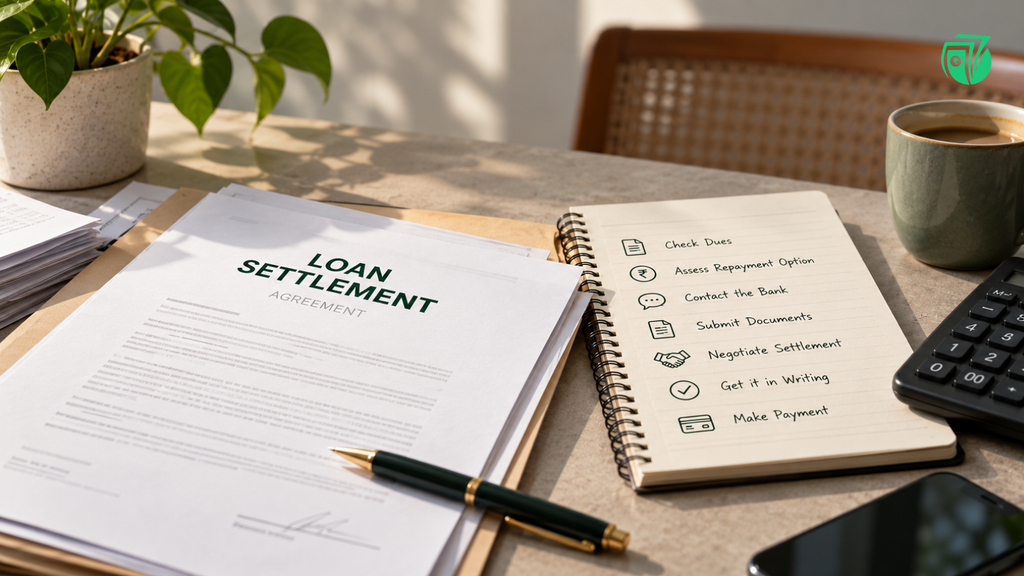
How to Settle Axis Bank Loan: Step by Step
Every case is different, but most Axis Bank loan settlements follow a similar path.
- Know exactly what you owe. Ask for an updated loan or card statement showing the principal, interest, late fees and penalties. You cannot negotiate well without knowing the real number.
- Work out what you can genuinely pay. Look at your savings, any help from family and your monthly income. Be realistic. Offering an amount and then failing to pay it can make things worse.
- Contact Axis Bank in writing. Reach out through the branch, the official customer care channels or the collections team handling your account. Explain your situation honestly and say you would like to discuss a settlement.
- Share proof of your hardship. The bank will want to see why you cannot pay in full. Termination letters, medical bills or bank statements showing reduced income help make your case.
- Submit your proposal and negotiate. Put forward an amount and a payment timeline you can stick to. The bank may accept, reject or come back with a counter-offer. Stay calm and keep all communication documented.
- Get the settlement terms in writing first. Never pay a single rupee until you have an official settlement letter from Axis Bank on its letterhead. Verbal promises over the phone are not enough.
- Pay only through official channels. Make the payment directly to the bank’s account or as the letter instructs. Never pay cash to an individual agent or transfer money to a personal account.
- Collect your closure documents. Once you have paid, ask for a settlement or closure confirmation and a no-dues letter where applicable. Keep every receipt.
Timelines vary. Some settlements close in a few weeks, others take months of back and forth.
Documents Required for Axis Bank Loan Settlement
The exact list depends on your loan and what the bank asks for, but keep these ready:
- Loan account number or credit card number
- Latest loan or card statement showing total dues
- KYC documents: PAN card and Aadhaar or another address proof
- Proof of hardship: termination or relieving letter, salary slips showing a cut, medical bills or hospital records
- Bank statements for the last few months showing your current income
- A short written request explaining your situation and your proposed amount
- Copies of all earlier letters, emails and notices from the bank
Keep photocopies and scanned copies of everything you submit.
How Much Will You Have to Pay?
This is the question everyone asks, and the honest answer is: it depends. There is no fixed settlement percentage that Axis Bank publishes or guarantees. Be wary of anyone who promises you will pay “only 30%” or “only 50%” before they have even seen your case.
The amount usually depends on:
- How much you owe, and how much of it is principal versus interest and penalties.
- How long the account has been overdue.
- Your proof of hardship and how convincing it is.
- Your repayment history before the trouble began.
- Whether you can pay as a lump sum or need instalments. A one-time payment often carries more weight.
- The bank’s internal policy at the time of your request.
In many cases, banks are more flexible on interest and penalties than on the principal amount. A well-prepared, honest proposal backed by documents gives you the best chance of a fair offer.
Axis Bank Settlement Letter: What to Check Before You Pay
The settlement letter is the most important document in the whole process. Read it slowly and check that it clearly shows:
- Your name and the correct loan or card account number
- The exact settlement amount, in figures and words
- The payment deadline, or the dates of each instalment
- The bank account or method to which you must pay
- A clear statement that the payment is in full and final settlement of the account
- That no further dues, interest or charges will be claimed after payment
- The bank’s official letterhead, reference number and an authorised signatory
If anything is missing or unclear, ask the bank to correct it before paying. And once you pay, stick to the deadlines. Missing even one instalment can cancel the settlement.
Loan Settlement vs Loan Restructuring
Before you settle, it is worth asking whether restructuring could work for you instead. The two are quite different.
| Loan settlement | Loan restructuring | |
|---|---|---|
| What it means | You pay a reduced amount and the account is closed | The loan terms change, such as a longer tenure or smaller EMIs |
| Total amount paid | Less than what you owe | Usually the full amount, sometimes more due to extra interest |
| Credit report status | Usually “Settled” | Usually shown as restructured, then “Closed” once fully repaid |
| Best suited for | Serious, long-term hardship | Temporary trouble, with income expected to recover |
If your income is likely to bounce back within a few months, restructuring may protect your credit profile better. If you see no realistic way to repay in full, settlement may be the more practical route.
Impact of Axis Bank Loan Settlement on Your CIBIL Score
Let us be upfront: settling a loan will usually affect your credit profile. When the bank reports your account to credit bureaus such as CIBIL, the status is typically “Settled” rather than “Closed”. Future lenders read “Settled” as a sign that the earlier loan was not repaid in full.
What this can mean for you:
- Your credit score may drop, especially alongside the missed payments that came before the settlement.
- New loans or credit cards may be harder to get for a while, or may come with stricter terms.
- The settled record can stay visible on your credit history for several years.
How long the impact lasts varies from person to person. It depends on your overall credit history and how you handle credit afterwards. With timely payments on any remaining or new credit, many borrowers gradually rebuild their profile.
If you later have the means, you can ask the bank whether paying the remaining waived amount would allow your status to be updated to “Closed”. This is at the bank’s discretion, so get any such arrangement in writing.
What to Do After Your Settlement Is Complete
Paying the amount is not quite the finish line. A few simple steps now can save you a lot of trouble later.
- Keep every document safely. The settlement letter, payment receipts, bank statements showing the payment and the closure confirmation. Store both paper and digital copies.
- Ask for a no-dues or closure letter confirming nothing more is owed on the account.
- Check your credit report after a couple of months. Make sure the account shows as “Settled” with a zero balance, not as still overdue.
- Raise a dispute if something is wrong. If the report has not been updated correctly, contact the bank and raise a dispute with the credit bureau, attaching your documents.
- Start rebuilding slowly. Pay any remaining bills on time and avoid taking on new debt too quickly.
Common Mistakes to Avoid
- Paying before getting the letter. Without written terms, you have no proof of what was agreed.
- Paying cash or into a personal account. Always pay the bank directly through official channels.
- Agreeing to an amount you cannot afford. A broken settlement leaves you back at square one, often with more dues.
- Ignoring calls and notices completely. Silence rarely helps. Respond in writing and keep records.
- Believing guaranteed-discount promises. No one can guarantee a fixed reduction or approval from Axis Bank.
- Forgetting to check your credit report after the settlement is done.
A quick note on recovery calls: you have a right to be treated respectfully. RBI rules require lenders and their agents to follow fair practices in collection. If you face harassment or threats, document the details and raise a complaint with the bank’s grievance team.
How TrueSettle Can Help
Dealing with a bank on your own while under financial pressure can feel overwhelming. That is where TrueSettle comes in.
Our team helps you understand your dues, decide whether settlement or restructuring makes more sense, prepare your documents and hardship proof, and approach the bank with a realistic, well-presented proposal. We also help you review the settlement letter before you pay, so you know exactly what you are agreeing to.
We will be honest with you from the first call. We cannot promise that Axis Bank will approve a settlement or guarantee a specific amount, because those decisions rest with the bank. What we can promise is clear guidance, transparency and support at every step.
Struggling with Axis Bank EMIs or credit card dues? Talk to a TrueSettle advisor for a free consultation and understand your options before you decide.
Frequently Asked Questions
Does Axis Bank offer one-time settlement? Yes, Axis Bank can offer one-time settlement, but only on a case-by-case basis under its internal policy. Approval is not guaranteed.
How do I apply for Axis Bank loan settlement? Contact the bank in writing through official channels, explain your hardship, submit supporting documents and propose an amount you can realistically pay.
Can I settle an Axis Bank credit card? Yes, credit card dues can also be settled. The process is similar to a personal loan settlement.
How long does the settlement process take? It varies. Some cases are resolved in a few weeks, while others take several months of negotiation.
Will settlement stop recovery calls? Once a settlement is agreed and paid as per the letter, the account is treated as settled and collection on it should end. Until then, calls may continue, so keep all communication documented.
What happens to my CIBIL score after settlement? Your account will usually be reported as “Settled”, which can lower your score and make new credit harder to get for some time. Responsible credit use afterwards helps you rebuild.
What should I do if I cannot pay my Axis Bank EMI? Do not ignore it. Speak to the bank early, ask about restructuring or settlement options, and get expert guidance if you feel unsure.
Disclaimer: This article is for general information only and is not legal or financial advice. Settlement terms and approval depend on Axis Bank’s policies and your individual circumstances.