Rahul took a ₹4 lakh personal loan from Kotak in 2023 to fund his sister’s wedding. The EMIs were comfortable on his salary. Then his company downsized, and within three months he had missed two EMIs, was getting recovery calls every day, and had no idea what to do next.
If your story sounds anything like Rahul’s, you have probably typed this question into Google at 2 a.m.: does Kotak Mahindra Bank provide loan settlement? You may have heard from a friend that banks “settle” loans for half the amount. You may also have heard that settlement ruins your CIBIL score forever. The truth sits somewhere in between.
Here is the short answer. Yes, Kotak Mahindra Bank loan settlement is possible. But it is not a scheme you can sign up for, and the bank does not offer it to everyone who asks. Kotak agrees to settle only in genuine hardship cases, usually after an account has been overdue for a while, and only when it believes a reduced one-time payment is better than a long, uncertain recovery.
In this blog, we break down exactly how that works: what settlement really means, which Kotak loans can be settled, when the bank says yes, when it says no, what the RBI allows, and how to protect yourself during the process.
Does Kotak Mahindra Bank Provide Loan Settlement?
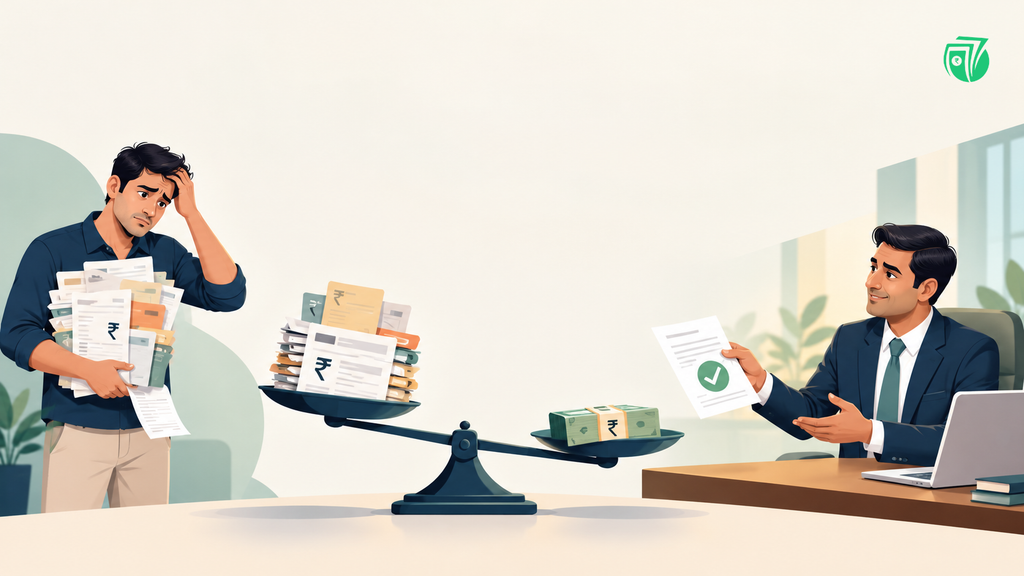
Yes, it does. Kotak Mahindra Bank, like every major private and public sector bank in India, settles loans through what is called a one-time settlement (OTS) or compromise settlement. But you will not find a settlement option on the Kotak app, the website, or a form at the branch. Each case is reviewed on its own, and the bank decides whether settling makes sense for it.
That last part is important. A settlement is a business decision for the bank, not a relief scheme. Kotak agrees when the numbers work in its favour: when chasing the full amount would take years, cost money in legal and recovery effort, and may still bring back very little.
What does loan settlement actually mean?
In simple words, loan settlement means the bank agrees to accept less than your total outstanding amount as a final payment, and then closes your loan account. The unpaid balance is written off by the bank as a loss.
Your outstanding amount on a defaulted loan is usually made up of three parts:
- Principal: the part of the original loan you have not yet repaid
- Interest: regular interest plus extra interest that keeps building on overdue amounts
- Penalties and charges: late payment fees, bounce charges, and other fees
In most settlements, the biggest cuts come from penalties and accumulated interest. The principal is the part banks are most reluctant to waive.
A simple example
Let us go back to Rahul. Suppose, after a year of missed payments, his Kotak loan looks like this:
| Component | Amount |
|---|---|
| Unpaid principal | ₹3,10,000 |
| Interest on overdue amount | ₹62,000 |
| Late fees and bounce charges | ₹28,000 |
| Total outstanding | ₹4,00,000 |
Rahul writes to the bank, shows his termination letter and bank statements, and offers a one-time payment he can arrange with family help. After some back and forth, the bank may agree to close the account for an amount well below ₹4 lakh. Rahul pays it, receives a closure letter, and the account is marked as settled.
Note: these figures are only an illustration. There is no fixed settlement percentage at Kotak, and every case gets a different offer.
Settlement is not the same as “closing” a loan
This is where many borrowers get confused. When you repay a loan in full, the account is reported to credit bureaus as “Closed”. When you settle, it is reported as “Settled”, which tells future lenders that you did not pay the full amount. So settlement does close your account with Kotak, but it leaves a mark on your credit history. Keep this in mind before treating settlement as an easy way out.
Which Kotak Loans Can Be Settled?
Settlement is most common on unsecured loans, where the bank has no property, vehicle or gold to fall back on. If you default on these, the bank’s only options are calls, notices and legal action, all of which are slow and costly. That makes a negotiated settlement more attractive to it.
| Kotak loan type | Is settlement common? | Why |
|---|---|---|
| Personal loan | Yes, most common | No collateral, so recovery is hard |
| Credit card dues | Yes, very common | Unsecured, and interest builds up fast |
| Unsecured business loan | Often | Depends on the business situation and guarantees |
| Consumer durable loan | Sometimes | Smaller amounts, case by case |
| Car or two-wheeler loan | Rare | The bank can repossess the vehicle |
| Home loan or loan against property | Very rare | The bank can recover through the property under the SARFAESI Act |
So if you are asking about Kotak Mahindra Bank personal loan settlement or credit card settlement, you are in the category where settlement is realistically on the table. For secured loans, the bank will usually push for repayment, restructuring or sale of the asset instead.
When Does Kotak Agree to a Settlement?
Kotak looks at the full picture before saying yes. In most approved cases, these conditions are present:
- The account is seriously overdue. Settlement usually comes up after repeated missed EMIs, often once the account crosses 90 days past due and is classified as a non-performing asset (NPA). The longer the default, the more open the bank tends to be.
- There is a real, provable hardship. Job loss, salary cuts, a serious illness, a death in the family, or a business shutting down. The bank wants documents, not just a story.
- Regular repayment is no longer realistic. If your current income clearly cannot support the EMI, settling now looks better to the bank than waiting.
- You can arrange a meaningful lump sum. A settlement only works if you can actually pay the agreed amount, either at once or in two or three short instalments.
- You are communicating honestly. Borrowers who stay in touch, reply to notices and share documents are taken far more seriously than those who disappear.
When Does Kotak Usually Say No?
Just as important is knowing when a settlement request is likely to be rejected or ignored:
- You have missed only one or two EMIs. At this stage, the bank expects you to catch up, and will suggest paying the overdue amount instead.
- Your income is still stable. If your bank statements show regular salary credits, the bank has little reason to accept less.
- The loan is secured. As explained above, the bank can recover through the asset.
- You cannot show any hardship. “I just want to pay less” is not a reason the bank will accept.
- Your offer is unrealistically low. A token offer can stall talks completely. It is better to start with a figure that shows genuine intent.
Is Loan Settlement Legal? What RBI Says
Yes, loan settlement is completely legal in India. The Reserve Bank of India allows banks to enter into compromise settlements with borrowers, as long as they follow a policy approved by their own board. RBI’s 2023 framework on compromise settlements and technical write-offs made this even clearer, and it applies to banks like Kotak.
Two points from this framework matter to borrowers:
- Settlement is a recognised recovery method, not a loophole or a favour. You are not doing anything wrong by asking for it.
- A settled borrower faces a cooling period before the same bank can lend to them again. RBI set a minimum of 12 months for retail loans, and banks can set a longer period in their own policy.
RBI rules also protect you during recovery. Recovery agents must identify themselves, behave respectfully, and avoid calling at unreasonable hours. Threats, abuse, or calls to your relatives and workplace to shame you are not allowed. If this happens, you can complain to Kotak’s grievance team and, if it is not resolved, to the RBI Ombudsman.
How Does Kotak Decide the Settlement Amount?
There is no fixed rate or published formula. The bank’s offer depends on several factors:
- Total outstanding amount and how much of it is principal versus interest and penalties
- How long the account has been in default: older defaults usually get more flexible offers
- Your documented hardship and its severity
- Your current income and assets, as seen in your bank statements
- How much you can pay upfront: a single lump sum usually gets a better deal than instalments
- Your communication history: consistent, honest engagement helps
- Internal targets and timing: banks often review NPA cases in batches, which can affect how open they are at a given time
This is why two people with the same loan amount can get completely different offers. Preparation matters a lot.
Common Myths About Kotak Loan Settlement
Myth 1: “Banks always settle for 50%.” There is no standard figure. Some offers are much higher, some lower. Anyone promising a fixed percentage before seeing your case is guessing.
Myth 2: “Settlement wipes my record clean.” No. Your account is marked “Settled” on your credit report, which affects future borrowing for years.
Myth 3: “If I stop paying long enough, the bank will just forget.” It will not. Interest and penalties keep growing, the bank can send legal notices, and for some cases, cheque bounce or civil recovery proceedings can follow.
Myth 4: “Recovery agents can settle my loan on the spot.” An agent can pass on your request, but the decision and the letter come from the bank. Never pay based on a verbal promise.
Red Flags: Protect Yourself During Settlement
Settlement is a stressful time, and fraudsters know it. Watch out for these warning signs:
- Someone asks you to pay into a personal bank account, UPI ID or in cash
- You are told to pay before receiving a written settlement letter
- The letter is not on Kotak’s official letterhead or has no authorised signature
- You are pressured to decide within hours with threats of arrest or police action
- A “consultant” asks for a large upfront fee and promises a guaranteed waiver
Always get the settlement terms in writing from Kotak, pay only through official bank channels, and keep every receipt. After the final payment, ask for a closure letter or No Dues Certificate.
Should You Settle Your Kotak Loan? Try These First
Settlement should be your last option, not your first. Before you ask Kotak to settle, check whether one of these could work for you:
- Pay the overdue EMIs and restart. If your income has recovered, catching up keeps your credit record far healthier.
- Ask for restructuring. The bank may extend your tenure to reduce the EMI, giving you breathing room without a “Settled” mark.
- Request a temporary EMI adjustment. Some borrowers get short-term relief during a documented crisis.
- Use savings or family support to foreclose. Paying the full amount early gets your account marked “Closed”, not “Settled”.
If none of these are realistic, settlement can be the right decision. It stops the growing interest, ends the recovery pressure, and gives you a clear end date.
Pros and cons at a glance
| Pros of settlement | Cons of settlement |
|---|---|
| You pay less than the total outstanding | Account is marked “Settled” on your credit report |
| Recovery calls and notices stop | CIBIL score is likely to drop |
| Interest and penalties stop growing | New loans and cards get harder for a few years |
| You get legal closure in writing | Kotak may not lend to you again for some time |
Frequently Asked Questions
Does Kotak Mahindra Bank provide loan settlement for personal loans? Yes. Personal loans are among the most commonly settled Kotak loans, mostly in cases of long overdue accounts with genuine hardship.
Can I apply for Kotak loan settlement online? There is no online settlement application. You need to contact Kotak’s collections or customer care team, explain your situation in writing, and share supporting documents.
Does Kotak settle credit card dues? Yes. Credit card settlement is very common because the dues are unsecured and interest builds up quickly.
Can Kotak refuse my settlement request? Yes. The bank is not obliged to settle. It may refuse if your account is only slightly overdue, your income is stable, or your offer is too low.
Is a settlement better than not paying at all? Almost always. An unpaid loan keeps growing, can lead to legal action, and stays as a default on your report. A settlement at least closes the account.
Conclusion
So, does Kotak Mahindra Bank provide loan settlement? Yes, it does, but only in the right circumstances. The bank considers settlement mainly for unsecured loans like personal loans and credit cards, when an account is seriously overdue, the borrower has a genuine and documented hardship, and a one-time payment is realistic.
Kotak Mahindra Bank loan settlement can give you real relief and a fresh start. It also has long-term effects on your credit, so it is worth doing carefully: know your numbers, keep your documents ready, get every term in writing, and pay only through official channels.
If you are struggling with a Kotak loan or credit card and do not know where to begin, TrueSettle Financial Services can help. Our team reviews your case, explains your options honestly, and supports you through negotiation with the bank, step by step. Get in touch with TrueSettle today for a free consultation.