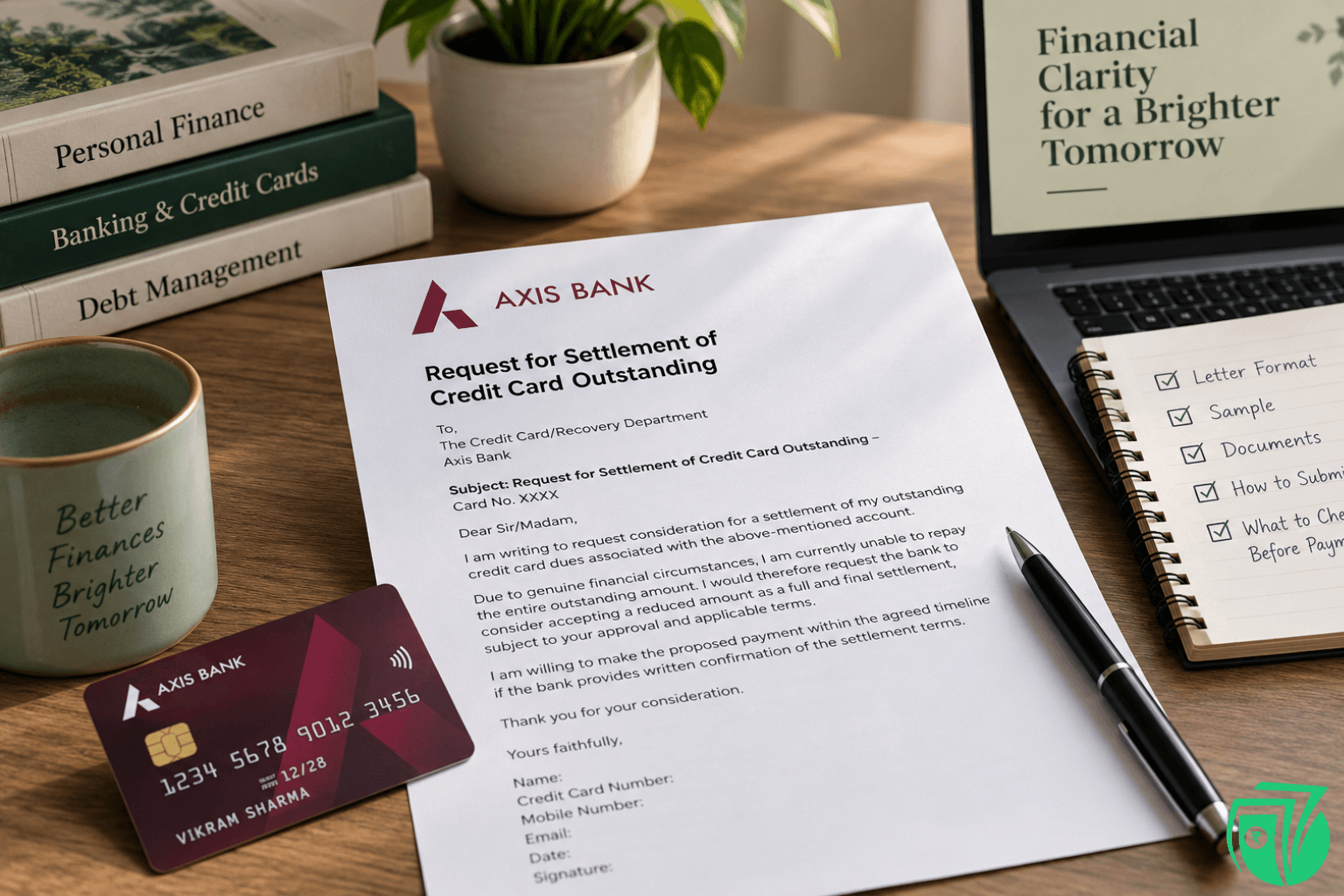
If you’re struggling to repay a personal loan or credit card dues in full, loan settlement may be one possible debt-resolution option. But settlement isn’t simply asking a bank to “reduce the loan.” It involves assessing your financial situation, negotiating with the lender, receiving written settlement terms, making the agreed payment, and completing the required documentation afterward.
One thing to keep in mind throughout this guide: settlement ≠ loan closure. They’re fundamentally different outcomes, and understanding that difference upfront will help you make a more informed decision.

What Is Loan Settlement?
Loan settlement is an arrangement where your lender agrees to accept an amount lower than your total outstanding dues as a full and final resolution of the account. This is often referred to as a One-Time Settlement (OTS).
A few important points:
- You pay the agreed, reduced amount — not the full outstanding balance.
- Any remaining liability is dealt with according to the specific settlement terms agreed upon.
- Settlement requires the lender’s agreement — it isn’t something you can simply declare or demand.
- It is not automatic debt forgiveness. The lender chooses whether to offer it, and on what terms, based on their own assessment of your account and circumstances.
Simple Example
Outstanding: ₹3,00,000
Agreed settlement: ₹1,50,000
Amount resolved through settlement: ₹1,50,000
This is an illustrative example only — actual settlement amounts depend on your specific lender, account, and circumstances, not a fixed formula.
Loan Settlement vs Loan Closure
| Loan Settlement | Loan Closure |
|---|---|
| Agreed amount may be lower than outstanding dues | Applicable dues are fully repaid |
| Requires lender agreement | Normal repayment/closure — no negotiation needed |
| Credit report may show “Settled” | Generally shows “Closed” |
| Can negatively affect credit history | Generally preferable for your credit profile |
This distinction matters more than most borrowers initially realise — the two outcomes look similar in that your account gets resolved, but they’re treated very differently by future lenders reviewing your credit history.
Who May Consider Loan Settlement?
Settlement is generally relevant where you’re facing genuine financial difficulty and can’t reasonably repay the full amount within an acceptable timeframe. This might include circumstances like:
- Job loss
- A significant reduction in income
- Business difficulties
- Major unexpected expenses
- Other documented financial hardship
That said, if you can still afford repayment — even if it’s uncomfortable — restructuring or another repayment arrangement may be worth exploring before settlement. Settlement carries real credit-report consequences, so it’s worth reserving for situations where full repayment genuinely isn’t realistic, not simply when payments have become inconvenient.
Loan Settlement Process in India — Step by Step
Step 1: Assess Your Financial Situation
Before you do anything else, calculate:
- Total outstanding
- Interest and applicable charges
- Monthly income
- Essential expenses
- Other debt obligations
- Savings or assets you could draw on
- A realistic lump sum you could actually offer
This groundwork shapes everything that follows.
Step 2: Review Your Loan or Credit Card Account
Check carefully:
- Your current outstanding amount
- Your account status (how far into default, if at all)
- Your payment history
- Recent statements
- Any previous notices or communication from the lender
- Applicable charges that have accrued
Don’t rely on a rough estimate when you start negotiating — precise numbers give you credibility and help you avoid disputes later.
Step 3: Contact the Lender
Reach out through the relevant bank or lender channel and explain:
- Your financial hardship, honestly and specifically
- Why full repayment isn’t currently realistic for you
- Your genuine willingness to resolve the account
- Your interest in discussing a settlement
Approaching this proactively — rather than waiting for the lender to escalate — generally puts you in a stronger position.
Step 4: Prepare Supporting Documents
Depending on your circumstances, gather:
- Bank statements
- Salary slips
- Income documents
- Job-loss or termination documents
- Medical bills
- Proof of reduced income
- Loan or credit card statements
- Previous correspondence with the lender
Step 5: Determine a Realistic Settlement Proposal
Don’t pick a number randomly. Work through:
Total outstanding + your financial capacity + your available lump sum + your essential expenses
Then propose an amount you can genuinely fund — not one that sounds impressive but that you can’t actually follow through on.
Step 6: Negotiate With the Lender
Discuss and clarify:
- The settlement amount
- The payment deadline
- The payment method
- The applicable terms
- How any remaining dues or liability will be treated
- The credit-reporting implications
Important: there is no universal settlement percentage that every bank accepts. Each negotiation is shaped by your specific account and circumstances.
Step 7: Get the Settlement Terms in Writing
Before paying anything, verify the written settlement communication clearly identifies:
- You, the borrower
- Your account number
- The outstanding amount
- The agreed settlement amount
- The payment deadline
- Payment instructions
- The relevant settlement terms
- The applicable credit-reporting status
Never rely solely on a verbal settlement promise. If it isn’t in writing, treat it as provisional.
Step 8: Make the Agreed Payment
When you pay, make sure you:
- Pay the correct amount
- Pay before the deadline
- Use the agreed, authorised payment channel
Keep the payment receipt and transaction reference safely — you’ll need them.
Step 9: Collect Post-Settlement Documents
Retain:
- The settlement letter
- Your payment receipt
- The NOC or No Dues Certificate, where applicable
- Any relevant correspondence
Keep these permanently, not just for a few months — you may need them years later if a question ever arises about the account.
Step 10: Check Your Credit Report
After the lender updates your account:
- Review your credit report
- Check the account status shown
- Verify the outstanding balance reflects the resolution
- Confirm the information is reported accurately
If something looks wrong, this is the point to raise a dispute — don’t assume it will correct itself.
Credit Card Settlement Process in India
Credit card debt is one of the most common reasons borrowers pursue settlement, so it’s worth walking through the flow specifically:
Outstanding credit card dues → financial hardship → contact lender → settlement negotiation → written settlement terms → payment → documentation → credit report update
Credit card settlement follows the same broad principles as loan settlement described above, but it’s worth knowing that individual card issuers can have their own specific procedures, documentation requirements, and internal terms. What works smoothly with one issuer may look slightly different with another — always confirm the specific process directly with your card issuer rather than assuming it will mirror a personal loan settlement exactly.
Documents Required for Loan Settlement
| Document | Why It May Be Needed |
|---|---|
| Loan/credit-card statement | Shows your outstanding dues |
| Bank statements | Demonstrates your financial position |
| Salary slips | Shows your current income |
| Termination letter | Supports job-loss hardship |
| Medical documents | Supports relevant financial hardship |
| Income documents | Helps demonstrate your repayment capacity |
| Previous correspondence | Provides your account history |
How Much Can You Settle a Loan For?
This is probably the question on most borrowers’ minds, and the honest answer is: there is no single settlement percentage applicable to every borrower or lender.
The final amount can depend on:
- Which lender you’re dealing with
- Your account status
- Your outstanding amount
- Your documented financial hardship
- Your realistic repayment capacity
- How the negotiation unfolds
- The lump sum you’re able to offer
- The lender’s own internal assessment
A simple illustrative example (not a promised rate from any bank): if your outstanding balance is ₹4,00,000 and you’re able to offer ₹2,00,000 as a documented, realistic lump sum, that would represent a 50% settlement — purely as a way to understand the calculation, not as a figure any specific lender has committed to.
Does Loan Settlement Affect CIBIL Score?
Yes, and it’s worth understanding this clearly before you commit to settlement:
- Settlement can negatively affect your credit history.
- “Settled” is different from “Closed” — these are distinct statuses that credit bureaus and future lenders read differently.
- Future lenders may view a settled account differently from one that was fully repaid, sometimes for years afterward.
- The actual effect varies depending on your overall credit profile — there’s no fixed number of points every borrower loses.
- Responsible credit behaviour afterward — timely payments on other obligations, low utilisation — can help rebuild your profile gradually over time.
What Happens After Loan Settlement?
The typical sequence:
Settlement payment → lender confirmation → NOC/No Dues documentation → credit-report update → rebuilding your credit profile
Retain every document from this process permanently — your settlement letter, payment receipt, and NOC are your protection if any question about the account ever comes up again, even years down the line.
Loan Settlement vs Restructuring vs Refinancing
| Option | Basic Purpose | Main Consideration |
|---|---|---|
| Repayment | Pay dues according to agreed terms | Requires ongoing affordability |
| Restructuring | Modify repayment terms | New terms and costs need careful review |
| Refinancing | Replace existing debt with new borrowing | Eligibility and total cost matter |
| Settlement | Resolve debt under negotiated terms | Can affect your credit history |
Settlement generally sits at the end of this list — worth considering once the other, less credit-damaging options genuinely don’t fit your situation.
Common Mistakes During Loan Settlement
- Assuming settlement is guaranteed — it isn’t; it depends entirely on lender agreement.
- Expecting a fixed discount percentage based on what someone else received.
- Stopping EMIs simply to force a settlement — this damages your credit history without guaranteeing anything in return.
- Ignoring restructuring options in favour of jumping straight to settlement.
- Paying without written settlement terms in hand.
- Paying through an unverified channel — always confirm the authorised payment method.
- Not collecting NOC/No Dues documentation after payment.
- Ignoring CIBIL implications and being surprised by them later.
- Taking another expensive loan to fund settlement without properly assessing whether you can actually afford it.
Frequently Asked Questions
What is the loan settlement process in India?
It generally involves assessing your financial situation, contacting your lender, negotiating a reduced settlement amount, receiving the terms in writing, making the agreed payment, and collecting post-settlement documentation.
How can I settle my personal loan?
Start by calculating your exact outstanding balance, documenting your financial hardship, proposing a realistic lump sum to your lender, and getting any agreed terms confirmed in writing before paying.
What is the credit-card settlement process?
It follows the same broad steps as loan settlement — hardship documentation, negotiation, written terms, payment, and documentation — though specific procedures can vary by card issuer.
How much can a bank reduce a loan during settlement?
There’s no fixed percentage. The amount depends on your outstanding balance, documented hardship, account status, and the lender’s own assessment of your case.
What documents are required for loan settlement?
Typically your loan/card statements, bank statements, income proof, and documentation supporting your financial hardship (job loss, medical bills, etc.).
Can I negotiate a loan settlement directly with my bank?
Yes, many borrowers negotiate directly. Coming prepared with accurate numbers and documentation generally strengthens your position.
Does loan settlement affect CIBIL?
Yes. A settled account is typically reported as “Settled” rather than “Closed,” which generally has a negative impact on your credit score and profile for a period of time.
What is the difference between settlement and loan closure?
Closure means you repaid the full amount as originally agreed. Settlement means the lender accepted a reduced amount, and this distinction is reflected differently in your credit report.
What happens after I pay the settlement amount?
You should receive written confirmation and, where applicable, a No Dues Certificate. Your account will then be reported to credit bureaus, and it’s worth checking that this reporting is accurate.
Is loan settlement better than restructuring?
It depends on your situation. Restructuring is generally preferable if your difficulty is temporary and full repayment remains realistic — settlement is more appropriate when full repayment genuinely isn’t achievable.
Understanding the process is the first step — figuring out whether settlement is actually the right move for your specific situation is the harder part. That’s where getting a clear, honest assessment can help.
👉 Get a free debt assessment with TrueSettle to understand your options.
👉 Explore your debt settlement options before you approach your lender.