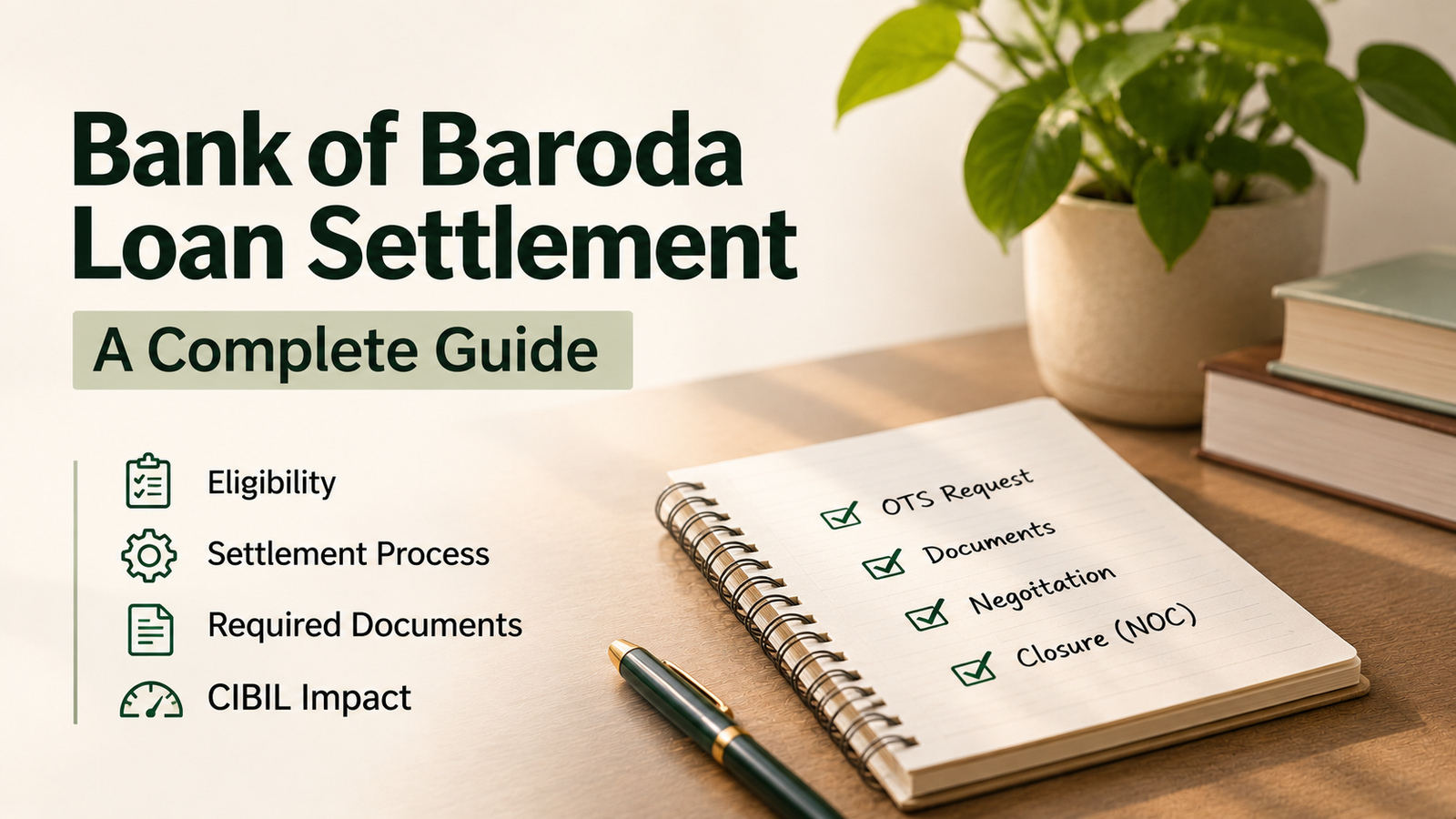
Missing one EMI feels like a small slip. Missing three or four, with calls from the bank and letters arriving at home, feels like you’re losing control of your own life. If you have a Union Bank of India loan and you can no longer keep up with repayments, you’re not alone, and you’re not out of options.
One option many borrowers look at is Union Bank of India loan settlement, usually done through a One Time Settlement (OTS). In simple words, you and the bank agree on a single amount that closes the loan, often less than the total you owe today.
It sounds like an easy way out, but it isn’t free. Settlement has a real cost to your credit history, and the bank doesn’t approve every request. This guide walks you through how the process actually works: who is eligible, how to apply online, what documents to keep ready, how the amount is decided, and what happens to your CIBIL score afterwards. No big promises, just the practical picture.
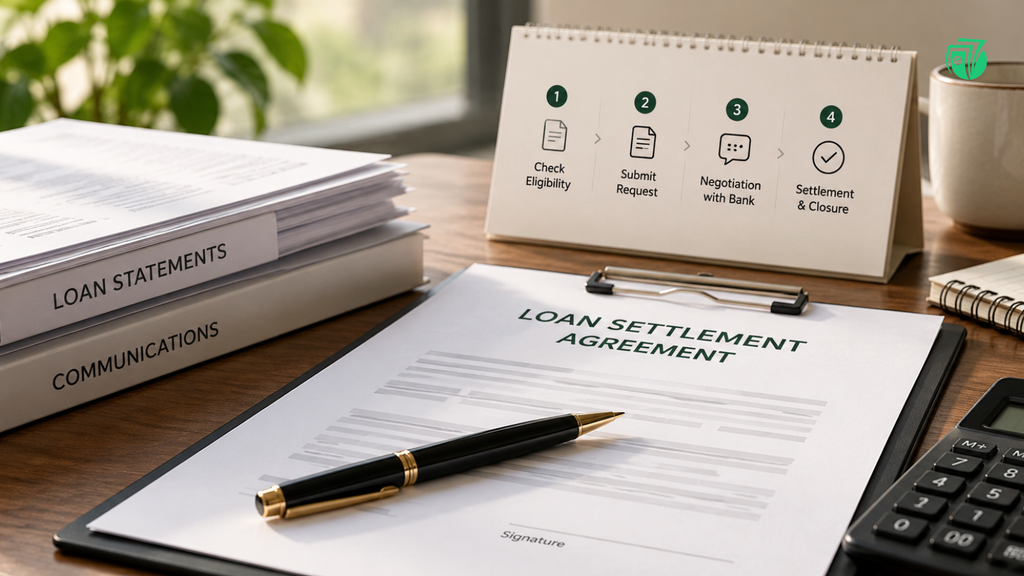
What Is Union Bank of India Loan Settlement?
Loan settlement is an agreement where the bank accepts a reduced, negotiated amount to close a loan that has gone bad. Once you pay that agreed amount on time, the bank stops chasing the rest of the dues.
You’ll usually hear two terms:
- One Time Settlement (OTS): You pay the agreed amount in one go, or in a few instalments within a short window fixed by the bank. This is the most common route for Union Bank borrowers.
- Compromise settlement: The broader term banks and the RBI use for any negotiated closure where the bank gives up part of what is legally due, such as some interest, penal charges or a part of the principal.
For a borrower, both mean the same thing in practice: you close the account for less than the full outstanding, and the bank records it as settled rather than fully repaid.
Does Union Bank of India Offer Loan Settlement?
Yes. Union Bank of India runs an Online OTS facility for NPA (Non-Performing Asset) borrowers, listed on its official Recovery page. Borrowers can also approach their home branch to discuss a settlement.
There’s an important line in the bank’s own wording that every borrower should read twice: an offer submitted online is only a non-binding proposal. It is subject to the bank’s Recovery Policy, and the bank’s competent authority can accept or reject it without giving a specific reason. Submitting the form does not mean your loan is settled.
The RBI rules behind settlements
Banks don’t settle loans on a whim. Under the RBI’s Framework for Compromise Settlements and Technical Write-offs dated June 8, 2023, every bank must follow a Board-approved policy for compromise settlements. A few points from it that matter to borrowers:
- Each bank decides its own settlement process and who can approve it, within its Board-approved policy.
- If the settlement amount is to be paid over more than three months, the RBI treats it as restructuring for the bank’s books.
- Banks can apply a cooling period before giving fresh loans to a borrower who has settled.
- A technical write-off is different from a settlement. It is an accounting entry in the bank’s books; it does not cancel what you owe, and the bank can still recover the full dues.
Who Is Eligible for Union Bank Loan Settlement?
There’s no single public checklist, because the final call depends on the bank’s Recovery Policy and the facts of your account. In practice, these are the things the bank looks at:
- NPA status: The online OTS is meant for accounts already classified as NPA. Generally, a loan becomes an NPA when an EMI or interest stays unpaid for more than 90 days.
- Genuine financial hardship: Job loss, salary cut, business shutdown, medical emergency or the death of an earning family member are the usual reasons banks consider.
- Ability to pay a lump sum: The bank wants to see that you can actually arrange the settlement amount, from savings, family support or the sale of an asset.
- Security on the loan: A secured loan (home loan, property-backed MSME loan) is assessed differently from an unsecured personal loan, because the bank has the option to recover through the asset.
- Account type: Under the bank’s own rule, NPA borrowers with Export/Import accounts can’t use the online route and must go through their branch.
A quick example: Rakesh, a salaried employee in Lucknow, lost his job and missed five EMIs on a Union Bank personal loan. His account is now an NPA, and his brother has offered to help with a lump sum. Rakesh is the kind of borrower an OTS is designed for. Someone who simply wants to pay less but still earns the same income is far less likely to get approval.
How to Apply for Union Bank of India OTS Online?
The online route is what makes Union Bank different from many other banks, because you can start the settlement process without first visiting a branch. Here’s how it works in simple steps:
- Check your registered mobile number. The OTP for Online OTS is sent only to the mobile number registered with the bank. If your number has changed, update it at your branch first.
- Go to the official Recovery page. Visit the Union Bank of India Recovery page and use the link given there for One Time Settlement. Only use the bank’s official website, never a link sent by an unknown caller or WhatsApp message.
- Verify with OTP. Enter the details asked for and confirm with the OTP sent to your registered number.
- Review your loan account details. Check that the account number and outstanding shown match your own records.
- Submit your settlement proposal. Enter the amount you can realistically pay and the timeline. Be honest here; an amount you can’t actually arrange will only hurt you later.
- Wait for the bank’s decision. The bank’s competent authority reviews the proposal under its Recovery Policy. It may accept it, reject it, or the branch may contact you to discuss it further.
- Get written approval before you pay. Don’t treat anything as final until you receive a sanction or approval letter from the bank.
Keep screenshots and reference numbers of everything you submit online. If there’s a dispute later, this is your proof.
Union Bank Loan Settlement Through Branch
The branch route still matters, especially if you have an Export/Import account, your mobile number isn’t registered, or your case needs a proper conversation rather than a form.
- Visit the branch where your loan account is held and ask to speak to the branch manager or the officer handling recovery.
- Submit a written settlement request (a simple letter) explaining why you can’t repay, what you can offer, and how you’ll arrange the money.
- Attach supporting documents for your hardship and keep a stamped or signed acknowledgement copy.
- Follow up in writing. Verbal assurances over the phone are not enough.
For general queries, Union Bank’s toll-free number is 1800 2333, as listed on its official website.
What Documents Are Required?
The exact list can vary by branch and loan type, but keeping these ready will save you time and repeated visits:
| Document type | Examples |
|---|---|
| Identity and address proof | PAN card, Aadhaar card, voter ID or passport |
| Loan details | Loan account number, sanction letter, latest statement of account |
| Income proof | Recent salary slips, bank statements, ITR (for self-employed borrowers) |
| Proof of hardship | Termination or resignation letter, medical bills and reports, business closure proof, death certificate of an earning member |
| Source of settlement funds | Bank statement showing savings, letter from a family member, or details of an asset sale |
| Bank communication | Recovery notices, emails and letters received from Union Bank |
The stronger your hardship proof, the more seriously the bank tends to take your proposal.
How Is the Union Bank Settlement Amount Decided?
There is no fixed percentage. Anyone who promises you a “50% waiver” or “settle at 30%” before seeing your file is guessing. The bank works out what it can realistically recover, and that depends on:
- Total outstanding: Principal, interest, penal charges and other costs added to the account.
- Age of the NPA: How long the account has been in default.
- Security available: If there’s property or another asset backing the loan, the bank weighs what it could recover by enforcing it.
- Your repayment capacity: Your current income, other debts and the hardship you can prove.
- The bank’s Recovery Policy: Each bank works within its own Board-approved rules, which can change over time.
Can You Negotiate Union Bank Loan Settlement?
Yes, settlement is a negotiation, not a fixed price list. A few practical tips:
- Know your numbers. Get an updated statement of account so you know exactly what the bank says you owe.
- Offer what you can actually pay. A realistic offer you can honour is better than a low offer you’ll default on.
- Show the full picture. Clear hardship proof gives the bank a reason to agree.
- Ask about waiver of penal charges and interest. These are often the first parts of the dues that get discussed.
- Keep everything in writing. Every offer, counter-offer and assurance should be on record.
- Stay calm with recovery agents. You can ask for their identity and authorisation, and complain to the bank if they misbehave.
What Happens After OTS Approval?
Approval is not the finish line. How you handle the next few weeks decides whether the settlement actually closes your loan.
- Read the approval letter carefully. Check the settlement amount, payment deadline, instalment dates (if any) and the conditions written in it.
- Pay only to the bank. Make payments directly to your Union Bank loan account or as the letter instructs, never in cash to an agent or to a third party’s account.
- Pay on time, every time. Missing the OTS deadline can cancel the settlement, and the bank may go back to claiming the full dues.
- Collect a No Dues Certificate (NDC). Once the full settlement amount is paid, ask for a written closure letter or NDC confirming nothing more is payable.
- Get your documents back. For secured loans, make sure original property papers are returned and any charge on the asset is released.
- Check your credit report after a few weeks. Confirm the account has been updated with the correct status and a zero balance.
How Does Union Bank Loan Settlement Affect CIBIL?
This is the part many borrowers aren’t told clearly, so let’s be honest about it. A settled loan is usually reported to credit bureaus like CIBIL as “Settled”, not “Closed”. That tells future lenders you didn’t repay the full amount.
What this means for you:
- Your credit score is likely to take a hit. How much depends on your overall credit profile, so no one can promise an exact number of points.
- Future loans and credit cards may be harder to get. Lenders may reject applications, ask for more documents, or offer higher interest rates.
- The record stays on your report for years. It doesn’t disappear once you pay the settlement amount.
Keep one thing in perspective, though. An NPA that stays unpaid also damages your credit, month after month. For many people, settling and starting a clean repayment history is the more practical path.
Rebuilding after settlement takes time and consistency: pay every bill and EMI on time, keep credit card use low, avoid applying for many loans at once, and check your credit report regularly. Some borrowers later choose to pay the waived amount to the bank and request that the status be updated to “Closed”. Whether this is possible depends on the bank, so ask in writing.
Loan Settlement vs Loan Restructuring
If your income has dropped but you can still pay something every month, restructuring may protect your credit better than settlement. Here’s the difference at a glance:
| Point | Loan settlement (OTS) | Loan restructuring |
|---|---|---|
| What changes | You pay a negotiated amount to close the loan | Repayment terms change: longer tenure, lower EMI or a moratorium |
| Amount repaid | May be less than the total dues | Generally the full dues, sometimes more interest over time |
| Credit report | Usually reported as “Settled” | Reporting depends on the type of restructuring |
| Best suited for | When full repayment is no longer realistic | When income is temporarily hit but repayment is still possible |
| Account at the end | Closed after the settlement amount is paid | Continues with the new EMI schedule |
What If Union Bank Rejects Your OTS Application?
A rejection is not the end of the road. The bank isn’t required to explain why, but it usually comes down to the amount offered, weak hardship proof, or the account not fitting the current policy.
- Ask the branch for clarity. Politely request what the bank would consider acceptable.
- Revise your proposal. A higher amount, a shorter payment window, or stronger supporting documents can change the outcome.
- Look at restructuring. If you can manage a smaller EMI, ask whether the loan can be restructured instead.
- Pay something regularly. Even partial payments show good faith and can keep the conversation open.
- Use proper complaint channels if needed. If you face harassment or unfair treatment, raise a complaint with the bank’s grievance cell. If it isn’t resolved, you can approach the RBI Ombudsman through the RBI’s complaint portal.
How TrueSettle Can Help With Union Bank Loan Settlement
Dealing with a bank alone, while stressed about money and recovery calls, is hard. That’s where TrueSettle steps in. Our team helps you:
- Understand where your Union Bank loan stands today and whether settlement or restructuring makes more sense
- Prepare a realistic settlement proposal backed by the right documents
- Communicate with the bank in a structured, professional way
- Handle recovery calls with confidence and know your rights as a borrower
- Check the final closure letter and your credit report so nothing is left hanging
We can’t promise a specific waiver or guaranteed approval, because the final decision always rests with the bank. What we can promise is clear guidance and honest advice at every step.
Struggling with a Union Bank loan? Get a Free Loan Assessment with TrueSettle today.
Final Thoughts
Union Bank of India loan settlement can give you a way out when repayment has truly become impossible. The online OTS facility makes it easier to start, but remember that it’s a proposal, not a promise. Go in with honest numbers, proper documents and a clear understanding of what settlement does to your credit. Done right, it can be the first step towards getting your financial life back on track.
Frequently Asked Questions
1. Does Union Bank of India provide loan settlement?
Yes. Union Bank offers One Time Settlement for eligible NPA borrowers, both through its online OTS facility and through branches. Approval depends on the bank’s Recovery Policy.
2. How can I apply for Union Bank of India OTS online?
Go to the Recovery page on Union Bank’s official website, open the One Time Settlement link, verify yourself with the OTP sent to your registered mobile number, and submit your proposal.
3. Who is eligible for Union Bank loan settlement?
Generally, borrowers whose loan has turned NPA and who face genuine financial hardship. Export/Import account holders must apply through their branch, not online.
4. Can I settle my Union Bank personal loan?
Yes, personal loans can be settled if the account is an NPA and the bank accepts your proposal. Being unsecured, personal loans are assessed mainly on your hardship and repayment capacity.
5. Is Union Bank OTS online approval guaranteed?
No. The bank clearly states that an online offer is a non-binding proposal, and it can accept or reject it without giving a reason.
6. What documents are required for Union Bank loan settlement?
ID and address proof, loan account details, income proof, proof of financial hardship, and proof of how you’ll pay the settlement amount.
7. How does Union Bank loan settlement affect my CIBIL score?
The account is usually reported as “Settled”, which lowers your score and can make future borrowing harder. The exact impact varies from person to person.
8. Can Union Bank reject my settlement request?
Yes. If that happens, you can revise your offer, add stronger documents, or explore restructuring.
9. What happens if I cannot pay the approved OTS amount?
The settlement may be cancelled and the bank may go back to recovering the full outstanding. Speak to the bank before the deadline if you see trouble coming.
10. Is loan settlement better than loan restructuring?
It depends on your situation. If you can still pay a reduced EMI, restructuring is usually kinder to your credit. If full repayment isn’t realistic, settlement may be the more practical choice.
Disclaimer: This article is for general information only and is not legal or financial advice. Loan settlement is always subject to Union Bank of India’s approval and its Recovery Policy, which may change over time. TrueSettle does not guarantee any settlement amount, waiver or approval.
Blog content ends here — publishing notes (don’t publish)
- Re-check the Union Bank Recovery page and the OTS link right before publishing (checked as of 31 Oct 2026).
- The RBI’s June 8, 2023 framework may now sit inside RBI’s consolidated Master Directions; confirm the link still resolves and update it if needed.
- Swap the CTA link for the actual Free Loan Assessment page URL.
- Internal links to add naturally: SBI, HDFC, Axis and ICICI settlement guides; “CIBIL score after loan settlement”; “loan settlement vs restructuring”.
- The Rakesh example is illustrative; keep it labelled as an example.
- Add FAQPage schema only because the FAQs are visible on the page; validate Article, Breadcrumb and FAQ schema in Google’s Rich Results Test.