The easiest debt trap to escape is often the one you never enter. A lot of the loan settlements, mounting credit card balances, and EMI stress we see didn’t start with reckless spending — they started with a single unexpected expense that had nowhere else to go but onto a credit card or a high-interest personal loan. An emergency fund is the simplest, least glamorous tool for making sure that expense doesn’t turn into years of debt.
Here’s what an emergency fund actually is, how much you realistically need, and how to build one — even if you’re starting from zero or already carrying some debt.
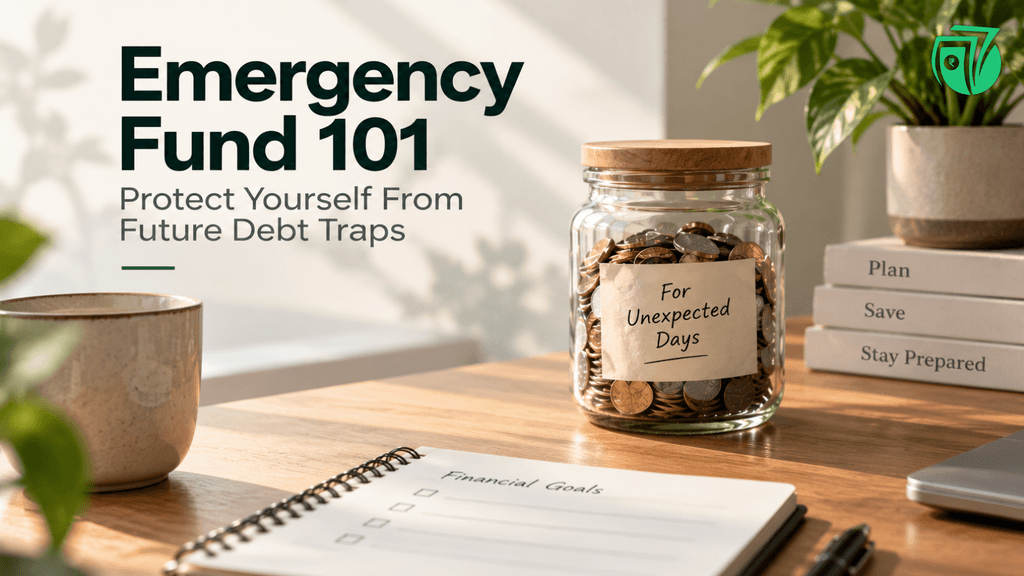
What Is an Emergency Fund?
An emergency fund is money set aside specifically for unexpected and necessary expenses — a job loss, an urgent medical bill, a major repair, or another genuine financial emergency.
It’s worth being clear about what it isn’t:
- It’s not your regular savings account, where money moves in and out for everyday goals.
- It’s not investment money that’s meant to grow over the long term.
- It’s not your vacation fund.
- It’s not money set aside for a planned purchase, even a big one.
An emergency fund has one job: to be there, untouched, for the moment something genuinely unplanned happens. That singular purpose is what makes it effective.
Why an Emergency Fund Can Protect You From Debt
The connection here is simple, and it’s worth sitting with for a moment:
Unexpected expense → no emergency savings → credit card or personal loan → growing repayments → debt stress.
Compare that to:
Unexpected expense → emergency fund → expense covered → no new high-cost debt.
The expense itself is often unavoidable. What determines whether it becomes a one-time inconvenience or the start of a debt spiral is whether you had the money ready before you needed it. This is really the entire case for an emergency fund — it’s not about earning more or investing better, it’s about breaking the link between bad luck and bad debt.
How Much Should Your Emergency Fund Be?
There’s no single number that applies to everyone, but a commonly used framework looks like this:
- A starter fund — enough to handle a small unexpected expense without immediately reaching for credit. Even a modest amount is better than none.
- 3 months of essential expenses — a common intermediate target for people with reasonably stable income.
- 3–6 months of essential expenses — a broader target, especially useful if your income is variable, you’re self-employed, or you have significant financial responsibilities (dependents, a large loan EMI, and so on).
The right target for you depends on how stable your income is and how much financial responsibility you carry. Someone with a steady salary and no dependents can often manage with a smaller buffer than someone with irregular income or a family relying on them.
Calculate Your Emergency Fund Target
A simple formula gets you there:
Monthly essential expenses × Number of months = Emergency fund target
For example, if your essential expenses are ₹25,000 per month:
- ₹25,000 × 3 = ₹75,000 (a 3-month target)
- ₹25,000 × 6 = ₹1,50,000 (a 6-month target)
“Essential expenses” here means rent, groceries, utilities, EMIs, insurance, and anything else you’d still need to pay even if your income stopped tomorrow — not your full monthly spending including discretionary items.
What Counts as an Emergency?
It helps to be honest with yourself about this distinction, since the fund only works if it’s protected for genuine emergencies.
Usually appropriate:
- Unexpected medical expenses
- Job loss
- Essential home or car repairs
- Urgent family-related expenses
Usually not an emergency:
- Shopping
- Holidays
- Dining out
- Planned purchases
- Lifestyle upgrades
If you find yourself justifying a purchase as an “emergency” that you’d actually enjoy, that’s usually a sign it isn’t one.
Where Should You Keep Your Emergency Fund?
Rather than pointing you toward one specific product, it’s more useful to think about the characteristics your emergency fund needs:
- Easily accessible — you should be able to get to it quickly, without penalties or long waiting periods.
- Low risk — this isn’t the money to take chances with.
- Separate from everyday spending — ideally in a different account so it doesn’t quietly get absorbed into regular expenses.
- Available when genuinely needed — liquidity matters more here than returns.
It’s worth being cautious about investing your entire emergency fund in volatile assets. The whole point of this money is that it’s there when you need it, regardless of what the market is doing that week. Growth is a secondary consideration here — reliability is the primary one.
How to Build an Emergency Fund on a Small Salary
Building a buffer on a tight budget is genuinely harder, but not impossible:
- Start with a small target. Even one month of essential expenses is a meaningful milestone — you don’t need to hit six months on day one.
- Automate savings after payday. Moving money before you have a chance to spend it removes a lot of the friction.
- Save windfalls where possible — bonuses, tax refunds, or any unexpected income can go a long way toward your target.
- Reduce a few discretionary expenses, even temporarily, and redirect that amount toward your fund.
- Increase your savings rate as your income increases, rather than letting a raise fully absorb into lifestyle spending.
- Keep the fund in a separate account from your regular spending money, so it’s less tempting to dip into.
Progress here compounds slowly but steadily — the goal is consistency, not speed.
What If You Already Have Debt?
This is a genuinely common situation, and it requires some balance rather than an all-or-nothing approach.
- Create a small initial cash buffer first — even a modest amount can prevent a new emergency from turning into new debt.
- Prioritise high-cost debt — credit card balances and high-interest loans usually deserve more of your attention than building a large fund from scratch.
- Continue building savings gradually, even in small amounts, alongside your debt repayments.
- Avoid taking on new expensive debt for emergencies while you’re still working through existing obligations — this is exactly the cycle an emergency fund is meant to break.
This isn’t about stopping debt repayment to build savings — it’s about having at least a small buffer so the next unexpected expense doesn’t add to the debt you’re already working to pay down.
When Should You Use Your Emergency Fund?
A simple three-question test can help you decide:
- Is it unexpected?
- Is it necessary?
- Can delaying it create a bigger financial problem?
If the answer to these is genuinely yes, using the fund is exactly what it’s there for. Hesitating to use it out of a desire to “keep the number high” defeats the purpose — the fund exists to be used when it’s needed.
How to Rebuild Your Emergency Fund After Using It
Using your emergency fund isn’t a setback — it’s the fund doing its job. A few things to keep in mind afterward:
- Don’t treat using it as a failure. That’s exactly what it was built for.
- Resume contributions once the emergency has passed, even in small amounts to start.
- Recalculate your target if your expenses or income have changed since you first set it.
- Rebuild before increasing discretionary spending — it’s tempting to loosen up once the immediate crisis is over, but replenishing the fund first keeps you protected for the next one.
Emergency Fund vs Credit Card: Which Should You Rely On?
| Emergency Fund | Credit Card |
|---|---|
| Your own saved money | Borrowed money |
| No interest on the amount used | Interest and charges may apply |
| Doesn’t create a new repayment obligation | Creates debt |
| Can protect against debt spirals | Can become expensive if the balance isn’t repaid quickly |
A credit card can absolutely help you handle an emergency in the moment — but if the balance isn’t cleared quickly, it stops being a solution and starts becoming its own problem. An emergency fund removes that risk entirely.
Common Emergency Fund Mistakes
- Setting an unrealistic target and never starting — a smaller, achievable goal beats an ambitious one you keep postponing.
- Keeping savings mixed with everyday spending money, where it’s easy to accidentally spend down.
- Using the fund for non-emergencies, which defeats its purpose over time.
- Investing money needed for emergencies in unsuitable high-risk assets, where it might not be available (or might be worth less) exactly when you need it.
- Forgetting to replenish the fund after using it, leaving yourself exposed to the next unexpected expense.
- Relying entirely on credit cards for unexpected expenses, without any cash buffer to fall back on.
Frequently Asked Questions
How much emergency fund should I have in India?
A common starting framework is 3 months of essential expenses, extending to 3–6 months depending on how stable your income is and how many financial responsibilities you carry.
Is 3 months of expenses enough for an emergency fund?
For many people with stable income, yes. Those with variable income, dependents, or greater financial responsibility may want to work toward a larger buffer, closer to 6 months.
Where should I keep my emergency fund?
Somewhere easily accessible, low-risk, and separate from your everyday spending account — liquidity and reliability matter more here than returns.
Should I build an emergency fund while paying off debt?
Generally, yes, but with balance — a small initial buffer alongside prioritising high-cost debt repayment tends to work better than focusing entirely on one or the other.
Can an emergency fund help prevent personal loan debt?
Yes. Having savings set aside for unexpected expenses reduces the need to borrow — often at high interest — when something unplanned comes up.
When should I use my emergency savings?
When the expense is genuinely unexpected, necessary, and delaying it would likely create a bigger financial problem.
How can I build an emergency fund on a low salary?
Start small, automate savings right after payday, redirect windfalls toward the fund, and increase contributions gradually as your income grows.
How long does it take to build an emergency fund?
It varies widely based on income, expenses, and how much you can consistently set aside — the key is steady progress rather than a fixed timeline.
An emergency fund is one of the simplest ways to keep an unexpected expense from turning into long-term debt. If you’re not sure where your finances currently stand, or you’re already juggling debt and want a clearer picture of your options, it helps to start with an honest assessment.
👉 Start your financial health check to see where you stand today.
👉 Get a free debt assessment with TrueSettle if existing debt is making it hard to build your savings.