A loan penalty waiver can help reduce the extra charges that build up after missed payment deadlines. Late fees, penalty interest, and additional charges stack up fast, and before long the amount you owe looks nothing like the amount you originally borrowed. If you’re in this position, you’re not alone — and you do have options.
One of the most underused options is simply asking. Lenders won’t always advertise it, but many are willing to waive or reduce penalty charges, especially for borrowers who communicate early, honestly, and with a clear plan. A waiver isn’t guaranteed — it depends on your lender’s policies, your repayment history, and the specifics of your situation — but knowing how to frame the conversation can make a real difference.
Below are five practical phrases you can use as starting points when you negotiate loan penalties, along with guidance on when and how to use each one effectively.
Why Ask for a Penalty Waiver?
Before getting into the phrases themselves, it helps to understand why this conversation is worth having at all.
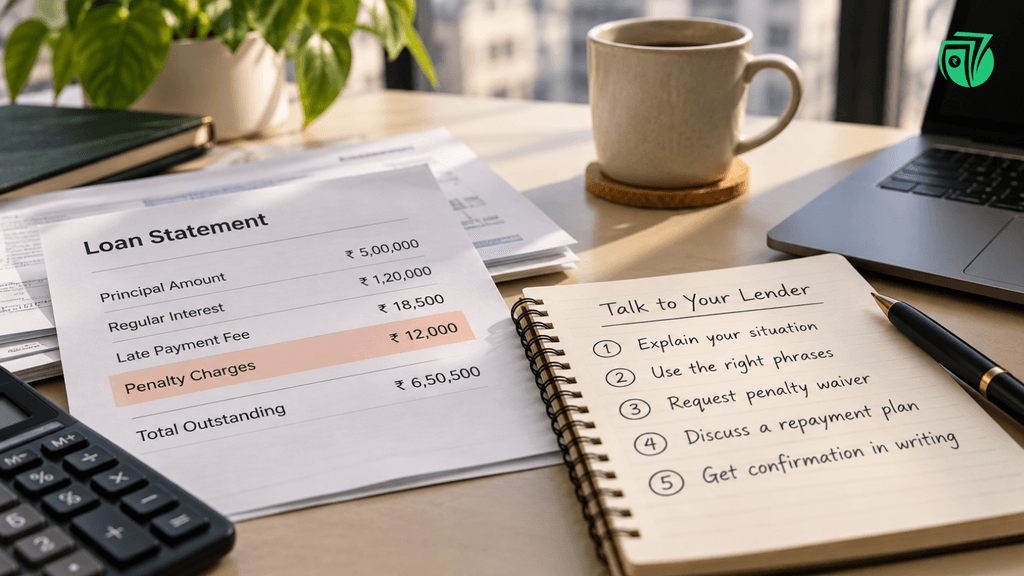
- Late fees and penalty charges compound quickly. What starts as a small percentage can meaningfully increase your total outstanding dues over just a few missed cycles.
- Reducing extra charges makes repayment more realistic. Even a partial waiver can be the difference between a payment plan that works and one that doesn’t.
- A reasonable request isn’t the same as avoiding your debt. You’re not asking to walk away from what you owe — you’re asking the lender to reconsider the additional charges layered on top of it, while you commit to resolving the core balance.
Lenders would generally rather recover the principal (and some interest) from an engaged borrower than chase penalties from someone who’s stopped responding. That’s the leverage point these conversations are built on.
1. “I’m Facing Financial Hardship and Would Like to Request a One-Time Waiver.”
This is the most direct opening, and it works best when your hardship is genuine and recent — a job loss, medical emergency, reduced income, or similar disruption.
When to use it: Early in the conversation, ideally before your account moves further into default. The sooner you raise it, the more flexibility a lender typically has.
What strengthens it: Supporting documentation. A termination letter, medical bills, or a simple written explanation of what changed and when. Lenders are far more responsive to a specific, documented hardship than a vague “things have been tough” — even if that’s also true.
Keep it factual and brief. You don’t need to over-explain; you need to establish that this is a genuine, one-time circumstance rather than an ongoing pattern.
2. “If I Pay the Agreed Amount, Can You Consider Waiving the Accumulated Penalties?”
This phrase reframes the conversation from a request into a negotiation — you’re offering something concrete in exchange for the waiver, rather than simply asking the lender to forgive charges outright.
Why it works: It gives the lender a clear incentive. Instead of continuing to chase a delinquent account, they get a defined payment now. For many lenders, that trade is worth making, especially on accumulated penalty charges rather than the principal itself.
How to use it well: Be specific about the amount and timeline you’re proposing. Vague offers (“I’ll pay something soon”) rarely move a negotiation forward. A concrete number and date give the lender something real to evaluate.
3. “Can We Review the Charges and See Whether Any Late Fees Can Be Reversed?”
This is a softer, more collaborative approach — useful when you’re not in a position to make an immediate lump-sum payment, or when you simply want to understand what’s been charged before proposing anything.
When it’s useful: If your account has multiple charges stacked up and you suspect some may be duplicated, miscalculated, or eligible for a standard courtesy reversal (many lenders offer at least one, especially for otherwise good accounts).
Why it’s effective: Asking for a review rather than making a demand keeps the tone cooperative. It also opens the door for the representative to walk you through what’s negotiable and what isn’t, which is useful information even if this specific call doesn’t resolve everything.
4. “I Want to Resolve the Outstanding Amount. What Relief Can You Offer on Penalties and Charges?”
Rather than proposing your own terms first, this phrase puts the question back to the lender and asks them to lay out what’s actually possible.
Why this order matters: Lenders often have internal thresholds or standard relief programs they can offer — restructured payment plans, reduced penalty rates, or short-term forbearance — that you might not know exist. Asking directly gives them room to present those options instead of you guessing or under-asking.
A useful follow-up: If they offer something, ask whether it’s the maximum flexibility available or a starting point. It’s a fair question, and it signals that you’re engaged and comparing options rather than accepting the first thing offered.
5. “If I Make the Payment by [Date], Can You Confirm the Waiver in Writing?”
This is arguably the most important phrase on this list, because it protects you after the negotiation is over.
Why it matters: Verbal agreements over the phone are easy to misremember, and staff turnover means the person you spoke to may not be the person who reviews your account later. Getting written confirmation — email, letter, or an official system note — before you make the payment protects you if there’s ever a dispute.
How to use it: Don’t send the payment until you have this confirmation in hand. If a lender is hesitant to put the waiver in writing, that’s worth noting — a genuine offer should hold up on paper.
How to Make Your Negotiation More Effective
A few practical habits go a long way in these conversations:
- Know your exact outstanding amount before you call — guessing undermines your credibility.
- Separate principal, interest, penalties, and other charges so you know exactly what you’re asking to be waived.
- Explain your financial hardship clearly and briefly, with documentation ready if asked.
- Make a realistic payment proposal — one you can actually follow through on.
- Stay polite and specific. Calm, clear communication tends to get further than frustration, even when the situation is stressful.
- Get any agreed waiver in writing before making a payment based on it.
What Not to Say When Negotiating With a Lender
Just as important as what to say is what to avoid:
- Threatening the lender. It rarely helps and can shut down an otherwise productive conversation.
- Making promises you can’t keep. Overcommitting on a payment date or amount damages your credibility for future negotiations.
- Claiming financial hardship without evidence, if asked to provide it. Inconsistencies here can end the conversation quickly.
- Assuming a verbal promise means the charges are waived. Until it’s confirmed in writing, treat it as pending.
- Refusing to discuss the underlying debt. The goal is charge relief, not avoidance of the loan itself — conversations that sound like the latter tend to go nowhere.
What to Get in Writing Before You Pay
Before making any payment based on a negotiated waiver, confirm the following in writing:
- The exact amount payable
- Which penalties or charges are being waived
- The payment deadline
- Your loan or account number
- What happens if the agreed payment is made (and what happens if it isn’t)
- Clear confirmation that the lender has agreed to these terms
This isn’t about distrust — it’s just good practice. A written record protects both sides and prevents misunderstandings down the line.
FAQs
Can I ask a bank to waive late payment penalties?
Yes. Many lenders have some flexibility to waive or reduce penalty charges, particularly for borrowers with a reasonable explanation and a workable repayment plan. It’s not guaranteed, but it’s always worth asking.
How do I negotiate a loan penalty waiver?
Start by understanding your exact outstanding amount, explain your situation clearly, propose a realistic payment, and ask directly whether penalties can be reduced or waived. Get any agreement confirmed in writing before paying.
What should I say to a lender to reduce penalties?
Phrases that reference genuine hardship, offer a concrete payment in exchange for relief, or simply ask for a review of charges tend to open productive conversations — see the five examples above.
Will lenders always waive late payment charges?
No. A waiver is at the lender’s discretion and depends on their internal policies, your account history, and the specifics of your request. Some charges may only be partially reduced, or not waived at all.
Can penalties be waived as part of a loan settlement?
Often, yes — penalty and charge waivers are a common part of broader settlement negotiations, particularly when a borrower is proposing a lump-sum resolution.
Should I get a penalty waiver in writing?
Always. A verbal agreement offers no protection if there’s a dispute later. Written confirmation should be in hand before you make any payment based on the arrangement.
If you’re dealing with mounting penalties and aren’t sure where to start, getting professional guidance before you negotiate can help you avoid common missteps — and improve your chances of a fair outcome.