Navi loan settlement is a common search for borrowers who are struggling to repay their Navi personal loan and want to know whether the lender may accept a reduced amount to resolve the outstanding dues.
The answer isn’t as straightforward as some websites make it sound.
Navi may consider loan settlement in certain cases, but it is not a guaranteed or standard option for every borrower. We could not find an official Navi page that publishes a fixed one-time settlement scheme, standard settlement percentage, or eligibility criteria.
This means that any settlement offer ultimately depends on Navi’s assessment of your individual loan account and circumstances.
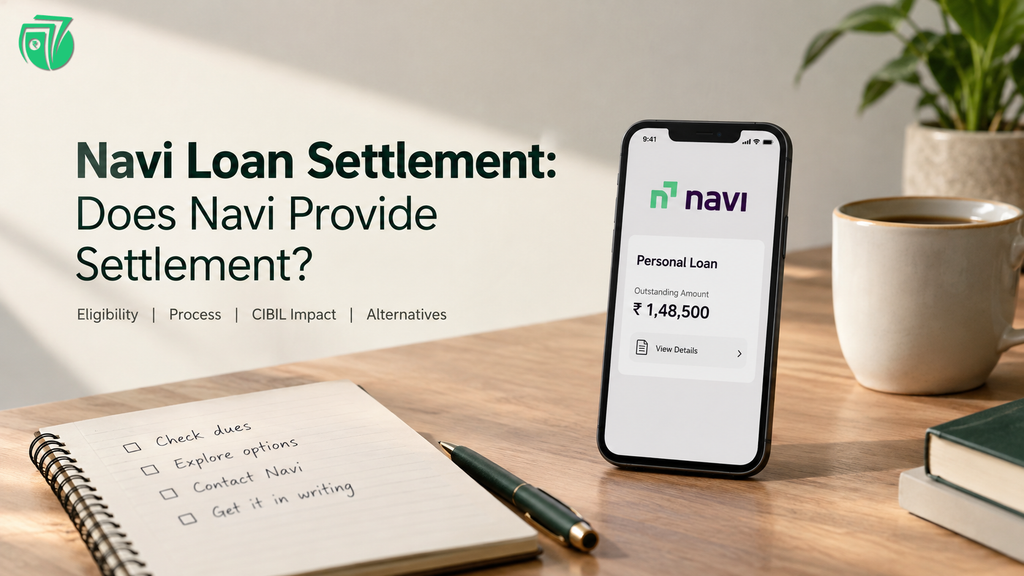
Does Navi Offer Loan Settlement?
Navi may consider settlement for borrowers who are facing genuine difficulty in repaying their outstanding loan. However, settlement is generally a case-by-case decision, not something a borrower is automatically entitled to.
A settlement typically involves the lender agreeing to accept a mutually agreed amount instead of the full outstanding dues, subject to the terms communicated by the lender.
If someone claims that Navi will definitely settle your loan for a specific percentage—such as 30%, 50%, or 70%—be careful.
There is no publicly verified standard Navi settlement percentage that can be guaranteed in advance.
The only reliable way to know whether settlement is available for your account is to discuss your situation with Navi through its official channels and obtain any offer in writing.
Why Are There So Many Different Claims About Navi Loan Settlement?
A search for “Navi loan settlement” can bring up numerous websites offering debt-settlement or legal assistance.
Some of these websites may provide useful general information, but they should not be treated as Navi’s official policy.
Be particularly cautious of claims such as:
- “Get 50% off your Navi loan”
- “Guaranteed Navi settlement”
- “100% penalty waiver”
- “We can force Navi to settle”
- “Pay us and we’ll stop recovery calls”
No third party can guarantee the settlement terms that Navi will offer.
Your settlement amount, if any, must come from Navi or an authorised representative acting on Navi’s behalf.
When Might Loan Settlement Be Considered?
Settlement is generally more relevant when a borrower is facing a genuine and sustained repayment problem, rather than a temporary delay.
Circumstances that may be relevant include:
- Significant loan overdue
- Loss of employment or income
- Major reduction in household income
- Unexpected medical expenses
- Business or financial losses
- Multiple outstanding debts
- Inability to continue regular EMI payments
- Availability of a realistic lump-sum amount
These factors do not automatically make you eligible for settlement. The lender decides whether settlement is appropriate for the particular account.
Missed One EMI? Don’t Assume Settlement Is the Answer
If you’ve only recently missed an EMI, settlement may not be the first option to consider.
Instead, ask Navi whether there are other options available for your account, such as:
- Repayment arrangements
- Revised payment plans
- Resolution of overdue amounts
- Applicable charge or interest relief
- Other assistance available under the lender’s policies
The earlier you communicate with the lender, the more clearly you can understand your available options.
What Should You Do Before Asking Navi for Settlement?
Before approaching Navi, get a clear picture of your financial position.
1. Check Your Outstanding Amount
Review your Navi loan account and identify:
- Principal outstanding
- Overdue EMIs
- Interest or applicable charges
- Late payment charges, if any
- Total amount currently payable
Don’t negotiate based on an estimate.
2. Decide What You Can Actually Afford
If settlement is being considered, determine how much you could realistically arrange as a lump sum.
Avoid promising an amount that you cannot pay within the agreed deadline.
3. Document Your Financial Hardship
If your repayment difficulty is caused by a genuine financial setback, keep relevant documents available.
Depending on your situation, these may include:
- Employment termination or salary reduction documents
- Medical bills
- Bank statements
- Income documents
- Business-loss records
- Other evidence of financial hardship
You may not always be asked for these, but having them ready can help explain your situation clearly.
4. Contact Navi Through Official Channels
Use Navi’s official app, website, customer support or other verified communication channels.
Explain that you’re facing difficulty repaying the loan and ask what resolution options are available for your account.
If settlement is an option, ask for the terms in writing.
How to Approach Navi for Loan Settlement
If you decide to explore settlement, follow a structured process:
Step 1: Check your current loan outstanding.
Step 2: Assess how much you can realistically arrange.
Step 3: Explain your financial circumstances to Navi.
Step 4: Ask whether your account is eligible for any resolution or settlement option.
Step 5: If an offer is made, request it in writing.
Step 6: Check the settlement amount, payment deadline and payment instructions carefully.
Step 7: Make payment only through the official payment channel specified by the lender.
Step 8: Keep the payment receipt and written settlement documentation.
Step 9: After completion, request appropriate confirmation of the account’s status and any applicable No Dues/closure documentation.
Never Pay Based on a Verbal Settlement Promise
This is particularly important.
Suppose someone calls you and says:
“Pay ₹50,000 today and your ₹1.5 lakh loan will be settled.”
Don’t rely on the statement alone.
Before making payment, ask for official written confirmation that clearly explains:
- Settlement amount
- Payment deadline
- Account/loan reference
- Payment method
- Treatment of the remaining outstanding amount
- Status of the account after payment
If the terms are unclear, don’t rush into making a payment simply because someone is pressuring you.
Beware of Navi Loan Settlement Scams
Financially distressed borrowers can be vulnerable to fraudulent settlement offers.
Be cautious if someone:
- Guarantees a specific discount
- Demands a large upfront fee
- Asks you to transfer money to a personal bank account
- Uses an unofficial payment link
- Claims to have special authority to “force” Navi to settle
- Promises to remove negative credit history instantly
- Pressures you to make an immediate payment
- Refuses to provide written settlement terms
If you decide to use a debt-resolution company, understand its fees and services before signing anything.
More importantly, verify the actual settlement terms directly with the lender.
What Happens to Your CIBIL Score After Settlement?
This is one of the most important things to understand before choosing settlement.
A loan that is fully repaid according to its original terms is generally reported differently from a loan that is settled for less than the full outstanding amount.
A settled account may be reported as “Settled” rather than “Closed.”
This can negatively affect your credit profile and may make it more difficult to obtain loans or credit cards in the future.
However, the exact impact is not the same for everyone. Your credit profile, repayment history, other accounts and subsequent financial behaviour can all matter.
Settlement Is Not the Same as Loan Waiver
It’s also important to understand the difference.
Loan settlement generally means the lender agrees to accept a specified amount to resolve the account, potentially less than the total outstanding amount.
Loan waiver generally refers to the lender cancelling some or all of an obligation under specific circumstances.
A settlement should not automatically be described as a “loan waiver.”
Can You Improve Your Credit Profile After Settlement?
Yes, your credit profile can improve over time, although there is no instant fix.
After settlement, focus on:
- Paying all active EMIs on time
- Paying credit-card bills on time
- Avoiding unnecessary new debt
- Keeping credit utilisation under control
- Checking your credit report periodically
- Resolving any inaccurate information reported to credit bureaus
Consistent responsible repayment behaviour can help rebuild your credit profile gradually.
What If Navi’s Recovery Conduct Feels Unfair?
Being unable to repay a loan does not mean you should accept inappropriate recovery behaviour.
If you believe you are experiencing harassment or improper recovery practices:
- Keep records of calls, messages and other communication.
- Raise the issue through Navi’s grievance redressal mechanism.
- Keep copies of your complaint and the response.
- If the issue remains unresolved, consider the appropriate RBI complaint or escalation mechanism available to you.
Always distinguish between legitimate recovery communication and conduct that may violate applicable rules.
Frequently Asked Questions
Does Navi provide loan settlement?
Navi may consider settlement on a case-by-case basis, but we could not verify a publicly announced standard Navi loan settlement scheme with fixed terms. Only Navi can confirm whether settlement is available for your particular account.
What percentage does Navi settle a loan for?
There is no publicly verified fixed Navi settlement percentage that applies to every borrower. Be cautious of anyone guaranteeing a particular discount.
Can I settle my Navi loan after missing one EMI?
Don’t assume that settlement will be available after only one missed EMI. If your payment difficulty is recent, ask Navi about available repayment or resolution options first.
Does Navi loan settlement affect CIBIL?
It can negatively affect your credit profile. A settled account is generally reported differently from a fully closed account, and “Settled” status can make future borrowing more difficult.
Is Navi loan settlement the same as loan closure?
No.
Settlement and closure are different outcomes. Before making a payment, understand exactly how Navi will report the account after the agreed amount is paid.
Should I hire a company to settle my Navi loan?
You don’t necessarily need a third party. You can approach the lender directly.
If you do use a debt-resolution service, verify its legitimacy, understand the fees, avoid guaranteed promises and make sure the actual settlement terms come from the lender in writing.
What should I get before paying a settlement amount?
Before paying, obtain written confirmation of:
- Agreed settlement amount
- Payment deadline
- Payment method
- Loan/account reference
- Treatment of the remaining balance
- Expected account status after payment
Keep all documents and payment receipts for your records.
Final Takeaway
Navi loan settlement may be possible, but it is not something anyone outside Navi can guarantee.
If you’re struggling with repayment, don’t make a decision based solely on a settlement percentage advertised online.
First understand your outstanding balance, assess what you can realistically afford, contact Navi through official channels and ask what resolution options are available for your account.
If settlement is offered, get the terms in writing before making any payment.
And remember: settlement can have consequences for your credit profile, so it should generally be considered only after understanding the alternatives and long-term impact.
Need help understanding your options before approaching Navi?