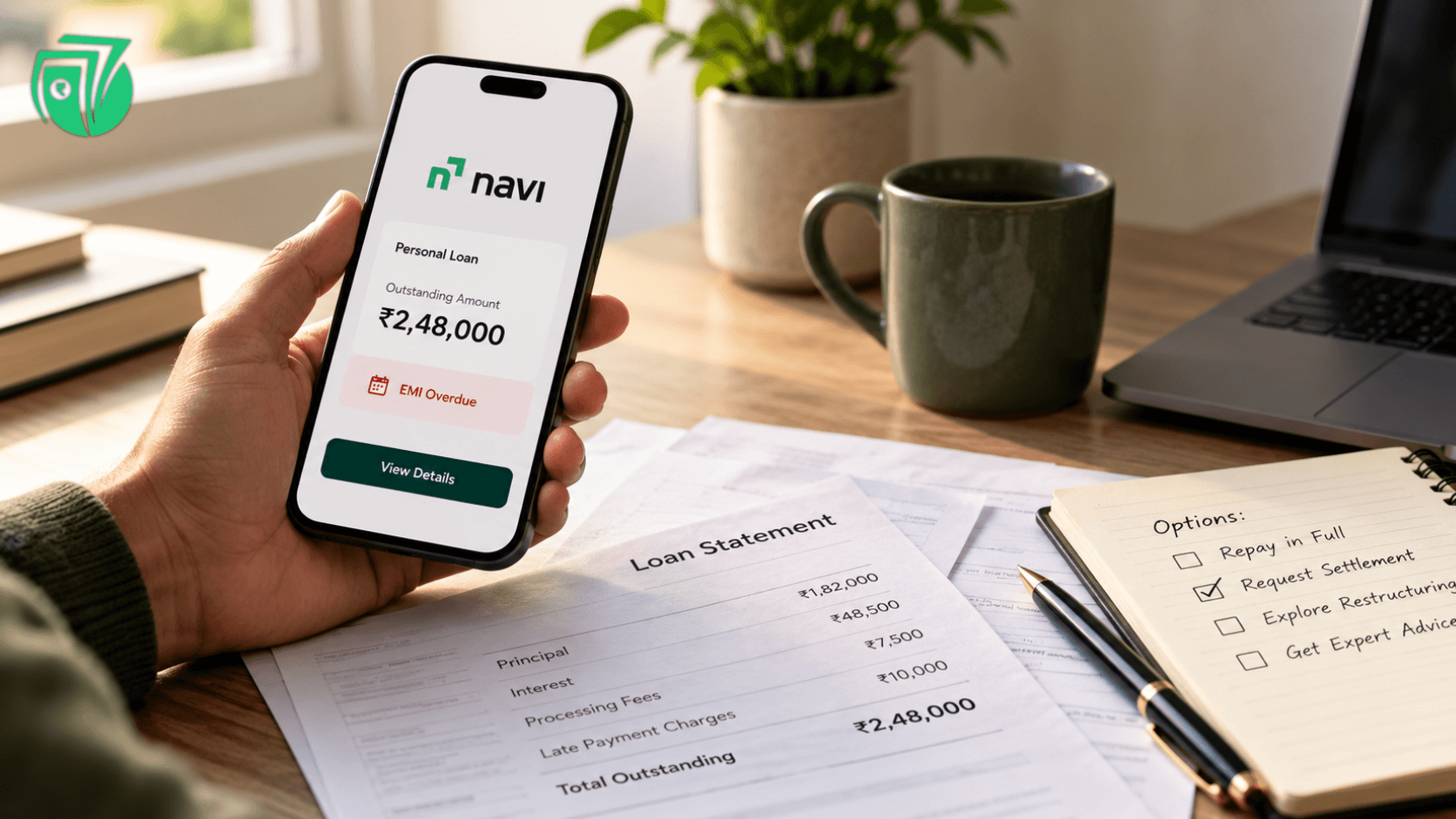
A settlement offer calculator can help you estimate a realistic amount to propose when you’re considering a loan or credit card settlement. Instead of guessing how much you can afford, you can use your outstanding debt, income, expenses, savings and repayment capacity to work out a practical settlement offer.
If you’re behind on EMIs and thinking about a loan settlement, the single biggest question isn’t “will the bank agree?” — it’s “how much cash can I actually put on the table?” Lenders don’t accept settlement offers based on good intentions. They look at hard numbers. And the only way to know your real number is to sit down and build a budget.
This worksheet walks you through exactly that — step by step — so you finish with a realistic, defensible settlement fund instead of a guess.
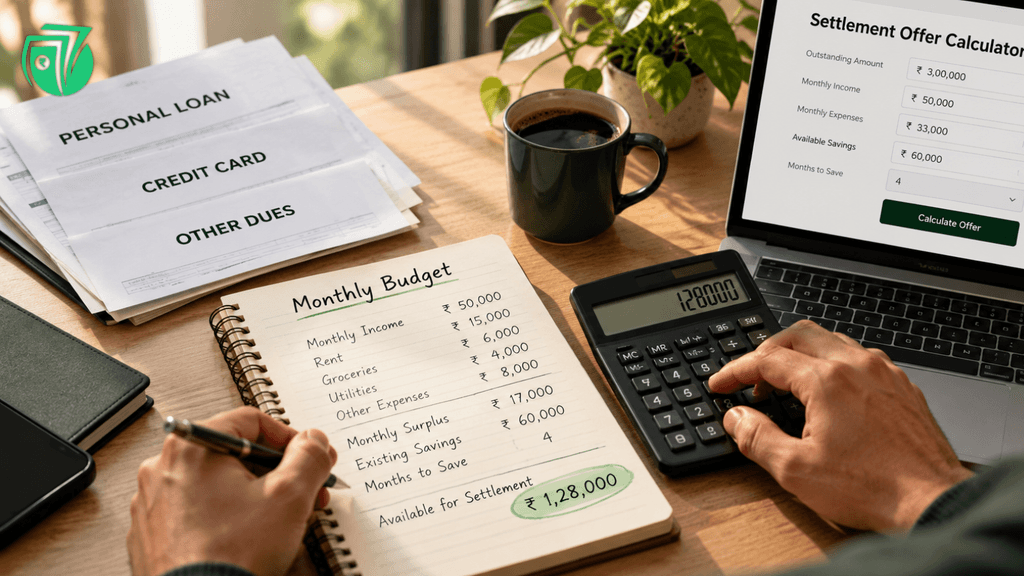
Why You Need a Budget Before Making a Settlement Offer
Walking into a settlement conversation without a budget is like negotiating a salary without knowing your monthly expenses. You might lowball yourself, or worse, promise more than you can actually pay and default on the settlement itself — which can undo weeks of negotiation.
A budget gives you three things:
- Credibility. A lender is more likely to take your offer seriously when it’s backed by real numbers.
- Clarity. You’ll know exactly how much you can set aside each month without starving your household budget.
- Confidence. Negotiating gets a lot easier when you’re not doing mental math on the spot.
Step 1: Calculate Your Total Monthly Income
Start with every rupee coming in. This includes:
- Salary or business income (take-home, not gross)
- Freelance or side income
- Rental income, pension, or other regular sources
Add these together for your Total Monthly Income. Be conservative — if a source is irregular, use the average of the last three months rather than your best month.
Step 2: List Every Essential Monthly Expense
These are the non-negotiables — the costs you’d pay even in a crisis:
- Rent or housing costs
- Food and groceries
- Utilities (electricity, water, gas, internet)
- Transportation
- Medical expenses
- Insurance premiums
- Education/school fees
- Any other essential, recurring cost
Total these up separately from the rest. This number tells you the floor below which your budget can’t go.
Step 3: Track Your Existing EMIs and Debt Payments
List every loan and credit obligation currently active:
- Personal loan EMIs
- Credit card minimum payments
- Other loan EMIs (auto, education, etc.)
Add these into a Total Debt Payments figure. If you’ve already stopped paying on the account you’re trying to settle, note that separately — it changes how much room you have elsewhere.
Step 4: Identify Expenses You Can Reduce or Pause
This is where the real cash-freeing happens. Go through your flexible spending:
- Dining out
- Shopping and non-essential purchases
- Entertainment and streaming subscriptions
- Travel
- Any other discretionary spend
For each one, ask: “Can I pause or cut this for the next 6–12 months?” Even small trims add up — cutting ₹500 here and ₹1,000 there can free up a surprising amount over a few months.
Step 5: Calculate Your Monthly Surplus
Now do the math:
Total Monthly Income − Essential Expenses − Debt Obligations = Monthly Surplus
If the number is negative, don’t panic — that’s exactly why Step 4 matters. Go back and see how much of your flexible spending can convert into surplus.
Step 6: Find Your Realistic Settlement Savings Amount
Your Monthly Surplus, plus whatever you’re able to cut from flexible expenses, gives you your Available Monthly Settlement Savings — the amount you can realistically set aside each month without disrupting your household.
This is the number that matters most in a negotiation. It’s honest, it’s sustainable, and it won’t collapse under pressure two months in.
Step 7: Build a Settlement Fund
Once you know your monthly savings capacity, decide where that money goes:
- A separate savings account (so it doesn’t get mixed with everyday spending)
- Existing savings you’re willing to allocate
- Any family or support contributions you can count on
Add these together for your Potential Settlement Fund.
Step 8: Set a Target Settlement Amount
Talk to your lender or a debt-settlement advisor about what kind of offer might be realistic for your account. Settlement percentages vary quite a bit depending on the lender, how overdue the account is, your repayment history, and the lender’s internal policies — so treat any “typical” percentage you read online as a starting point for discussion, not a guarantee.
Once you have a ballpark figure, compare it against your Potential Settlement Fund to see how long you’ll need to save.
Step 9: Create a Monthly Savings Plan
Break your target amount into monthly milestones. For example, if you need to reach a fund of ₹1,20,000 and you can save ₹10,000 a month, you’re looking at a 12-month runway. Write this down — a plan on paper is far easier to stick to than one in your head.
Step 10: Review Your Budget Before Making an Offer
Before you approach the lender, revisit your numbers:
- Has your income changed?
- Have any essential expenses gone up?
- Is your fund actually where you expected it to be?
A quick review here can save you from making an offer you can’t follow through on.
Free Loan Settlement Budget Worksheet
Here’s the worksheet in one place — fill in your own numbers:
Income
- Salary/business income: ___
- Freelance/side income: ___
- Other regular income: ___
- Total Monthly Income: ___
Essential Expenses
- Rent: ___
- Food/groceries: ___
- Utilities: ___
- Transportation: ___
- Medical: ___
- Insurance: ___
- Education: ___
- Other essential costs: ___
- Total Essential Expenses: ___
Debt Obligations
- Personal loan EMI: ___
- Credit card payments: ___
- Other loan EMIs: ___
- Total Debt Payments: ___
Flexible Expenses
- Dining out: ___
- Shopping: ___
- Entertainment: ___
- Subscriptions: ___
- Travel: ___
- Other discretionary spending: ___
- Potential Monthly Savings from Cuts: ___
Settlement Calculation
- Total Monthly Income: ___
- Minus Essential Expenses: ___
- Minus Debt Obligations: ___
- Plus Potential Expense Reductions: ___
- Available Monthly Settlement Savings: ___
- Existing Savings Available: ___
- Expected Family/Support Contribution: ___
- Potential Settlement Fund: ___
Example: How a Borrower Can Free Up ₹10,000 a Month
Say a borrower earns ₹45,000 a month. Essential expenses come to ₹22,000, and an existing car EMI takes another ₹8,000. That leaves a surplus of ₹15,000.
Now look at flexible spending — dining out, subscriptions, and a few shopping habits add up to roughly ₹18,000 a month. By trimming this down to ₹8,000 (cutting dining out and pausing two subscriptions), the borrower frees up an additional ₹10,000.
Combined, that’s ₹25,000 in monthly settlement savings — enough to build a meaningful fund within 6–8 months, depending on the target settlement amount.
Common Budgeting Mistakes to Avoid
- Overestimating income — using your best month instead of your average
- Underestimating essential expenses — forgetting irregular costs like annual insurance premiums
- Cutting too aggressively — a plan you can’t sustain for more than a month isn’t a real plan
- Ignoring emergency funds — draining all your savings into a settlement fund can backfire if an emergency hits
- Not reviewing the budget regularly — expenses shift, and your worksheet should shift with them
When Settlement May Not Be the Right Option
A settlement isn’t always the best path. If your monthly surplus is consistently negative even after cutting flexible expenses, it may be worth exploring other options — such as restructuring your EMI, consolidating debt, or speaking with a financial counsellor before committing to a settlement fund you can’t realistically build.
Frequently Asked Questions
How do I create a budget for loan settlement?
Start by listing your total income, then subtract essential expenses and existing debt payments. What’s left, plus any cuts you make to flexible spending, becomes your available settlement savings.
How much should I save before making a settlement offer?
This depends on your lender, account status, and negotiated terms — there’s no fixed number. Your worksheet total gives you a realistic starting point for the conversation.
Can I use savings for a loan settlement?
Yes, existing savings can be added to your settlement fund, but it’s worth keeping a small emergency buffer aside rather than using every rupee you have.
How can I reduce expenses to build a settlement fund?
Look first at discretionary spending — dining out, subscriptions, shopping, and travel — since these are usually easiest to pause or cut without affecting your essential needs.
Should I stop paying EMIs to save for settlement?
This is a significant decision with consequences for your credit report and account status, and it varies case by case — it’s best discussed with a lender or debt-settlement advisor rather than decided on your own.
Does a settlement budget guarantee that the bank will accept my offer?
No. A budget shows the lender what you can realistically pay, but acceptance depends on the lender’s own policies, your account history, and their internal approval process.